Languages
Sunday, November 8, 2026



News and Views from the Global South
Politics
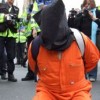
U.S.: A Dark Decade for Civil Rights and Liberties
The tenth anniversary of the attacks on the World Trade Center's Twin Towers and the Pentagon on Sep. 11, 2001 is marked by mourning.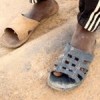
Libyan Rebels Hound Black Refugees
The Libyan revolution has been devastating for 20-year-old Alybe Nally from Nigeria, as it has been for countless others from Africa seen by the rebels as Gaddafi loyalists. "When the rebels took over Tripoli two weeks ago they took my money, my mobile, my passport...All I have is what you see now," he says, pointing to his mismatched pair of sandals.
U.S.: Al Qaeda’s Project for Ending the American Century Largely Succeeded
A decade after its spectacular Sep. 11, 2001 attacks on New York City's twin World Trade Center towers and the Pentagon and despite the killing earlier this year of its charismatic leader, Osama bin Laden, Al Qaeda appears to have largely succeeded in its hopes of accelerating the decline of U.S. global power, if not bringing it to the brink of collapse.U.S.: Weighing in on “Generation 9/11”
The 10 years since Sep. 11, 2001 have offered scholars, politicians and the Millennial Generation, a group who was entering adolescence at the turn of the century, fodder for contention about just what the changes of the last decade mean for the younger generation.RIGHTS-CUBA: Dissident Group Reports Uptick in Arrests
The Cuban Commission for Human Rights and National Reconciliation criticised the situation in this Caribbean island nation in a report released three days after government media warned that a new smear campaign was being organised against the country.Washington Warned Against Lifting Aid Curbs
As a high-ranking Uzbek delegation wound up talks with senior U.S. officials here Wednesday, human rights groups urged the administration of President Barack Obama not to lift seven- year-old restrictions on Washington's aid to Tashkent in exchange for a new agreement on using Uzbek territory to transport "non-lethal" supplies to and from Afghanistan.OP-ED: Double Standards: the Case of Itamar Awarta
Last March, a vicious crime occurred in the occupied Palestinian territories. Five members of an Israeli settler family were slain in their home in Itamar, a settlement in the northern West Bank. A mother, father, two young children and a three-month-old were all stabbed to death.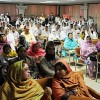
PAKISTAN: Dodging Drones and Bullets to Beat HIV
Having to contend with U.S. army drones and the crossfire between the Taliban and the Pakistani army, the residents of Pakistan’s tribal areas find access to treatment for HIV/AIDS harder than in most other parts of the world.Deaths Reported in ‘Fresh Syrian Assault’
Syrian forces have killed at least 21 people in a massive tank-backed raid on the central city of Homs, rights activists say, after the government postponed a visit to the country by the Arab League chief.ARGENTINA: Against the Current in Nuclear Energy
While the tendency in the industrialised world in the wake of the Mar. 11 nuclear meltdown in Japan is to abandon plans for further nuclear energy development, in Argentina the capacity of existing plants is being strengthened, and new reactors are being built.LIBYA: Jihadists Take Over, As Warned
The official euphoria with which the U.S. and European governments celebrated the fall of the regime of Muammar Gaddafi in Libya has given way to growing concern that many among the new Libyan leadership are radical Muslims with links to al-Qaeda. Revelations are surfacing also of a close collaboration of Western governments with the deposed dictator.Donors Fund Forced Labour in Vietnam
A leading international human rights group has accused the United States government, the World Bank and other international donors of indirectly funding forced labour in Vietnam’s drug rehabilitation centres.Post-9/11 Rebuffs Set U.S.-Iran Relations on Downward Spiral
Of all the mistakes and missed opportunities that have characterised U.S. foreign policy since Sep. 11, 2001, few may have been as consequential as the failure to improve relations with Iran.Nicaragua’s Antidote to Violent Crime
The so-called "Northern Triangle" of Central America, plagued by poverty, violence and the legacy of civil war, is considered one of the most violent areas in the world. But neighbouring Nicaragua has largely escaped the spiralling violence, and many wonder how it has managed to do so.U.N. Racism Meet Threatens North-South Confrontation
A high-level meeting on racism, scheduled to take place later this month under the auspices of the General Assembly, is threatening to split the world body and trigger a North-South confrontation.OP-ED-RIGHTS: “We Just Want to Know Where They Are”
The last time Supaya Serrano saw her sisters Erlinda and Ernestina, they were just three and seven years old, respectively.ARGENTINA: Purging the Legal System of Dictatorship Accomplices
As human rights cases from Argentina's 1976-1983 military dictatorship move ahead in the courts, cases of judges and prosecutors who were accomplices in the crimes are coming to light.DEVELOPMENT: ‘Boomerang Aid Enriches Donors’
Development aid is ineffective mostly because it is tied to contracts worth billions of dollars awarded to firms in developed countries in a phenomenon called boomerang aid, a new study says.
BOLIVIA: Rainforest Road Will Have Environmental and Cultural Impacts
A richly biodiverse rainforest the size of 3,000 soccer fields in central Bolivia will be the first victim of the road planned to run through the Isiboro Sécure Indigenous Territory and National Park (TIPNIS), say environmental activists.
CUBA: Catholic Church Takes the Pulse of Religious Sentiment
The Catholic Church seems to be expecting a rise in religious sentiment among the Cuban population as a result of the climate of dialogue and more relaxed relations with the government seen since the 1998 visit of Pope John Paul II.KOSOVO: EU Cornered by UN Jurisdiction – Part 2
European investigators had a hard time dealing with cases of misuse of European Union funds in Kosovo due to the complex bureaucracy that regulated the relationship between the EU and the United Nations administration, which was the only official international decision-making authority in the former Serbian province.« Previous Page — Next Page »





The Week with IPS

NEXT STOP - SDGs
Tracking global progress towards a sustainable world
Tracking global progress towards a sustainable world
