Languages
Saturday, November 14, 2026



News and Views from the Global South
Poverty & MDGs
PERU: Small Towns Face Challenge of Using Windfall Mining Revenues
Peru is enjoying a mining boom. But while some areas lacking in minerals and oil have seen very little of the windfall profits, other districts have taken in so much money that they have only been able to actually use a tiny portion of it.DEVELOPMENT: U.N. Warns of Faltering Goals on Aid, Trade
When the United Nations approved a set of development goals on poverty, health, gender empowerment, and sustainable environment back in September 2000, it laid down a deadline of 2015 to reach these targets.DEVELOPMENT-SWAZILAND: Don't Blame Donor Dependency
What happens to a nation whose people depend on the largesse of international donor agencies for their existence, once support is withdrawn?
DEVELOPMENT: Coming Together To Aid the Poor
In what is turning out to be hard-fought negotiations between rich and poor nations, more than 1,000 government and civil society delegates are gathered in the Ghanaian capital to agree the best ways to deliver and administer aid.NICARAGUA: Name and Identity for Thousands of Indigenous Children
Some 250,000 indigenous children and adolescents who had no legal identity in Nicaragua are in the process of being registered - an essential step towards achieving recognition of their basic human rights.
SIERRA LEONE: Building Peace
Sierra Leone has been a major recipient of foreign aid since the end of a devastating 11-year civil war in 2002. But government, donors and citizens are all questioning how effectively this aid is being used.
DEVELOPMENT: Accra Agenda for Action – A Step Backwards?
Ahead of the Third High Level Forum on Aid Effectiveness (HLF3), opening in Accra on September 2nd, representatives of civil society at a parallel forum have raised concerns that the HLF could represent a step backwards in efforts to improve aid effectiveness.
WORLD-DEVELOPMENT: ‘‘It’s the Same Talking and Talking’’
About a 1,000 delegates are expected to take up their seats tomorrow at a high level forum on the effectiveness of aid that opens in Ghana’s capital, Accra. But their arrival has been met with mixed reactions.SOUTH PACIFIC: Climate Change Refugees Look to Australia, N.Z.
With the apparent effects of global warming already being felt among Pacific island nations, Australia and New Zealand are being urged to do more to prepare for ‘climate change refugees’.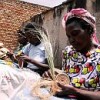
DEVELOPMENT: Peace Baskets Bring Hope to Rwandan Women
In the courtyard of a red brick home in the district of Gitarama outside Kigali, three women sit together on a bench, laughing and gossiping as they wrap lengths of crimson twine around a curl of bunched straw. While it may seem like little more then Rwandan tradition, these weavers represent an economic success the tiny landlocked country has earned by the hands of its women.DEVELOPMENT: Towards an 'Aid-Free' World?
Imagine the dawn of a day when development aid ministries in Europe are shut down because there are no countries left in the 'South' that depend on financial assistance from the 'North'.ECONOMY-NAMIBIA: Plans Afoot as Diamonds Dwindle after 100 years
Namibia’s once rich diamond deposits are dwindling after a century of exploitation, forcing miners to look for the hard stones offshore while the country’s fledgling cutting and polishing sector could shrink as fewer and smaller stones are found.TRADE-AFRICA: The Struggle Continues Over EPAs
The economic partnership agreements (EPAs) are being given a bad name for nothing, according to Ghanaian parliamentarian JB Danquah.CUBA: Shoring Up the Educational System
In the new school year, which begins next Monday, Cuba’s educational system will be trying out several changes aimed at overcoming the decline in the quality of teaching, blamed on a shortage of teachers and other problems.
DEVELOPMENT-ZIMBABWE: Ground Realities Stall Basket Fund Take Off
In 2006, there was shared concern among donors and women’s organisations over the fragmented approaches to gender and women’s empowerment programmes in Zimbabwe.
Q&A: "Where Women Can't Thrive, MDGs Are in Jeopardy"
Ines Alberdi has worked for over 25 years on gender issues and in politics.EDUCATION-MEXICO: Teachers and Students Failing Exams
Assessments of student performance at primary and secondary schools in Mexico have produced dismal results, as have evaluations of new teachers, who have to pass exams before being appointed to a teaching post.BRAZIL: Start of Landmark Case Bodes Well for Indigenous People
A Brazilian Supreme Court hearing on a landmark case got off on a positive footing for the indigenous people who live in the Raposa Serra do Sol reservation in northern Brazil.MEXICO: Conservatives Lose Key Battle Against Abortion
The Mexican government, Catholic Church and conservative groups lost a crucial battle Wednesday in their fight against abortion, which was legalised in the capital in April 2007.RIGHTS-SWAZILAND: Women Challenge King Mswati
Hard on the heels of the signing of the Gender Protocol at the Southern African Development Community (SADC) heads of state summit, Swazi women have challenged King Mswati III on the monarchy's lavish lifestyle in the face of abject poverty and disease.
DEVELOPMENT: Nepal Scrutinises Spending to Cap Gender Gaps
The period between 2002 and 2007, was marked with various political and economic changes in Nepal. As the government and the Maoist rebels fought a bloody war in the hinterlands, exports plummeted due to internal and international factors, investments by government and private sectors dropped due to instability caused by the war and agriculture stagnated. During this period Nepal’s average growth dropped from 5 to 2.9 percent.« Previous Page — Next Page »


