Languages
Saturday, November 14, 2026



News and Views from the Global South
Poverty & MDGs
HEALTH: Goal to Halt AIDS by 2015 Recedes Further
What if HIV/AIDS was just another chronic disease instead of a widespread epidemic? This could be the case if the world community takes serious action, according to Human Rights Watch and other activists. But today, the Millennium Development Goal (MDG) on HIV/AIDS is nowhere near being realised.DEVELOPMENT: Less Than Half of EU Aid Tackles Poverty
Less than half of development aid approved by the European Commission is explicitly linked to international objectives on reducing poverty, a new study has found.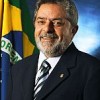
ANNOUNCEMENT: Brazilian President Wins IPS Award
President Luiz Inacio Lula da Silva of Brazil, who has successfully championed the cause of fair trade, social justice and economic equity for the developing world, has been named the winner of the Inter Press Service (IPS) International Achievement Award 2008.CLIMATE CHANGE: Chemical Lobby Weakening Ozone Treaty
In hard economic times, protecting the environment is often seen as a luxury - or ignored completely. But had that attitude prevailed 20 years ago when it came to taking action to protect the ozone layer, skin cancer rates would have soared and climate change would be even more dramatic than it is today.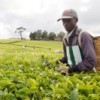
TRADE: Africa’s Export Performance Still Dismal, Says UNCTAD
Despite the liberalisation of trade over more than two decades, the level and composition of Africa’s exports have not substantially changed, according to the 2008 report by the United Nations Conference on Trade and Development (UNCTAD) on economic development in Africa.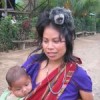
PERU: Birthing Houses Combine Native Traditions, Modern Medicine
"Ashaninka women give birth at home, in accordance with tradition," declares José Ponce, the head of the health committee in Puerto Ocopa, a village of 253 Ashaninka indigenous families deep in the central Peruvian jungle.
Q&A: Unravelling the Knots of Tied Aid
The forum on aid effectiveness in Accra has delivered "profound" decisions to change the way aid is structured, OECD Secretary-General Angel Gurria told IPS in an interview.
DEVELOPMENT-WORLD: What Is So Fair About Fair Trade?
Fair trade is held up as promoting fair prices for producers and guaranteeing social and environmental standards. These ideas are neither new nor controversial. But the recent boom in fair trade has drawn attention as standards and models multiply while authentication mechanisms lag behind.
INDIA: Empowering Women is About Basic Funding
Kudumbasree (Family Prosperity) is India’s one success story in getting down to the job of helping poor women take care of their own basic needs - from health care and housing to self-employment.
Q&A: Zimbabwean Women Have Had ‘‘More Trauma'' After Independence
Zimbabwean women have experienced higher levels of trauma, including violence and lack of food, after the country's independence from Britain in 1980 than before.ASIA PACIFIC: MDGs – Children Under Five Straggling
Children under five years across Asia and the Pacific are being left behind in the race to reduce poverty even as the region boasts impressive strides in meeting major United Nations development goals.
DEVELOPMENT-MALAWI: Irrigation Promises to Increase Food Security
Wyson Chandanga, a small-holder Malawian farmer from the northern district of Mzimba, does not care if the country receives enough rain this year. He is also not concerned on whether the rains come on time or not.
TRADE-SOUTHERN AFRICA: The Deal’s Signed But Where’s The Action?
Cross-border trader Florence Tjani is sceptical about the free trade agreement (FTA) recently signed by southern African states.POLITICS: U.N. Warns of Impending Development Emergency
The much-ballyhooed Millennium Development Goals (MDGs ) - which include the reduction of extreme poverty and hunger by 50 percent by 2015 - are being seriously undermined by food, financial and climate change crises.BRAZIL: Parties Fielding Too Few Women in Local Elections
There are still too few women on the lists of candidates for Brazil’s municipal elections in October - another example of the distance between political parties and society which has led to the loss of credibility of political institutions.BOLIVIA: “Twenty Families Are Obstructing Governability” – Expert
The Bolivian government's determination to hold a referendum, by presidential decree, on a new constitution that it hopes will "re-found" the nation as a "plurinational state," has ceded to pressure from the rightwing opposition. The vote has been postponed several weeks, and Congress will be setting the rules.
DEVELOPMENT-ETHIOPIA: Understanding Poverty's Impact on Children
When the school bell rings, Alemtsehay and her three younger sisters rush home to change out of their school uniforms and into tattered clothes to go out begging around Bole Road, one of Addis Ababa's smarter areas.
TRADE-KENYA: A Woman Navigating the Obstacles to the ‘Big Money’
‘‘I enjoy the trade,’’ says Sonia Gateri as she ushers me into her office next to the Yaya Centre in the Kenyan capital. It is a hot afternoon and she has been busy most of the morning, preparing for a trip to Tanzania later in the evening.ECONOMY: Increased Nuclear Energy Demand Boosts Namibia
The worldwide scramble for energy sources due to dwindling fossil fuel reserves has placed renewed emphasis on nuclear energy as solution for future needs. As a result, Namibia in south-western Africa is experiencing a uranium boom.AGRICULTURE-MALAWI: Going Against the Grain on Subsidies
In each of the past three growing seasons, the family of Bernadette Banda, in Chidambo village in the central region of Malawi, has doubled the maize harvest from the family plot, thanks to a government input subsidy programme.LATIN AMERICA: Food Price Hikes Hit Poor Hard – ECLAC
The countries of Latin America have coped relatively well so far with the rising global food and fuel prices. But the main challenge they face is to focus more attention on the plight of the poor, experts said at a seminar being held in the Chilean capital.« Previous Page — Next Page »


