Languages
Wednesday, November 18, 2026



News and Views from the Global South
Poverty & MDGs
HEALTH: Commonwealth Event Debates Why AIDS Wears “the Face of a Woman”
The issue of women continuing to be at higher risk of HIV infection than men has received considerable attention at a gathering of women's affairs ministers from Commonwealth countries underway in Uganda's capital, Kampala.ENVIRONMENT-SOUTH AFRICA: Land Returned in St Lucia World Heritage Site
A section of the world heritage site the Greater St Lucia Wetland Park, Africa's largest estuary, has been returned to its rightful owners, who have in turn undertaken to manage the land in accordance with the country's environmental laws.RIGHTS-SOUTH AFRICA: Back to the Land of Our Parents
‘‘Today we are here to say never again shall our people lose their land rights because they are black,'' said Lulama Xingwana, South Africa's minister of agriculture and land affairs.POLITICS-AFRICA: Continental Government by 2015?
Debate on the prospects for continent-wide government in Africa is heating up ahead of the African Union (AU) summit that is scheduled to begin Jun. 25 in the Ghanaian capital of Accra.CLIMATE CHANGE: Nobel Laureate Calls for Post-Kyoto Treaty
Large developing nations like China, India and Mexico should sign a new international treaty to curb climate change which must include economic penalties to clamp down on emissions of greenhouse gases, Nobel chemistry laureate Mario Molina said Wednesday.AGRICULTURE-BRAZIL: David, Goliath and Land Reform
The largest movement fighting for the distribution of unproductive rural property to landless peasant farmers in Brazil complains that the "euphoria" over the production of biofuels from sugar cane and other crops is aggravating the concentration of land ownership and driving up land prices.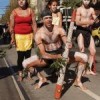
RIGHTS-AUSTRALIA: Too Little, Too Late for Lost Generation Aborigines
A decade after the release of the landmark 'Bringing Them Home Report' on the forced removal of indigenous children from their families - known as the Stolen Generations - the situation for indigenous Australians remains desperate.AGRICULTURE: 70 Percent of Worst Forms of Child Labour
The global campaign for the elimination of the worst forms of child labour by 2016 is focusing this year on agriculture, which accounts for 70 percent of such jobs, said Kari Tapiola, executive director of the International Labour Organisation (ILO).ENVIRONMENT-THAILAND: Seeing the Light With Solar Power
Till over a year ago, health officials worried over maintaining the cold chain for vaccines delivered to children on this island. These included the ten given to new-born Thais, such as those for polio, diphtheria, tetanus, Japanese encephalitis and tuberculosis.
ENVIRONMENT: Chile’s Biggest Freshwater Reserve Left Unprotected
Chile possesses vast freshwater reserves in its glaciers, but lacks laws to protect them. Lawmakers, farmers and environmentalists are calling for legislation to fill that gap.Q&A: “I Said to Myself, Why Not Create an NGO Focused on the Dignity of Women?”
Later this year, Salamatou Traoré - a leading health worker in Niger - will be awarded a five thousand dollar grant from the United Nations Population Fund (UNFPA) in recognition of her work to assist women who suffer from fistulas. She is one of three persons being honoured by the agency for their efforts to uplift women.PARAGUAY: Shooting Ranges, Munitions Depots Within City Limits
The humble dwellings of the Varadero neighbourhood in the Paraguayan capital still show signs of the devastating explosion that occurred three years ago in a navy arsenal located within a residential area.Q&A: “People Often Cannot Avoid Putting at Risk the Natural Resource Base Upon Which They Depend”
With the World Day to Combat Desertification set to take place shortly (Jun. 17), efforts are gearing up to highlight the threats posed by land degradation in much of Africa - as well as initiatives to safeguard against desertification.G8-AFRICA: Shortfall on Help in AIDS Fight ‘Devastating’
Although the Group of Eight industrialised nations agreed at their summit in Heiligendamm, Germany, to allocate 60 billion dollars to fight AIDS, malaria and tuberculosis in Africa, health activists say the treatment targets are much lower than originally pledged, which is "devastating news", especially for the millions of people with HIV/AIDS.
ENVIRONMENT-MEXICO: Emigration a Blessing for Biosphere Reserve
Pressure on natural resources and biodiversity in Mexico's Sierra Gorda Biosphere Reserve has been reduced as a result of the emigration of half its human inhabitants - some 50,000 people - to the United States.ENVIRONMENT-RWANDA: Unhappy Ending of a Welcome Return
The return in 1996 of over a million Rwandans who had fled their country in the wake of genocide two years earlier, fearing persecution at the hands of Tutsi rebels who took control of Rwanda, was greeted with relief in many quarters.BOLIVIA: Safe Abortion Nearly Impossible Even in Cases of Rape
Bolivia's constituent assembly has just two months left to finishing rewriting the country's constitution. In 10 months of sessions, it has approved a single article, regarding the right to hold football matches at high altitudes, in response to the International Football Federation's (FIFA) ban on high-altitude international matches.
G8: Much Talk, Too Few Results
This year's summit of the G8 heads of government will likely be remembered as a "how not to" organise such an event, for the contrast between the expectations it raised and its negligible accomplishments, and for its enormous security costs.CARIBBEAN: Leaders Seek Funds to Transform Agriculture
Convinced that agriculture holds the key to the socioeconomic development of the Caribbean, regional leaders have drawn up a project list totaling almost 300 million dollars for regional and international donors to help transform the sector.AFRICA: G8 Has Yet to Deliver on Aid Promises – World Bank
The industrialised nations of the Group of Eight are failing on the promises made in their previous summits to help Africa's economic development and to push for poverty alleviation for those struggling to survive on less than a dollar per day, say World Bank experts and development activists.G8: Health Over Intellectual Property Rights, Says G5
The Group of Eight industrialised countries suffered a setback Friday in its plan to strengthen intellectual property rights through "promoting innovation - protecting innovation" when the five developing world's leaders - China, India, Brazil, South Africa and Mexico - forced a key change in the final statement.« Previous Page — Next Page »


