Languages
Tuesday, August 4, 2026



News and Views from the Global South
Reproductive and Sexual Rights
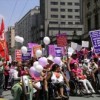
BRAZIL: Moves to Legalise Abortion Shut Down by Campaign
Politically awkward when it comes to negotiating alliances and congressional support from the right, the decriminalisation of abortion has been dropped from a Brazilian government human rights plan -- and from the election debate, even among candidates who have traditionally been open to the prospect.Pope Rewrites Epitaph for Legion of Christ Founder
The Vatican's decision to appoint a special delegate to run the Legion of Christ and to set up a commission to look into the order after more than a decade of allegations of sexual abuse by its founder has shaken the powerful ultraconservative Catholic order established in Mexico.Chile Shaken by Sex Abuse Allegations against Revered Priest
A small group of feminists demonstrated outside the Metropolitan Cathedral in the Chilean capital Thursday to express their condemnation of an influential Catholic priest accused of sexually abusing at least five teenagers.U.S.: Obama Criticised for Health Package Abortion Ban
The largest civil liberties group in the U.S. faulted President Barack Obama for signing an executive order on Wednesday that bans federal funds from being used for abortion procedures and revives funding for expired abstinence-only sex-education programming.RIGHTS-UGANDA: Bearing the Pains of Double Discrimination
They endure stigma, discrimination, violence and extreme poverty, but Ugandan women living with disabilities say the greatest challenge facing them centres on their reproductive health.HEALTH-US: Maternal Deaths on the Rise
Despite the fact that the United States spends more on maternal health than any other country in the world, deaths in childbirth among U.S. women are on the rise and already surpass the morbidity rates in most developed countries.
RIGHTS-MALAWI: Country Not Safe for Homosexuals
Malawi is quickly becoming unsafe for homosexuals as the country’s police service recently launched a campaign to hunt down and arrest prominent people who are suspected of being gay.EDUCATION-TANZANIA: Pregnant Teens Forced Out of School
Pregnancy is the leading cause of dropouts for school girls in Tanzania. And a national law forbidding young mothers to return to school after giving birth did not make it any easier for them to continue their education.
LATIN AMERICA: Abortion – Still Illegal, Still Killing, Despite Growing Awareness
Although most of the governments in Latin America today are described as progressive, abortion is only legal in one country, while in five countries it is banned under all circumstances, even when the mother's life is at risk.
RIGHTS: Rise and Fall of Gender Empowerment
The 45-member Commission on the Status of Women (CSW), presiding over one of the largest gatherings of women at the United Nations, listened Monday to dozens of speakers spelling out the successes and failures of gender empowerment worldwide.U.S.: Healthcare Should Include Abortion Access, Women Say
Last fall, the push to reform healthcare in the United States was all but hijacked by one of the country's most passionate recurring cultural debates.RIGHTS-GERMANY: ‘Catholic Church Protects Paedophile Priests’
The Catholic Church has for decades protected paedophile priests and clerics who sexually abused children from judiciary prosecution, according to German theologians, law experts, and internal church documents.RIGHTS: U.N. to Focus on Global Epidemic of Gender Abuse
The statistics relating to the world's socially and economically-distressed women are staggering.EUROPE: Fight Female Mutilation Harder Activists Urge EU
With hundreds of thousands of girls and women believed to be at risk of female genital mutilation (FGM) in Europe, rights groups have mounted a campaign to get EU leaders to stop what they see as a barbaric and dangerous procedure.RIGHTS: Nicaragua Refuses to Discuss Therapeutic Abortion
Nicaragua slammed the door on any possible debate on the restitution of therapeutic abortion - performed to save the life of the pregnant woman - despite demands that it do so voiced during a United Nations review of human rights in the country.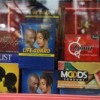
RWANDA: Efforts to Contain HIV/AIDS Among Teens Slacken
Eighteen-year-old David Kimenyi* is sure he infected his girlfriend with HIV. They had unprotected sex many times, even after he discovered he was HIV-positive.
Q&A: Creating Momentum for Women’s Participation
Women's movements have played a critical role in creating political space for female participation in politics around the world. In fact, there are more women in government today than ever before.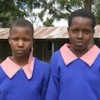
KENYA: Victory for Anti-Abortion Lobby
The threat by influential Christian leaders to mobilise a vote against Kenya's draft constitution if it does not explicitly prevent any expansion of abortion rights appears to have succeeded.INDIA: Mobilised by Old Clothes, Poor Folk Stand Up, Take Action
Salidhana village, a mere blip on the vast and arid landscape of India’s central state of Madhya Pradesh, was devoid of life’s most basic necessity – water. Until last year, there was no well in this hamlet of about a hundred families. Women would trudge hours daily to fetch water from distant areas, often losing their balance on the hilly village’s treacherous slopes.
ARGENTINA: Slow Progress in Cutting Maternal Deaths
Some 300 women a year die in Argentina of complications during pregnancy, childbirth or the postpartum period, from largely preventable causes. Many of the deaths result from unsafe abortions.CUBA: Wendy – Reconciling the Inner and Outer Image
It was as if she had only closed her eyes for a moment. When Wendy Iriepa came round after surgery over a year ago, she tried to get up as if nothing had happened, but a nurse gently pushed her back into bed. "All done?" she asked, and the nurse replied, "Yes."« Previous Page — Next Page »


The Week with IPS

NEXT STOP - SDGs
Tracking global progress towards a sustainable world
Tracking global progress towards a sustainable world
