Languages
Thursday, September 3, 2026



News and Views from the Global South
Reproductive and Sexual Rights
CUBA: Lesbians Demand Fair Treatment from Health Providers
Lesbian and bisexual women's groups in Cuba, which welcome anyone who wishes to participate "with solidarity and in a respectful, friendly and healthy manner," point to the need to sensitise health personnel to the issue of female sexual diversity.LATIN AMERICA: Violence Against Women Linked to HIV Risk
"My mother used to beat me. She would lock me away, and then she started chaining me to the table," says Elizabeth. Teresa recounts how she was seven months pregnant when her husband grabbed her by the hair, threw her to the ground and kicked her.
Q&A: Imagining Urban Life Without Catcalls or Rape
The U.N. Development Fund for Women (UNIFEM) launched an ambitious new initiative to improve the safety and wellbeing of women in five major cities Monday - New Delhi, India; Cairo, Egypt; Quito, Ecuador; Kigali, Rwanda; and Port Moresby in Papua New Guinea.
No Sex Education Please, We’re Arab
Civil society has warned of adverse social and health consequences after the Egyptian government ordered the removal of content related to male and female anatomy, reproductive health and sexually transmitted diseases (STDs) from the school curriculum.
AFRICA: Church Leaders An Obstacle To Preventing Maternal Deaths
The resurgence in religious fundamentalism and the inordinate influence of certain church leaders over public health policy present major obstacles to the prevention of needless deaths and injuries of women from unsafe abortion on the African continent.
Cancer Treatment Out of Reach for Ugandan Women
Josephine Adongo's heart leapt when she heard that two doctors from Kampala were offering free medical exams in Soroti. She was diagnosed with cervical cancer at a regional hospital more than a year previously, but unable to afford to travel to the capital for treatment.CHILE: Women Sterilised Over HIV Status
When Francisca arrived at the historic Curicó Hospital – a staple in the Chilean central valley for nearly one and a half centuries – for the birth of her first child, she didn't know it would be her only one.
Q&A: What the U.S. Undid for Women in Iraq
The U.S.-led invasion and then occupation of Iraq brought a sharp setback to the rights of women in that country, UNFPA head Thoraya Obaid tells IPS in an interview.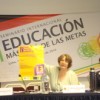
LATIN AMERICA: And Now For Non-Sexist Education
Women in Latin America have broken down barriers in education, and in several countries have more years of education than men. But the task now is to make sure that education reduces, rather than fuels, inequality between men and women.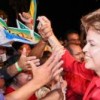
BRAZIL: Abortion, a Bargaining Chip in Campaign for Runoff
The issue of abortion has turned into a weapon that threatens to take away votes from the candidates in the campaign for the second round of presidential elections in Brazil, with conservative religious groups using it as a bargaining chip in exchange for their support.CUBA: Ten Years Fighting HIV/AIDS and Reaching Out to Gays
Raúl Regueiro remembers every detail about the creation, 10 years ago in Cuba, of the project for the prevention of HIV/AIDS among men who have sex with men, and the way the initiative crossed the boundaries of purely health-related concerns to address the question of social inclusion.Retraining Rwanda’s Traditional Birth Attendants
Two years spent training traditional birth attendants in remote rural areas has allowed Rwanda to reduce the country's maternal mortality rate, says the country's health department.
ARGENTINA: Activists File Writ of Habeas Corpus – for Legal Abortion
Heartened by the passage of a same-sex marriage law in Argentina, women's organisations in this South American country stepped up their demands for the legalisation of abortion, on the Day for the Decriminalisation of Abortion in Latin America and the Caribbean.MALAWI: Village Chief Leads Fight For Maternal Health
In Ntcheu, a rural district in central Malawi, villagers have taken the fight against the country's high maternal mortality rate into their own hands. They have almost eradicated maternal deaths in the area by urging pregnant women to give birth in hospitals, under medical supervision.
CUBA: Men’s Group Champions “Diverse Masculinities”
Men representing an array of sexual identifications have organised in Cuba to defend sexual rights and promote respect for "other masculinities," with the belief that greater visibility is needed to achieve true social change and acceptance.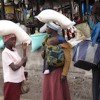
AFRICA: Women Traders Confronting Sexual Harassment at Borders
Harassment and sexual exploitation by border officials seeking bribes constitute the biggest obstacles for female informal cross-border traders in Africa, according to a United Nations Development Fund for Women (UNIFEM) research study.
WHO – Maternal Deaths Fall
The number of women dying from pregnancy related causes around the world is falling. Sub-Saharan Africa remains one of the most dangerous place for pregnant women, despite recording a 26 percent reduction in maternal mortality rates.SOUTH AFRICA: CSOs Urge Binding Commitment on Socio-Economic Rights
A grouping of six civil society organisations (CSOs) has called on the South African government to ratify the International Covenant on Economic, Social and Cultural Rights (ICESCR).COTE D’IVOIRE: More Births Attended By Skilled Attendants
As she leaves the community health centre in Abobo-Baule with her newborn baby, Abiba Tahoué is doubly satisfied.
FILM-CUBA: “I Fought for This, But Not Just to Be a Housewife”
Mavi Susel, the first transsexual in Cuba to undergo sex reassignment surgery, back in 1988, has found herself trapped in the traditionally assigned gender role of a housewife.AFRICA: Maputo Protocol a Work in Progress
Kenyans are still euphoric over the referendum endorsing a progressive new constitution; but the heat generated by its opponents around their main rallying point - abortion rights - is a reminder of the wide gap between law and implementation in Africa, particularly when it concerns women's rights.« Previous Page — Next Page »


The Week with IPS

NEXT STOP - SDGs
Tracking global progress towards a sustainable world
Tracking global progress towards a sustainable world
