Languages
Sunday, October 11, 2026



News and Views from the Global South
Science and Technology
Cancer Surge Getting Short Shrift in Developing World
Although long treated as a problem exclusive to high-income and developed countries, cancer is also a major cause of mortality in the developing world. A group of leading cancer and global health experts is now calling for new strategies to effectively prevent and treat cancer in poor countries.
BIODIVERSITY: An Ocean of Crustaceans
What lives in the world's oceans? Crabs mostly, according to the Census of Marine Life, a 10-year research effort.
AFRICA: Modified Banana Could Cure Deadly Disease
An innovation by researchers in Nigeria could be a cure for the devastating Banana Xanthomonas Wilt (BXW) - responsible for annual losses in excess of 500 million dollars of crop across East and Central Africa. But it has also fuelled debate on the genetic engineering of crops in Africa.
EAST AFRICA: Deadly Cactus Good for Animal Feed
Joseph Ole Morijo is baffled by research findings that cactus plants can be used as animal fodder during drought. Not after he lost his entire herd of 152 goats and sheep to the said plant.COSTA RICA: Working Towards Carbon Neutrality
With the elimination of certain taxes and the implementation of several green initiatives, Costa Rica is pressing forward in its aim to promote sustainable energy generation with a view to achieving "carbon neutrality" by 2021, the year this country will celebrate two centuries of independence.
Developing More Top African Women Research Scientists
In a tiny village near Kisumu city in Kenya, scientific researcher Mary Anyango Oyunga spends most of her time educating women about something they have always done – grow sweet potatoes.
Scientists Deeply Concerned About BP Disaster’s Long-Term Impact
Contrary to recent media reports of a quick recovery in the Gulf of Mexico, scientists and biologists are "deeply concerned" about impacts that will likely span "several decades".Ocean Losing Its Green
The oceans are the lifeblood of our planet and plankton its red blood cells. Those vital "red blood cells" have declined more than 40 percent since 1950 and the rate of decline is increasing due to climate change, scientists reported this week.Bricks in Brazil – Eco-Friendly, Low-Cost and Cool
Clay or earthen bricks could help to alleviate the housing shortage in Brazil because of the lower cost of brick buildings, while an innovative process for producing what are known as "ecological bricks" can avoid the environmental harm arising from more usual building materials.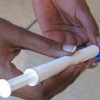
AFRICA: Antiretroviral Gel Lowers HIV Infection and Offers Hope to Women
When women from the predominantly rural Vulindela district in KwaZulu-Natal first began participating in an HIV-prevention trial many were unable to negotiate the use of condoms or even discuss safe sex with their partners. But as they used the discreet antiretroviral (ARV) microbicide gel, for the first time women - who bear the brunt of the HIV epidemic in Africa - were in control of an HIV-prevention method.BURMA: Loophole Gives Junta Room to Go Nuclear in Secrecy
Thanks to a loophole in the international regime to control the proliferation of nuclear weapons, military-ruled Burma could very well carry out its reported intent to go nuclear behind a veil of secrecy, free of scrutiny from the International Atomic Energy Agency (IAEA).Sustainable Aquaculture Picks Up Steam
As farmed fish consumption catches up on wild, a search for sustainable aquaculture picks up steam.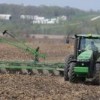
New Weather Patterns Threaten U.S. Breadbasket
Climate change is expected to disrupt agriculture in the U.S. Midwest, with high carbon dioxide promoting crop growth but stronger storms, drought, floods and migrating yields dampening yields.EDUCATION: Taking Science into the Streets
A group of 80 students, broken into smaller groups with their notebooks in tow, troop through the boroughs of New York City to survey the produce that populates farmers' markets and grocery stores in their neighbourhoods. Across the world, a similar image emerges in Dar es Salaam, Tanzania, where female students are learning to grow edible mushrooms in their villages.ZAMBIA: “Privatisation Like Grabbing Goods Fallen from a Truck”
Zambia has sold more than 262 state-owned enterprises in the past 18 years, with the latest being the beleaguered telecommunications company Zamtel.HIV Vaccine Advances Made Ahead of Global Conference
In 1984, then-U.S. Secretary of Health and Human Services Margaret Heckler famously declared, "We hope to have such a vaccine ready for testing in approximately two years." The vaccine in question would prevent AIDS and the goal Heckler set has been missed by over 26 years.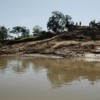
Bolivian Lowlands Get Life-Saving Flood Warning System
An early warning system to alert people living in the lowlands of the northern Bolivian department of Beni about imminent flooding of the mighty Mamoré and Ibare rivers is saving lives, food and goods, and overcoming the uncertainty that led to enormous losses in the past.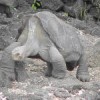
GALÁPAGOS: The Return of the Giant Tortoise
The historic reintroduction of giant tortoises is under way on Pinta Island, where not a single one of the famous animals that gave their name to the Ecuadorian archipelago of Galápagos remained.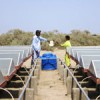
PAKISTAN: Water Trickles Back into Village, Thanks to Solar Desalination
Ismail Achar never thought a day would come when his island village would be reduced to a barren tract of land with hardly a drop of water to drink.Gulf Spill Could Produce Wealth of Scientific Knowledge
Eventually, the oil spewing from the ruptured well of BP's Deepwater Horizon offshore rig will stop. And some time after that the bulk of the mess will be cleaned up. By then, though, the amount of damage done to the Gulf of Mexico may be catastrophic - but will we know just how catastrophic?SOUTH-EAST ASIA: Leper Colonies on the Road to Extinction
The Culion island, in the western Philippines, is increasingly becoming a magnet for tourists drawn to its corals in the shallow waters close to its shore, its deep green hills and its ancient Spanish fort.« Previous Page — Next Page »





The Week with IPS

NEXT STOP - SDGs
Tracking global progress towards a sustainable world
Tracking global progress towards a sustainable world
