Languages
Friday, October 9, 2026



News and Views from the Global South
Science and Technology
JAPAN: Difficult Shift From Aid Donor to Recipient
April has traditionally been the time for ‘hanami’, or cherry blossom festivals, when millions of Japanese hold parties under the pink flowering trees in parks and streets lit up gaily by lanterns.
Israel Leads the Electric Charge
A woman takes the driver's seat, turns on the radio, sliding through broadcasts of the tit-for-tat battles between Israel and the Palestinian Islamist movement Hamas till she finds a quiet music station.
Antarctic Penguin Population Declines with Krill
Two species of Antarctic penguins have declined sharply over the past 30 years as their chief food source has been devastated by a combination of other predators, over-fishing, and rapidly melting sea ice caused by global warming, according to a new study released here Monday by the National Academy of Sciences.
HEALTH-COLOMBIA: Controversy Still Surrounds Malaria Vaccine Pioneer
The announcement of progress towards making synthetic vaccines against 517 infectious diseases, and the award of an international prize for his work have stirred up lively controversy around Colombian pathologist Manuel Elkin Patarroyo, a malaria vaccine pioneer.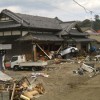
EXCLUSIVE: Report from Fukushima
 My decision to visit Fukushima - the area worst hit by the massive quake, tsunami and nuclear power accident on Mar. 11 - was taken one afternoon last week after a long meeting with scientists.

WORLD HEALTH DAY-BRAZIL: First Map of Clusters of Antibiotic Resistance
Scientists in Brazil have created the first map of clusters of antibiotic resistance in Brazil, linking the phenomenon to abuse of the drug and opening doors to guide public policies for antibiotic prescription and sales.CLIMATE CHANGE: Uncertain Future of Kyoto Protocol Alarms Green Groups
With just seven months to go before a pivotal U.N. climate change summit in South Africa, green groups are raising the alarm here about the future of the Kyoto Protocol, the world’s only international treaty that mandates most industrialised nations to cut their environment polluting greenhouse gases (GHG) to save the planet from overheating.
UGANDA: Sun Smiling on Renewable Energy Initiative
Clementine Auma was still living in a displaced person's camp in Gulu district when she acquired the treasure she's gone into the house to fetch. She re-emerges from her home with a white box in her arms: a solar oven.JAPAN: Disaster Highlights Economic Vulnerability
As authorities struggle to control dangerous radioactive material spilling from the quake ravaged Fukushima nuclear power reactors, a more difficult question has begun to unsettle Japan: is the country’s post-war prosperity as invincible as was believed till now?INDIA: Fukushima Revives Debate Over Nuclear Liability
The Fukushima disaster has prompted calls to review legislation passed by the Indian parliament in August 2010 that capped compensation payable, in the event of a nuclear accident, at 320 million U.S. dollars.AUSTRALIA: Pushing Uranium Exports Despite Japanese Crisis
Many countries view nuclear energy as a way to meet growing electricity demands without releasing large amounts of greenhouse gasses. And as a major uranium exporter, Australia is keen to capitalise on future opportunities despite the ongoing nuclear emergency at Japan’s Fukushima reactors.JAPAN: Working Poor Hardest Hit By Disaster
When the massive Tohoku quake struck on Mar. 11, Yayoko Shinohara, owner of a small grocery store on the main shopping street of the now devastated Namie town, grabbed the day’s earnings and escaped to safety with her husband.SOUTH AFRICA: Who Says Research Can’t Be Dramatic?
In the early 1990s, a group of researchers set off for a small rural village in the eastern part of South Africa. Their intention was simple: teach the community how to rehydrate sick babies.
TAIWAN: Opposition Urges Nuclear Phase-out By 2025
Opposition Democratic Progressive Party (DPP) Chairwoman and former Vice Premier Tsai Ing-wen have announced a proposal for a "2025 Non-Nuclear Home Plan" that would allow Taiwan to eliminate reliance on nuclear power by the end of 2025.SOUTHEAST ASIA: Despite Japan’s Crisis, Vietnam Aims to Win Region’s Nuclear Race
Vietnam’s race to build nuclear power plants has barely skipped a beat despite the troubling scenes unfolding in Japan, where a nuclear nightmare has gripped the country for over a week. It places the Southeast Asian nation at odds with its regional neighbours who have similar plans but are urging caution.JAPAN: Vulnerability and Uncertainty Prevail In Wake of Nuclear Disaster
Accidents at four nuclear power reactors hit by the earthquake and tsunami in Fukushima have left thousands of residents in the vicinity facing an uncertain future as they prepare for evacuation orders to protect them from dangerous radiation contamination.
INDIA: Engaging Africa With Software and Soft Power
India cannot match China’s massive investments in Africa, but it is using its information technology capabilities and its affordable university courses to stay relevant on the continent.CHINA: Sympathy for Japan Drowns Out Historic Hate
Despite deep historic tensions between the two Asian powers, a surge of sympathy has emerged among Chinese toward victims of last week’s earthquake and resulting tsunami in northern Japan, which has left an estimated 10,000 dead or missing.
TAIWAN: Public Demands Safety Review of New Reactor
The unfolding disaster at Japan’s Fukushima Daiichi Nuclear Power Plant has reignited debate over Taiwan’s own nuclear power programme and the controversy over continuing construction of a fourth nuclear facility here.
JAPAN: Food and Gasoline Shortages Plague Nuclear Exclusion Zone
For the past three days Hiroko Oogusa, 62 - following orders from the local authorities - has remained in her tightly shuttered home located 40 kilometres from the badly damaged Daiichi nuclear power plant in Fukushima.Japan’s Nuclear Nightmare Triggers Fears in France
Until the nuclear crisis started unfolding in Japan last week, most French citizens did not doubt that the country's 58 nuclear reactors were safe enough to continue operating for scores of years to come.« Previous Page — Next Page »





The Week with IPS

NEXT STOP - SDGs
Tracking global progress towards a sustainable world
Tracking global progress towards a sustainable world
