Languages
Sunday, October 11, 2026



News and Views from the Global South
Science and Technology
VIETNAM: Communists Gag the Web
By clamping down on the Facebook.com social networking service, Vietnam’s ruling Communist Party is revealing its discomfort with the rapidly expanding avenue for free expression even as it pushes to transform the once poor agrarian nation into a modern industrial society by 2020.
INDIA: 100-Dollar Laptops Bring In Distant Kids
Responding to the lack of computer training in Mukteshwar’s schools, Veena Sethi, a retired Delhi University professor, set up two used personal computers in the basement of her home with the aim of bringing the basics of computing to school children.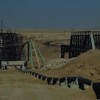
ECONOMY: Namibia Embarks on Nuclear Policy
Namibia is set to develop its rich uranium resources and intends to pursue uranium enrichment locally. It also plans to build its own nuclear electricity plant.
BRAZIL: Resilient Plants Could Hold Key to Adapting Agriculture
A vision of "the Apocalypse, everything burnt, turned black from ashes and smoke," was what photographer Mila Petrillo saw when she returned in October to what had been her Eden in the Brazilian municipality of Alto Paraiso, 230 km from Brasilia.
Cassava Combating Rural Hunger in Zambia
In Zambia, a silver lining has emerged for widespread rural hunger and poverty, thanks to homegrown agricultural research. Local scientists have successfully developed four new, early-maturing and high- yielding cassava cultivars in an ambitious research project conducted in the cassava-rich Luapula Province, under the on-going Root and Tuber Improvement Programme (RTIP).
BRAZIL: Climate Change Means New Crop Health Concerns
Farming around the globe, already reeling from drought, heat waves and major storms, will have to prepare for the new challenges that global warming will bring, especially in the form of pests and disease.
FOOD CRISIS: Two New Varieties of Vegetables on Kenyan Food Market
Agriculture remains one of the most significant economic activities in Kenya. It accounts for over 24 percent of Gross Domestic Product (GDP) with an estimated 70 percent of total production coming from small scale farmers who typically have about 2-5 acres of land, depending on the region.
CHINA: Researchers Race Toward Renewable Energy
Researchers in China, the world’s leading provider of wind turbines and solar panels, are working toward making renewable energy cheaper, more efficient and a bigger part of the country’s power grid.
SOUTH AMERICA: Rain May Disappear from the World’s Breadbasket
South America still has vast extensions of land available for growing crops to help meet the global demand for food and biofuels. But the areas of greatest potential agricultural production -- central-southern Brazil, northern Argentina, and Paraguay -- could be left without the necessary rains.
JAMAICA: Priceless Native Plants Vanishing in the Wind
The recent successes of local medicinal researchers have turned the spotlight on local laws that fail to protect Jamaica's rich biological diversity.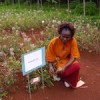
AGRICULTURE: Kenyan Researchers Say Traditional Vegetables Can Improve Food Security
According to Vision 2030, which is a government strategic plan on how to boost growth and development in Kenya, there are an estimated five million out of an estimated eight million households who depend directly on agriculture, despite the fact that agriculture continues to be one of the most under-budgeted ministries.
HEALTH: Scientists Focus on Male Mosquitoes in Bid to Control Malaria
After successfully suppressing scourges of fruit, tsetse and screwworm flies in the Americas, researchers are exploring whether the same sterilised insect technique can be used to control malaria, which kills some one million people every year, many of them in Africa.COLOMBIA: Climate Science Reaching Out for Traditional Farmers’ Wisdom
The wide-ranging knowledge about climate variation possessed by native people and other small farmers, such as the people in one region of Colombia, is almost a perfect match to scientific measurements recorded on high-tech instruments.
CLIMATE CHANGE: Will Year of Extremes End with a Whimper?
This year will likely be the warmest ever recorded, with soaring ocean temperatures resulting in a near record die-off of tropical corals, extreme heat and drought in Russia and massive flooding in Pakistan - all signs that climate change has taken hold.
DEVELOPMENT: Economic Boom Worsened De-industrialisation of LDCs
Least developed countries (LDCs) in Africa did not use the commodity export boom of the mid-2000s to diversify their economies from commodity dependence to manufacturing value-added products. Significantly, the agricultural sector has also not benefited, with the result that LDC reliance on imported food has become even worse.
AFRICA: New Drugs To Speed TB Treatment
Researchers are testing a new combination of tuberculosis drugs on patients in South Africa which they are hoping will shorten the treatment term of the disease to six months.PHILIPPINES: When A Typhoon Comes, Turn to Twitter
Disaster time is social networking time for a growing number of humanitarian agencies, weather agencies, volunteers and individuals in the Philippines, one of the most disaster-prone countries in the world.HUMAN RIGHTS: Reading the Bones
Created with the aim of recovering the remains of the victims of forced disappearance from Argentina's 1976-1983 dictatorship, the Argentine Forensic Anthropology Team has already worked in 40 countries and is expanding the scope of cases that it investigates.Tackling Climate Change Could Save Biodiversity
A major change in the direction of economic development is essential to avoid the catastrophic unraveling of Earth's ecosystems that support all life, a new global analysis published in the journal Science revealed Tuesday.
CLIMATE CHANGE: Geoengineering for a Desperate Planet
Delegates to the world summit on biodiversity here are calling for a moratorium on climate engineering research, like the idea of putting huge mirrors in outer space to reflect some of the sun's heating rays away from the planet.
Cuba, Brazil Unite for Africa’s Health
The risk of meningitis outbreaks rises during the dry season -- December to June -- in some 20 countries of sub-Saharan Africa. Meningitis in the region is too often deadly, though the disease can be prevented with vaccination.« Previous Page — Next Page »





The Week with IPS

NEXT STOP - SDGs
Tracking global progress towards a sustainable world
Tracking global progress towards a sustainable world
