Languages
Thursday, June 25, 2026



News and Views from the Global South
The Information Society
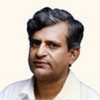
Q&A: 'Media – Most Exclusionist Institution in India'
Palagummi Sainath, winner of this year’s Ramon Magsaysay award in the category for journalism, literature, creative communication and arts, believes that while India has a free press there is a growing disconnect between mass media and mass reality, arising from monopolistic trends.RUSSIA: Murder Arrests Unconvincing
The public announcement by Russian prosecutor-general Yury Chaika last week that ten people have been arrested in connection with the killing of journalist Anna Politkovskaya has called into question the effectiveness of the justice system.MEDIA-THAILAND: Junta Tightens Computer Crime Laws
Thailand’s military-backed government lifted a ban on the popular video-sharing website ‘YouTube’ and passed an easier printing act this week, but newly tightened computer crime laws suggest that free expression is still being stifled.BURMA: Junta Exposed by Information Technology
As public protests in Burma enter a second week, Burmese journalists living in exile and other expatriates are finding new appreciation for the marvels of modern communication and information technology.BALKANS: Media Bowing Under Pressure
The ways of Serbian media have come into focus again after the Organisation for Security and Cooperation in Europe (OSCE) declared earlier this week that Serbian media must practise professionalism and respect human dignity.MEDIA-AFGHANISTAN: Reporters Put Life on Line
The media in conflict-scarred Afghanistan is under increasing attack from Taliban forces and powerful social interests.MEDIA-US: How Iraq War Backers Morphed Into “Critics”
Sep. 15 is the deadline for the George W. Bush administration to submit a report to Congress defending its Iraq "surge strategy", an escalation of more than 30,000 U.S. troops designed to increase security in the war-torn nation.MEDIA-MOROCCO: Censorship Begins At Home
A new press law has created a regulatory council comprising journalists that some fear could lead to censorship by media persons rather than the government.MUSIC-CUBA: Rap Calls for ‘Revolution Within the Revolution’
In makeshift studios, Cuba’s hip hop movement keeps on recording music that goes to the heart of the country’s troubles, in spite of the indifference of record companies and the media, and the negative response of society, which is perhaps afraid of hearing its defects exposed in song lyrics.
THEATRE-US: Million-Dollar Media Yields Cheap Thrills
Two Broadway plays showing here expose how the media and its stars, at both the high and the low end, manipulate politics to turn news stories into emotional confrontations.
CULTURE: It All Begins With a Webcam and a Smile
Imagine rolling out of bed, sprinting to class in your pyjamas and meeting face-to-face with friends in Egypt, the Netherlands, Belgium and Morocco.LABOUR-SINGAPORE: Migrant Workers’ Dramatic Quest for Equality
For 12 years Siti Muyasaroh slaved as an underpaid and overworked housemaid in this affluent South-east Asian nation. Still, during that time, she completed a nursing aid course and acquired a diploma in business English from a British university.POLITICS-US: Polls Find Broad Support for Greater Altruism
The U.S. public rejects the idea that the United States should revert to a more isolationist foreign policy, but expresses dissatisfaction with the current role of the U.S. in the world and the destabilising effect it is having, concludes a compilation of recent public opinion polls.MEDIA-US: Murdoch’s Expanding Empire Seen as “Ominous”
Australian media mogul Rupert Murdoch added one of the most respected brands in journalism to his already vast media empire this week, gaining enough support from the deeply divided Bancroft family to buy Dow Jones & Company, publisher of the Wall Street Journal, for 5 billion dollars.PAKISTAN: Devastating Floods Fail To Move Media
"Media is not interested in human suffering where the process of death is slow," lashes out Sadiqa Salahuddin, director of the Indus Resource Centre, a non-governmental organisation (NGO), working in the flood-affected area of Sindh, in Pakistan.DEATH PENALTY: Two Kurdish Journalists on Iran's Death Row
Kurdish human rights and political groups have launched an Internet campaign to save the lives of Adnan Hasanpoor and Abdolvahed (Hiva) Bootimar, two Iranian Kurdish journalists who were sentenced to death on Jul. 16 by a revolutionary tribunal in the Iranian Kurdish city of Marivan.ELECTIONS-LATAM: Brains Behind Dirty Campaigns Go Global
Consulting firms notorious for orchestrating aggressive attacks on opponents in electoral campaigns, especially in Mexico and the United States, have been much in demand in Latin America in recent years.MEDIA: Poverty, Development Goals Hard Subjects to Tackle
Water used to be carried home, usually by women, in large jugs, as is still the case in many poor countries. But now that many people around the world have piped water, they go to the supermarket to buy bottled water.
FILM-US: A Blurry Line Between Propaganda and News
A shocking thing happens midway through Norman Solomon's documentary film "War Made Easy".LATIN AMERICA: Enterprising Women Network for Support and Success
Martha Elena González worked hard to make a success of her small family bakery, like many other women in Tegucigalpa, the capital of Honduras. But she only got the support she needed when she met another woman over the Internet, who was carrying out a project of her own thousands of kilometres to the south.POLITICS: Most Muslims Reject Extremism
Growing numbers of Muslims in the Middle East and in predominantly Muslim countries in Asia and Africa are rejecting "Islamic extremism" and the use of suicide bombing, according to a new 47-nation global attitudes survey released by the Pew Research Centre on Tuesday.« Previous Page — Next Page »


The Week with IPS

NEXT STOP - SDGs
Tracking global progress towards a sustainable world
Tracking global progress towards a sustainable world
