Languages
Monday, November 9, 2026



News and Views from the Global South
The Information Society
MEDIA-U.S.: Won’t Get Fooled Again?
When U.S. Homeland Security chief Tom Ridge stood in Washington last Sunday to warn that some of the country's largest banks were being targeted by al-Qaeda terrorists, the mass media splashed the news on front pages and television screens - despite recent well-known intelligence failures in the "war on terrorism."COMMUNICATION-BRAZIL: The Voices of the Homeless
"Boca de rua" is a unique newspaper, written and sold by the homeless in this city in southern Brazil, bringing together the exceptional stories of people who seek to rejoin society and reclaim their rights in adverse conditions.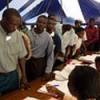
RIGHTS-ZIMBABWE: Media Environment Bodes Ill for 2005 Poll
When two reporters and a lawyer traveled to Zimbabwe recently on a fact-finding mission, they found it a journey of the most arduous kind.MEDIA-MALAYSIA: New Premier Dashes Any Hope for Press Freedom
New Malaysian Prime Minister Abdullah Ahmad Badawi has dashed hopes of easing the country's media restrictions despite calls made by editors of Malaysia's tightly-controlled press to repeal draconian laws affecting publications.MEDIA: Radio Activists ‘Tune In’ Brazilian Neighbourhoods
Last Sunday, people attending the weekly artisans' market in Farropilha Park made themselves heard far beyond shouting distance in the neighbourhood in the centre of Porto Alegre.CUBA-US: War of the Airwaves
The long history of broadcasting clashes between Cuba and the United States has entered a new chapter with the White House granting fresh funds to Radio and TV Martí, stations created by the U.S. government to broadcast anti-Castro programming from U.S. territory.AMERICAS SOCIAL FORUM: The Media – the First Power?
The media are the first power in Brazil, because they define the agenda for the government, said Brazilian theologian and writer Frei Betto Monday, the first day of debates at the I Social Forum of the Americas.RIGHTS-US: Activists Win Billboard Battle, Not Free Expression War
Anti-war messages are going up in Manhattan's Times Square in time for the Republican Party convention in August after the company that owns the billboards, media giant Clear Channel, backed down from its refusal to carry them.MEDIA: Yes Means no for al-Jazeera in Canada
Canada's broadcast regulator has approved Qatar-based news channel al-Jazeera for the country's digital cable TV market, but with censorship rules that are so stringent it is unlikely to be carried in this country, say television executives.FRANCE: Defence of Media Takes On a New Meaning
French entrepreneur Serge Dassault was known until recently for selling military equipment, particularly aircraft. But since late June he has become the most powerful newspaper publisher in France, and is now trying to extend his influence into television.MEDIA: Newsrooms Pale in Contrast to Diverse U.S. Society
The world of journalism is much whiter than the world it represents, according to two media industry studies.COMMUNICATION-EUROPE: Cities Begin to Look Away from Microsoft
Many European public administrations are distancing themselves from the U.S. software giant Microsoft and turning to free software.MEDIA-EAST TIMOR: Filmmaker Wants to Drive Away Past Devils
Documentary filmmaker and cameraman Max Stahl - whose images of the 1991 Dili massacre in East Timor moved the world into taking action against Indonesia - is back in the fledgling nation to help the East Timorese deal with their past violent history and pave the way for healing and reconciliation.RIGHTS: U.S.-Backed Tunisia Isolating Political Prisoners – Report
The North African nation of Tunisia is holding in isolation as many as 40 leaders of a moderate Islamist movement, who are among 500 political prisoners in the country chosen by U.S. President George W Bush as the base for his plan to democratise the Middle East, says a new report by Human Rights Watch (HRW).COMMUNICATIONS: Junk E-Mail Is ‘Epidemic’
All hopes invested in the ''information society'' could be dashed if current - and ever-increasing - abuses of the Internet and electronic mail persist, say experts meeting here this week.COMMUNICATION: Clue Offered to Knowing Your Pesticides
A curious court action Wednesday gave Friends of the Earth the right to tell people where to look for information on some pesticides - but not to offer the information.MEDIA-U.S.: Activists Remain Vigilant After Major Court Win
Public interest groups scored an almost total victory in a lawsuit to overturn changes by the U.S. Federal Communications Commission (FCC) that had loosened media ownership rules, but they say the fight against market consolidation is far from over.SPECIAL REPORT: The ‘Prop-Agenda’ at War
In an interview with Arabic broadcaster al-Jazeera, President Bush's national security adviser Condoleezza Rice said in 2001 that she did not want U.S. networks to show Osama bin Laden tapes because "it was not a matter of news, it was a matter of propaganda."MEDIA: The Price of Surfing Can Be Prison
When he downloaded some material on Syria and emailed it to his friends, Abdel Rahman al-Shaghouri did not think he would end up in prison.RIGHTS-THAILAND: Thaksin Goes For Jugular in Libel Case
Supinya Klangnarong was able to summon a smile hours after a court decided that she will have to face the wrath of the business empire owned by Prime Minister Thaksin Shinawatra's family - Shin Corporation.RIGHTS-NIGERIA: Freedom of Information Bill Proves Elusive
In recent decades, Nigeria has acquired the unhappy reputation of being one of the world's most corrupt states. It would also earn a high ranking in a list of the most secretive nations.« Previous Page — Next Page »





The Week with IPS

NEXT STOP - SDGs
Tracking global progress towards a sustainable world
Tracking global progress towards a sustainable world
