Languages
Saturday, October 17, 2026



News and Views from the Global South
West Africa

SENEGAL: Small-Scale Irrigation: Key to Rural Development
Over the past four years, the Local Small-scale Irritation Project has spent more than $10.5 million U.S. dollars supporting rural communities in Senegal.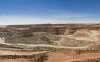
ENVIRONMENT-NIGER: French State-Owned Company “Poisoning” Poor
Recent research by Greenpeace suggests that French state-owned company Areva’s public claims of decontamination of populated areas near uranium mines in Niger are false. High radio-activity persists in towns and rural areas near the mines, affecting some 80,000 people.MALI: Shea Production Vital to Women’s Incomes
Across the semi-arid Sahel region of West Africa, the shea tree prized by women, who produce a butter from its nuts that is a key ingredient in food and cosmetics. However, drought and diseases threaten this source of income.GHANA: Political Parties Urged to Come Clean
There are growing fears that lack of transparency on how political parties are being funded has given rise to corruption.SIERRA LEONE: Plan For Sanitation Rests with Community
Lying forgotten in the bush somewhere is a sign declaring "Ogoo Farm is an open defecation-free community."
NIGER: Livestock Herders Plan Ahead
The cows Djibo Hama looks after belong to someone else, but he is diligent. Anticipating a severe shortage of good grazing in 2010, he secured cattle feed for the 35 that remain.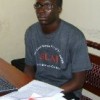
RIGHTS-SIERRA LEONE: Journalists Under Attack
Sierra Leone has become a place of torment for journalists practicing their profession.SIERRA LEONE: No Easy Road to Reconciliation
Former child soldier Komba Gbondo maimed and killed many people from his hometown, and the 25-year-old is still too terrified to return.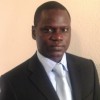
Q&A: EPAs Are Still Not Developmental, Despite EU Promises
The contentious trade deals known as the economic partnership agreements (EPAs) will in their current form not do African countries any good as they still do not take those countries’ development needs into consideration, despite such an undertaking by the European Union (EU).ECONOMY-SENEGAL: ‘Only The Rich Get Loans’
Despite the financial sector boom in Senegal, small and medium sized businesses (SMBs), which represent over 90 percent of the industrial fabric of the country, struggle to access funding for their development, their representatives claim.WEST AFRICA: Stopping the Polio Virus
The World Health Organisation (WHO) and its partners hope to eliminate the circulation of the polio virus in West Africa as soon as June by launching the first round of national synchronised immunisation days against the debilitating disease.EDUCATION-SIERRA LEONE: Government Ignores Demands for Additional Teachers
Ismail Conteh has been teaching for the past year-and-a-half at a primary school in Sierra Leone’s capital Freetown – without receiving a single cent. He is one of hundreds of teachers recruited by schools to match the ever-growing number of pupils.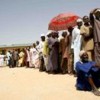
POLITICS-NIGERIA: In the Shadows of Men: Women’s Political Marginalisation
Ten years after Nigeria returned to civil rule women still play second fiddle in the male-dominated politics of Africa’s most populous nation, women politicians and activists say.DEVELOPMENT-CAMEROON: Are Women the Magic Bullet for “Electoral Apathy”?
A support network for women's political participation, is challenging head-on what it calls "electoral apathy", after noting a growing trend in electoral abstention.HEALTH-SOUTH AFRICA: Five Years to Children Born Free of HIV
A world where all children are born free of HIV infection is possible in only five years if donors continue to fund global efforts to combat the virus.POLITICS-NIGER: First Steps Towards the Restoration of Democracy?
As its promised transition to democratic rule begins, the military junta that overthrew Nigerien president Mamadou Tandja on February 18 has named a former information minister, Mahamadou Danda, as the new prime minister while retaining legislative and executive powers for itself.
COTE D’IVOIRE: Crisis Within a Crisis Delays Elections Again
A week after President Laurent Gbagbo dissolved the government and the electoral commission, thousands marched in the city of Bouaké, damaging cars and shops. There have been almost daily demonstrations in cities across the country as Côte d'Ivoire's political crisis deepens.POLITICS-TOGO: First Female Presidential Candidate
Brigitte Kafui Adjamagbo-Johnson, head of the opposition Democratic Convention of African Peoples party, is Togo's first female presidential candidate. But she has withdrawn from the electoral process.
COTE D’IVOIRE: Policy Changes Revive Poultry Industry
Ivorian poultry producers are enjoying strong growth thanks to the imposition of a tax on imports of poultry products from the European Union and South America.GHANA: Constitution Under the Knife
After 18 years of successful multi-party democracy, Ghanaians are bracing themselves to review the Fourth Republican Constitution.
NIGERIA: No Oil Company Will Know Peace in the Creeks
Three flow stations in the oil-rich Niger Delta have had to be closed after a pipeline was sabotaged, according to Royal Dutch Shell.« Previous Page — Next Page »





The Week with IPS

NEXT STOP - SDGs
Tracking global progress towards a sustainable world
Tracking global progress towards a sustainable world
