Languages
Sunday, October 18, 2026



News and Views from the Global South
West Africa

WORLD SOCIAL FORUM: Sierra Leone Sees Opportunity to Rise Up
The World Social Forum held in Nairobi in 2007 inspired Sierra Leonean activists to organise themselves to demand things like housing, health care and greater accountability from their government. That inspiration was not sustained.
COTE D’IVOIRE: Banana Producers Turn To Regional Markets
Twelve thousand people working on Côte d'Ivoire's banana plantations face uncertainty as the European Union begins implementing a new agreement governing tariffs on bananas.
GUINEA: Transition Plan Agreed
General Sékouba Konaté, head of Guinea's military junta since the assassination attempt on Captain Moussa Dadis Camara in December has returned from a week of meetings in Burkina Faso bearing a blueprint for a return Guinea to democratic rule and constitutional order.
GHANA: Quietly Extending Options to Women
Juliana Kweais has a small scar on her bottom lip, from the first time she witnessed an abortion. The sharp blow to her mouth was delivered by her grandmother, after the then-13-year-old Kweais had asked why her auntie had given "birth" to a bloody sack.
MALI: Small Farmers in the Carbon Market
Mohamed Abd Khibé is a caretaker at the acacia nursery in Dialoubé village, part of a project to sequester carbon in trees while simultaneously improving farmers' livelihoods.LIBERIA: Paper Rights Flimsy Protection
Just a few metres outside the front door of a large white-washed courthouse in north central Liberia, Tete Garwo sells small plastic bags of cold water and passes time by pleading her case to thirsty customers. The 40-year old woman describes how she was forced out of her house by an abusive husband, then deprived of her half of the property.COTE D’IVOIRE: Elections Under Threat Again
Preparations for presidential elections scheduled for the end of February or the beginning of March - elections which have already been postponed numerous times since 2005 - have again reached an impasse in Côte d'Ivoire.
NIGERIA: Lake Communities Left High and Dry
The fittest are fleeing the shores of Lake Chad: Adamu Modu, a young fisherman, is joining a stream of able-bodied men heading south to find work in the southern part of the country.COTE D’IVOIRE: Independent Candidate Pledges Reconciliation
Presidential elections in Côte d'Ivoire, scheduled for Nov. 29, were postponed until February or March 2010. Among the candidates who will try to take advantage of some additional time to campaign will be the sole independent candidate, Jacqueline Oble.NIGERIA: Fears for the Future as Religious Violence Claims 35
Government has again clashed with a religious sect in the state of Bauchi. Just under six months ago, an Islamist sect called Boko Haram launched attacks on police stations across four northern states, and hundreds of lives were lost before the situation was brought under control.
MALI: Mobilising in Defence of Migrants
The number of migrants being deported and returned to Mali is increasing. Civil society has mobilised to support the returnees.
LIBERIA: New Army Faces Greatest Challenge
More than a year ago several hundred newly trained Liberian soldiers staged a one-day strike at the Armed Forces of Liberia (AFL) headquarters.
SIERRA LEONE: Mining Bill Queried
Sierra Leone’s parliament has come under serious scrutiny by opposition legislators, civil society and members of the public for ‘breaching procedures’ and ‘undermining the constitution’.
SIERRA LEONE: Police Plan to Use Youth Against Crime Sparks Row
A new police force plan to recruit youths in each community, to help fight the country-wide spate of armed robbery, has provoked controversy and sparked a nationwide debate.
SIERRA LEONE: Woman Breaking Traditional Walls in Chieftaincy Elections
A war is raging in the eastern part of the country, once the centre stage for battles during the 10-year civil war and the place where "blood diamonds" were once mined. But this time the war is not for diamonds, but about whether a woman has the right to stand for paramount chief in the local chieftaincy election.RIGHTS-AFRICA: Judges Address How Law Can Assist HIV Response
In Ghana, because the stigmatisation against gay men is so great, many are forced to have sexual relationships with women to escape prejudice and homophobic violence.
CORRUPTION-SIERRA LEONE: President Challenged on Corruption
The country’s president has failed to meet his electoral commitment of running a transparent and accountable government, free of tribalism and regionalism, opposition parties say.
SIERRA LEONE: Mixed Reactions to Libel Laws Ruling
Journalists in Sierra Leone can still be arrested and jailed for writing material considered "libel" regardless if what they published is true or not.SENEGAL: Farmers Anxious About Aid
As part of a project to support community initiatives and fight poverty in South Senegal, the Sédhiou Local Development Fund received a donation of agricultural equipment worth more than half a million dollars in a bid to reverse the region's dramatic drop in agricultural production in recent years.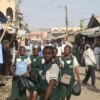
RIGHTS: Nigeria Failing To End Discrimination Against Women
Nigeria ratified the Convention on the Elimination of Discrimination Against Women (CEDAW) in 1985 without reservations. But few of its citizens have ever heard of the document. Day-to-day life for women in Nigeria is shaped less by international conventions than it is by the diverse cultures, traditions and religions found in the country.Q&A: CEDAW – Signed, Sealed and Largely Left on the Shelf
Mauritania formally adopted the Convention on the Elimination of Discrimination Against Women in 2001, but in the eight years since, it has had limited effect on the status of women.« Previous Page — Next Page »





The Week with IPS

NEXT STOP - SDGs
Tracking global progress towards a sustainable world
Tracking global progress towards a sustainable world
