Languages
Thursday, October 8, 2026



News and Views from the Global South
Women Leaders - Africa

TRADE-MALAWI: The ABC of Being a Successful Business Woman
Through hard work and resilience, Malawian entrepreneur Mary Phombeya has developed her once small and struggling business outfit into a fully fledged company. She imports fashionable clothes – for women, children and men – from Dubai, Thailand and Hong Kong which she sells locally.POLITICS-KENYA: Broken Bodies, Unbroken Spirit
It was a sad occasion, and an occasion to rejoice. Sad, said Dr Ludeki Chweya, introducing Flora Terah's new book, because her heart-wrenching story shows that physical abuse and torture are a weapon of choice to deter women's participation in electoral politics in Kenya.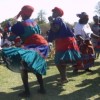
POLITICS-NAMIBIA: Gender Equality – Making The Numbers Count
Namibian gender activists applaud the goal of a 50/50 split of women and men in government by 2015, but warn that the real work is only just beginning.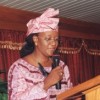
POLITICS-SIERRA LEONE: The Ups And Downs Of Zainab Bangura
Her reputation as a fiery orator is enhanced whenever she takes the podium, her punch softened by her broad smiles and gorgeous attires in West African style.
POLITICS-SWAZILAND: Struggling Against Tradition
The crowd ululated, whistled and danced. Their candidate had won! Last Sunday, the people of Mbabane East returned Esther Dlamini to Swaziland's House of Assembly for a second term.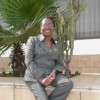
POLITICS-ANGOLA: Boys’ Club No Longer
Something looked very different at the inauguration of Angola’s newly elected parliament, held Tuesday at the Talatona Convention Centre in Luanda, the capital - this is not a boys' club any longer.SOUTH SUDAN: Growing Women's Power in Government
When Sabrina Dario Lokolong, the Speaker of South Sudan's Eastern Equatoria State Assembly, enters or leaves Parliament, all the other members of parliament must stand up.
POLITICS-ZIMBABWE: Now To Share Power With Women
The ink was barely dry on the power-sharing agreement signed by Zimbabwe’s main political parties on Sep. 15 when women activists demanded a fair share of power.
POLITICS-ZIMBABWE: Blazing a Trail For Women Politicians
You could spot her easily in the evening newscasts: the only woman among the grey-suited men daily accosted by reporters as they emerged, tense and tight-lipped, from the closed-door meetings.
POLITICS-MAURITIUS: Women Still Seeking the Political Kingdom
Mauritius - along with Botswana, Malawi and Madagascar - did not sign the Gender Protocol at the Southern African Development Community (SADC) summit in August. While the island nation has made some recent progress in political representation of women at the level of Parliament, much remains to be done to allow women to enjoy their full rights in the political arena.
Q&A: Zimbabwean Women Have Had ‘‘More Trauma'' After Independence
Zimbabwean women have experienced higher levels of trauma, including violence and lack of food, after the country's independence from Britain in 1980 than before.
CULTURE-NIGERIA: Writers, Film-makers Defy Censors
"I don't sell cocaine," says the video vendor in Kano's Rimi market when I ask for Adam Zango's music video CD Bahaushiya. He is not referring to the white powder, but instead a new illegal substance - Hausa films that have not passed through the Kano State Censors Board.SOUTH AFRICA: Will Gender Protocol Help Business Women?
South African women in business welcomed the recently-signed South African Development Community (SADC) Gender and Development Protocol, but are sceptical about its ability to truly achieve greater gender equality in business and trade.
Q&A: "We Will Write About Them"
While formal publishing companies in Nigeria languished through the economic crises that accompanied the structural adjustment programmes of the late 1980s and early 1990s, young Hausa writers began writing about their lives and contemporary problems they faced. Bypassing formal publishers, they self-published their novels, often with the help of a writers' cooperative.
RIGHTS: Swazi Law And Custom Under Pressure
When the women's movement in the southern African kingdom of Swaziland took to the streets in August to challenge what they called extravagance by the royal family, Swazi traditionalists were livid.
RIGHTS-SOMALIA: Building Women’s Leadership
The moderator raps her pen on the table to hush the boisterous assembly of Somali women gathered in Bagamoyo, on the Indian Ocean coast of Tanzania. Their voices drop for a moment before the sound level rises again to a heated crescendo.
Q&A: 'Our Voices Have Been Heard'
As the Third High Level Forum on Aid Effectiveness draws to a close in the Ghanaian capital, gender activists are reflecting on the way ahead.RIGHTS-SWAZILAND: Women Challenge King Mswati
Hard on the heels of the signing of the Gender Protocol at the Southern African Development Community (SADC) heads of state summit, Swazi women have challenged King Mswati III on the monarchy's lavish lifestyle in the face of abject poverty and disease.RIGHTS-ZIMBABWE: Towards Parity For Women In Politics
In a highly contested election marred by violence and held under very difficult economic conditions, Zimbabwean women politicians defied the odds to participate as candidates in the March 29th elections.POLITICS-SOUTHERN AFRICA: Ground-breaking Gender Protocol Signed
Gender activists breathed a sigh of relief when a long-delayed gender protocol was signed at the Southern African Development Community (SADC) summit this weekend. Women bear the brunt of social injustice and problems on the African continent, ranging from access to clean water, poor health care, access to economic opportunities or adequate protection before the law.
POLITICS-SOUTHERN AFRICA: SADC Summit Under Way
A free trade agreement is one of the main points on the agenda at the Southern African Development Community (SADC) summit presently under way in Johannesburg, South Africa. The summit will also discuss political problems in Zimbabwe, Malawi and Lesotho and consider protocols on gender and poverty eradication.« Previous Page — Next Page »





The Week with IPS

NEXT STOP - SDGs
Tracking global progress towards a sustainable world
Tracking global progress towards a sustainable world
