Languages
Wednesday, September 30, 2026



News and Views from the Global South
Women Leaders - Africa
ZAMBIA: Need to Mainstream Gender Equality into all Policies
Despite the adoption almost a decade ago of a national gender policy that aims to ensure fair participation of men and women in the development process, most of the Zambian government’s policies still remain gender blind, say civil society and women's rights associations.
ZIMBABWE: A Chance for Women’s Voices to be Heard?
As Zimbabwe embarks on writing a new constitution with the countrywide collection of public submissions starting on Jun. 23, not all women are upbeat about the process.
ANGOLA: Changing More than Policies
She may have been little-known in political circles until now, but by putting herself forward as the first female independent presidential candidate, Luisete Macedo Araújo (50) has thrust herself into the limelight.MALAWI: Changing the Face of Politics
The face of politics is changing in the southern African country of Malawi. And civil society is making plans to ensure that it changes even more.
Q&A: ‘True African Leaders Have Nothing to Fear From ICC’
As the first Review Conference of the Rome Statute that established the International Criminal Court takes stock of the ICC's achievements and considers amendments to strengthen the pursuit of justice around the world, the first African woman to win the Nobel Peace Prize is one of its strongest defenders.
Kenyan Women Look to the Hague for Justice
Hanging from a rafter in Jane Wanjiku’s home is a calendar bearing the image of the International Criminal Court's chief prosecutor, Luis Moreno-Ocampo. It's an illustration of how the ICC has seized the imagination of ill-treated people around the world.
RWANDA: Women Win by Formalising Businesses
The vast majority of businesses in Rwanda - like elsewhere in Africa - are informal. Government expects that a drive to register an estimated 900,000 informal enterprises will both strengthen these businesses and improve tax revenues.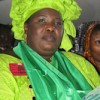
Door to Political Office Opens for Senegalese Women
A law on gender parity in electoral lists, approved by a large majority in Senegal's National Assembly, has been welcomed by women from diverse walks of life.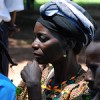
AFRICA: Women Demand Answers and Action from ICC
With the first Review Conference of the Rome Statute of the International Criminal Court (ICC) under way in the Ugandan capital Kampala, women are crying out for justice for gender-based violence inflicted upon them during the civil conflict in the country’s north.AFRICA: Better Data Key to Supporting Women Farmers
An accomplished farmer who won the coveted Woman Farmer of the Year Award in 2008, Thabile Dlamini-Gooday wants to uplift the standard of other women in agriculture. She believes that if women farmers were to work together they could fight hunger and significantly reduce poverty among themselves.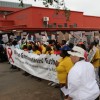
African Grandmothers Demand Support in Role as Caregivers
"Africa cannot survive without us," is the message from grandmothers representing all corners of the continent.
AFRICA: A Loud and Clear No to Violence Against Women
Poet activist Myesha Jenkins' voice reverberated through the hall: "Women are out in the night; we are cleaning the streets, some are walking the streets..."
MAURITIUS-POLITICS: Voting for the Future
Incumbent Prime Minister Navin Ramgoolam has won the Mauritian election, retaining a third term of office.
Greater Support Needed For Botswana’s Women Farmers
On the outskirts of Botswana’s capital, Gaborone, Charity Molefhi is learning the ropes of the horticulture industry.UGANDA: Fresh Concerns About Women in Captivity
The fate of thousands of women and girls held as sex slaves and child soldiers by Uganda’s Lords Resistance Army rebels hangs in the balance.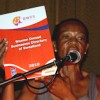
ECONOMY: Brighter Business Prospects for Swazi Women
Business in Swaziland is perceived as a man’s playground, and Swazi women have long found themselves on the periphery. Not only are big industries dominated by men, they are also the ones who award tenders in government and other institutions.EGYPT: Battle For Women Judges Half Won
There are "no obstacles according to Islamic sharia, the constitution or the law" to women serving as judges, announced one of Egypt’s main courts, the State Council, last week. But "there are currently practical obstacles," it affirmed.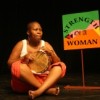
ARTS-SOUTHERN AFRICA: Women Dancers Can Fill Granaries
"Some said, how can women dancers tell us about climate change? Some said, how can dancers talk about planting trees? Others asked, how can women dancers build schools? But now the government says a drum has managed to fill our granaries, a dancer has managed to build schools."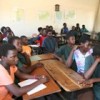
ZAMBIA: School Policy for Teen Mothers a Partial Success
Naomi Mulenga is determined to beat the odds by finishing her school education and becoming a nurse – despite being a teenage mother.
POLITICS-RWANDA: Woman Vies for Top Job
On average women constitute 18.8 percent of representatives in parliaments across the world according to the Inter-Parliamentary Union (IPU). This gender imbalance has been subject to much feminist criticism and many campaigns for change have been staged to address the status quo. The situation is however different in Rwanda.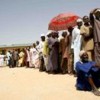
POLITICS-NIGERIA: In the Shadows of Men: Women’s Political Marginalisation
Ten years after Nigeria returned to civil rule women still play second fiddle in the male-dominated politics of Africa’s most populous nation, women politicians and activists say.« Previous Page — Next Page »


The Week with IPS

NEXT STOP - SDGs
Tracking global progress towards a sustainable world
Tracking global progress towards a sustainable world
