Languages
Monday, September 28, 2026



News and Views from the Global South
Women Leaders - Africa
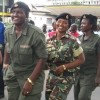
A Place for Women in Sierra Leone’s Military
A woman took position alongside male soldiers at the graveside of a fallen colleague. She positioned her AK47 on her shoulder, and on command fired into the grey sky with the others.Kenyan Women Sceptical Over Constitution’s Promise
Charity Karemi operates a pay-phone booth and sells mobile phone scratch cards in a Nairobi suburb east of the capital. She has mixed expectations of the benefits she will gain from Kenya’s new constitution.MALAWI: Women Candidates Hard Hit by Election Postponement
News that Malawi’s November local government elections are to be postponed yet again has hit female candidates hard – and mostly in their pockets. And it could mean that the country will have less female candidates to vote for when they finally go to the polls.
AGRICULTURE-SOUTH AFRICA: ‘There Is No Dignity’
South African farm workers – especially female labourers – continue to be exploited, despite the existence of national labour laws and regulations designed to protect them. But in the absence of information and education about their rights, workers have a hard time claiming them.
MALAWI: Campaign Against Female Vice President a Campaign Against Equality
The future of women’s political representation in Malawi has come into question as the ruling Democratic People’s Party (DPP) launched a smear campaign against its own member, the country’s female Vice President Joyce Banda. Many had hoped Banda would become the country’s first female president in 2014.
Burkinabe Women’s Economic Empowerment Key to Girls’ Education
An initiative to keep girls in school by supporting income-generating activities for their mothers is bearing fruit in Burkina Faso, where poverty and cultural values still deprive many girls of an education.
SOUTHERN AFRICA: Women Traders “Blocked” From the “Big Business”
"Africans do not believe women can do big business," fumes Zambian trader Angelica Rumsey.
POLITICS-RWANDA: “Climate of Repression” as Voting Concludes
As voting concluded in Rwanda’s presidential elections, with incumbent President Paul Kagame expected to win by a landslide, fears remain that not all citizens will accept the results amidst claims the elections were neither free nor fair.KENYA: New Constitution a Winner With Women
A day after Kenyans voted to accept a new constitution, women across the country speak about their hopes and expectations. The case of Elizabeth Chazima could stand for the story of millions of women in Kenya who have been robbed of their financial contributions to matrimonial assets.
ZAMBIA: Election Violence Could Mean Fewer Women Participants
There are growing fears that increasing numbers of women candidates and voters may not participate in the 2011 general elections because of an upsurge in election-related violence.
Developing More Top African Women Research Scientists
In a tiny village near Kisumu city in Kenya, scientific researcher Mary Anyango Oyunga spends most of her time educating women about something they have always done – grow sweet potatoes.MALAWI: Innovative Campaigning by Women Candidates
You will find Beauty Kasonda on her campaign trail at funerals, weddings, church functions or just about any local gathering in her community. Kasonda does not have the sort of funding her male counterparts have for campaigning in the country’s November 2010 elections but she is not letting that stop her.
POLITICS-GUINEA: Women Amongst Also-Rans in Presidential Elections
Celou Dalein Diallo gained a significant advantage over Alpha Condé, his main rival for the Guinean presidency, when a third candidate said he would back Diallo in a second round of voting in August. But what has become of women candidates for high political office in this West African country?
MADAGASCAR: Women Form Own Political Parties for Fair Representation
Brigitte Rasamoelina and Yvette Sylla are women with two different approaches to politics in Madagascar. One formed a political party, while the other decided to legalise her organisation as an association. But both women are considering running in Madagascar's November elections.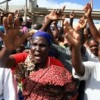
ZAMBIA: Calls for Political Parties to Field 50 Percent Female Candidates
With women having achieved little in terms of representation in decision-making positions in Zambia, a national women’s lobby group is hoping to change this in the 2011 general elections.
INDIAN OCEAN ISLANDS: Women Join Forces for Political Equality
"Instead of moaning all the time, why don’t you create your own (political) party?" some men asked Brigitte Rabemanantsoa Rasamoelina, a female politician from Madagascar. She accepted the challenge and in February formed Ampela Mano Politika, a political party which started with only 22 female members and now has over 5,000 female members ... and 10 men.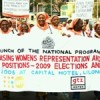
MALAWI: Women Candidates Desperate to Finance Freebies for Voters
Mable Malinda wants to contest the local government elections but the independent candidate who is using her life savings to fund her campaign only has 500 dollars left in her bank account. She has already spent three times as much buying handouts for voters – an unofficial requirement when contesting elections in Malawi.ZAMBIA: Women Welcome Equality Commission
The Zambian National Constitution Conference (NCC) concluded its business recently with the adoption of a clause for the creation of a Gender Equality Commission.
Liberian Woman in the Centre Circle
Vivian Howard is a single mother who cooks and cleans like just about any other woman in Liberia - but in her work life she’s in charge of 22 strong, athletic men. The first and only centre female referee in Liberia with a FIFA badge, Howard is standing shoulder to shoulder with the men of Liberia.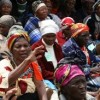
SWAZILAND: Women MPs Limited by the Patriarchal System
Minah Ndzinisa spends every day selling fruit and vegetables at the outdoor Mbabane Market, braving the rain, wind and cold for almost 20 years. "I was in the same cold even in the 1990s when we used to have only one woman Member of Parliament."MADAGASCAR: Calls for Equality to be Written into New Constitution
Madagascan female activists are asking that the right of women to participate directly in politics be included in a new draft of the country’s Constitution, so that there can be 30 percent of female politicians in parliament by 2012 and 50 percent by 2015.« Previous Page — Next Page »


The Week with IPS

NEXT STOP - SDGs
Tracking global progress towards a sustainable world
Tracking global progress towards a sustainable world
