Languages
Saturday, June 27, 2026



News and Views from the Global South
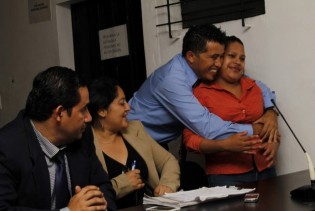
Draconian Ban on Abortion in El Salvador Targeted by Global Campaign
International and local human rights groups are carrying out an intense global campaign to get El Salvador to modify its draconian law that criminalises abortion and provides for prison terms for women.
Watch What Happens When Tribal Women Manage India’s Forests
Kama Pradhan, a 35-year-old tribal woman, her eyes intent on the glowing screen of a hand-held GPS device, moves quickly between the trees. Ahead of her, a group of men hastens to clear away the brambles from stone pillars that stand at scattered intervals throughout this dense forest in the Nayagarh district of India’s eastern Odisha state.
Opinion: Don’t Sell Sweden’s Vattenfall, Keep Coal in the Ground
The Swedish government is in the process of pondering an important decision -- whether to sell the vast lignite reserves of the state-owned Vattenfall energy giant or ensure that they stay in the ground. The decision will define Sweden’s commitment to tackling climate change.
In Nicaragua Marriage Is Only for ‘Him’ and ‘Her’
A new Family Code that went into effect in Nicaragua this month represents an overall improvement in terms of the rights of Nicaraguans. However, it has one major gap: it fails to recognise same-sex marriage, and as a result it closes the doors to adoption by gay couples.
Deadline Looms for NGOs to Apply for ECOSOC Status
The NGO Branch of the Department of Economic and Social Affairs at the United Nations is calling on non-governmental organisations to apply for Economic and Social Council (ECOSOC) consultative status in order to be considered by the 2016 NGO Committee.Nigeria’s Anti-Corruption Pledge Resonates in Far-Off Zambia
Nigeria’s president-elect is already making waves with his pledge to attack corruption, starting with the missing 20 billion dollars allegedly swiped from the Nigerian National Petroleum Corporation during the previous administration.
U.N. Staffers Secure at Home, Moving Targets Overseas
When the United Nations spent over 2.2 billion dollars refurbishing its ageing 65-year-old Secretariat building, one of its primary goals was to strengthen security to prevent any violent attacks on the glass house by New York city’s East River.
Q&A: Comprehensive Ban on Nuclear Testing, a ‘Stepping Stone’ to a Nuke-Free World
With the four-week-long review conference of the Nuclear Non-Proliferation Treaty (NPT) underway at the United Nations, hopes and frustrations are running equally high, as a binding political agreement on the biggest threat to humanity hangs in the balance.
Campaign Against Glyphosate Steps Up in Latin America
After the World Health Organisation (WHO) declared glyphosate a probable carcinogen, the campaign has intensified in Latin America to ban the herbicide, which is employed on a massive scale on transgenic crops.
Opinion: Continuing the Centennial Work of Women and Citizen Diplomacy in Korea
A century ago, the suffragist Jane Addams boarded a ship with other American women peace activists to participate in a Congress of Women in The Hague.
Caribbean Stakes Out “Red Lines” for Paris Climate Talks
When the international climate change talks ended in Peru last December, the 15-member Caribbean Community (CARICOM), a political and economic union comprising small, developing, climate-vulnerable islands and low-lying nations, left with “the bare minimum necessary to continue the process to address climate change”.Anti-Foreigner Discrimination ‘Fostered in South African Schools’
A practice of denying admission to South African public schools of children without visas or whose parents are refugees from other African countries is creating a foundation for the current rash of xenophobia, critics of the practice say.European Biofuel Bubble Bursts
Ten years of debate in the European Union over the detrimental effects of the demand for biofuels for transport on food prices, hunger, forest destruction, land consumption and climate change have come to an end.
Expo 2015 Host City Promotes Urban Food Policy Pact
How can we provide healthy food for everyone, without threatening the survival of our planet? This is the fundamental issue at the centre of Expo 2015 – which has ‘Feeding the Planet, Energy for Life’ as its central theme – and a huge challenge for cities.Chaos Grows in Burundi as President Defies Advice to Step Down
Burundian President Pierre Nkurunziza, overriding objections to an ill-advised third term, now faces a growing popular movement to oust him after his term ends this coming June.
Cash-Strapped Latin American Countries Turn to China for Credit
Angolans are generally grateful for China’s participation in the reconstruction of their central African country, in spite of the fact that some of the roads and buildings built by Chinese firms are of poor quality, and mainly Chinese labourers have been hired rather than local workers.
Moving Indigenous Land Rights from Paper to Reality
Frustrated with decades of marginalisation, and of seeing their rights respected only on paper, Indigenous peoples are calling for major recognition from the international community.
As Nuke Talks Begin, U.N. Chief Warns of Dangerous Return to Cold War Mentalities
Against the backdrop of a new Cold War between the United States and Russia, two of the world’s major nuclear powers, the United Nations is once again playing host to a four-week-long international review conference on the Nuclear Non-Proliferation Treaty (NPT).
Opinion: Progress of the World’s Women 2015-2016: Transforming Economies, Realising Rights
Our world is out of balance. It is both wealthier and more unequal today than at any time since the Second World War.No Woman, No World
Almost exactly two years ago, on the morning of Apr. 24, over 3,600 workers – 80 percent of them young women between the ages of 18 and 20 – refused to enter the Rana Plaza garment factory building in Dhaka, Bangladesh, because there were large ominous cracks in the walls. They were beaten with sticks and forced to enter.
Want to Help Nepal Recover from the Quake? Cancel its Debt, Says Rights Group
The death toll has now passed 3,300, and there is no telling how much farther it will climb. Search and rescue operations in Nepal entered their third day Monday, as the government and international aid agencies scramble to cope with the aftermath of a 7.8-magnitude earthquake that struck this South Asian nation on Apr. 25.Next Page »


The Week with IPS

NEXT STOP - SDGs
Tracking global progress towards a sustainable world
Tracking global progress towards a sustainable world
