Languages
Friday, April 24, 2026



News and Views from the Global South
Headlines
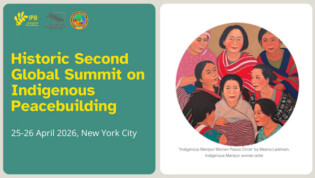
Why Indigenous Peacebuilding Matters in Today’s World
About 132 wars are happening in the world today, displacing 200 million people. 80 percent of these conflicts are happening in sensitive biodiversity areas where Indigenous Peoples live.
NEPAL: ‘Voting on Discord Was a Very Gen Z Way of Doing Politics’
CIVICUS discusses Gen Z-led protests in Nepal with Abhijeet Adhikari (Abhi), a lawyer and political activist who took part in the protests.

No Kings? Meet King Don and King John – Part 1 of 3
After Donald Trump’s second election as president in November 2024, he said coyly that he wanted to be a dictator … but just for a day. On his first day in office, his sharpie signed an impressive pile of presidential orders, many of dubious legality. The next day he continued to govern like a DIY duce. He has not stopped since.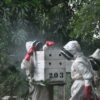
Inside the Funding Model Behind Kenya’s Tana Delta Restoration Project
Lydia Hagodana stands next to a bee yard (apiary) in Golbanti, Tana Delta, where she lives. The air carries a low, steady hum as bees move in and out in a constant stream. She lifts the back of one hive slightly, gauging its weight.
The Good Bold Days – Rethinking the Fight for Gender Equality and Human Rights
The world of 2026 is marked by overlapping crises that continue to expose the fragility of our systems and the persistence of inequality. Geopolitical conflicts enrich a few while devastating many, intensifying the already catastrophic impacts of climate change. These political choices are not neutral—they shrink civic spaces, reinforce political extremism, and unleash coordinated assaults on gender equality and human rights. These attacks are not incidental; they are deliberate strategies to undermine multilateralism and global solidarity, eroding the foundations of peace and planetary well-being.
African Institutions in Plan to Stabilise Food, Fuel and Fertiliser Amid Mideast War
Fearing the Middle East war could drive millions into hunger and cripple economies, Africa’s leading institutions are drafting a strategy to mobilise domestic and "innovative" finance and harness national competitiveness to stabilise food, fuel, and fertiliser supplies.
Feminist Governance and Democratic Change in Armenia
 The period after Armenia's 2018 "Velvet Revolution" maintains a fragile status which presents both substantial democratic and feminist achievements and rising internal and external international pressures.

The Impact of the Middle East Crisis on Women and Girls
Six weeks into the 2026 Middle East military escalation, UNFPA Arab States Regional Office warns that its impact on 161 million women and girls living in conflict-affected areas across the region remain largely invisible in conflict analysis, humanitarian response, and funding priorities.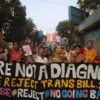
Criminalized Sanctuaries: How India’s 2026 Trans Act Undermines Safety
On 30 March, the eve of Transgender Day of Visibility, the Transgender Persons Amendment Act, 2026 became law in India, narrowing who can be recognized as transgender and requiring individuals to have their identity verified by authorities. This bill risks placing already vulnerable people under deeper scrutiny while destabilizing the informal systems of care they rely on.
From Resolution to Reality: Delivering Water and Sanitation for “The Africa We Want”
When Africa’s Heads of State and Government gathered in Addis Ababa on 14 February 2026 for the African Union’s 39th Ordinary Session, they did more than adopt another resolution. They made a choice: to place at the centre of the agenda the most fundamental, life-sustaining and strategic resource our continent possesses: water.
The Stadium of the Disappeared – World Cup Should Kick Off Justice for Families
This week marks the six-week countdown to the opening game of the 2026 FIFA World Cup, which kicks off with a match between Mexico and South Africa on Thursday, June 11, at the Estadio Azteca in Mexico City.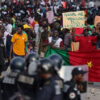
The Ballot Box Illusion: How Authoritarians Repackaged the African Ballot
In many countries across Africa, people have recently lined up to vote. But in country after country, there has been no real choice on offer. As CIVICUS’s 2026 State of Civil Society Report documents, what has frequently been on display is a procedural ceremony of democracy, orderly enough to satisfy observers, but hollow enough to leave those who hold the reins of power untroubled. Laws and structures that were supposed to promote democratic decisions have been manipulated into compliance checks, ticking all procedural requirements while lacking democratic substance. In too many cases, the ballot box has become a public relations exercise.
Global Shipping Reforms Cast Shadow Over Tanzania’s Fishing Communities
At dawn, as the sun rises across the Indian Ocean, Venance Shayo perches on the edge of his boat, hauling in a net. The sea gently ripples under the breeze and the sound of revving engines.
No Bones Broken, No Crime Committed: Inside the Taliban’s New Rules on Violence Against Women
The Taliban have announced new laws that effectively legalise domestic violence against women and children. Afghanistan's supreme leader, Mullah Hibatullah Akhundzada, signed a decree introducing a new criminal code in January. It contains three parts, ten chapters, and 119 articles that legalise violence, codify social inequality, and introduce punitive measures widely condemned as a return to slavery.
Trump’s Apocalyptic Rhetoric Echoes Nuclear Annihilation
It is hard to exaggerate the dire implications of Trump’s April 7 post on Truth Social, stating that a civilization will die tonight, never to be brought back again,” if no deal is reached with Iran. Such a damning statement implies that he would use ‘weapons of mass destruction,’ i.e., nuclear, to execute his threat.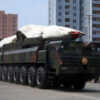
The Middle East War Triggers a Move to Boost North Korea’s Nuclear Arsenal
The ongoing military conflicts in the Middle East—involving the US, Israel, Palestine, Iran and Lebanon—have indirectly bolstered North Korea’s plans to expand its nuclear arsenal.
“War-Shock Inflation” and Inflation Phobia: Lessons of History for Central Bankers
The global economy, is at the precipice of “stagflation” – growth slowdown and higher inflation – due to the energy price shock following the illegal US-Israel war on Iran. The International Monetary Fund (IMF) has recently termed this as a “textbook negative supply shock”. For the first time since the 1970s, the prospect of stagflation seems real.
Guardians of the Sea: How GEF Small Grants Program Enables Young Volunteers Take the Lead in Sea Turtle Conservation
Every winter thousands of sea turtles come ashore at Cox’s Bazar, in the Bay of Bengal, Bangladesh, to lay eggs.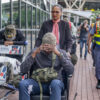
Russia’s African Cannon Fodder
On 7 April, the government of Cameroon published a list of 16 of its citizens confirmed killed fighting for Russia against Ukraine. That means the number of Cameroon citizens killed in this distant war has likely surpassed a hundred, making the country the biggest victim of a Russian recruitment drive increasingly focused on Africa.
Using Better Data to Break the Cycle of Permanent Crisis
We are stuck in response mode. But what good is an ambulance without a hospital? Climate shocks are intensifying. Conflict is at record levels. Economies are fragile. Humanitarian appeals grow larger each year, while donor countries prioritise domestic and security concerns. One emergency follows another. Recovery slips further out of reach.
Aid Groups Appeal for Lasting Ceasefire to Address Lebanon’s Catastrophic Humanitarian Crisis
Aid groups have welcomed a ten-day ceasefire agreed between Israel and Lebanon but warn only a permanent halt to fighting can allow for the kind of response needed to address the dire humanitarian situation in the country.Next Page »


