Languages
Tuesday, October 27, 2026



News and Views from the Global South
Conferences
Wanted: A Feminist UN Secretary-General for ‘We the Peoples’, Not the Powerful
Notwithstanding last minute shenanigans and the possibility of backroom deals by powerful states, two women from Latin America are leading contenders in the race for the UN’s next Secretary-General. After 80-plus years of men-only leadership, momentum is building to break the glass ceiling at the global institution dedicated to saving future generations from the scourge of war.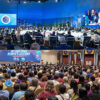
Two Summits in Bangkok: IMF/World Bank and Finance Ministers Inside, the People’s Assembly Outside
Bangkok hosted two summits last week. Inside the Queen Sirikit Convention Center, more than 15,000 finance ministers, central bank governors and CEOs of the world’s largest banks and corporations attended the Annual Meetings of the International Monetary Fund (IMF) and the World Bank. They flew in business class and slept in five-star hotels to talk about growth, inflation and public spending, and thus to decide the destiny of billions of people they will never meet. Outside, hundreds of social movements and civil society organizations held the People’s Assembly, for the 99% whose voice would not be heard. They flew economy and often shared modest rooms. The first was the summit of money and power. The second, the summit of the rest of us.
Climate Change Is Becoming a Pregnancy Hazard Worldwide, Survey Finds
Extreme heat is increasingly threatening pregnant women and newborn babies around the world, with almost all maternal health professionals surveyed across five continents saying they have cared for women or infants whose health was affected by high temperatures.
BRICS: Growing Ambition, Zero Accountability
At the 18th BRICS Summit, held on 12 and 13 September in New Delhi, India’s Prime Minister Narendra Modi brought together presidents Xi Jinping of China, Vladimir Putin of Russia and Masoud Pezeshkian of Iran, along with Abu Dhabi’s Crown Prince, Sheikh Khaled bin Mohamed bin Zayed, representing the United Arab Emirates (UAE). Around the table sat longstanding rivals such as India and China and, in the case of Iran, Saudi Arabia and the UAE, states on opposite sides of an ongoing war. That the summit produced a joint declaration every member could sign was a modest multilateralist success.
Fragmented Policies Hold Back Agroecology Adoption in Africa’s Congo Basin
Agricultural, land, forestry, environmental and trade policies in the Congo Basin remain compartmentalised at country levels, leaving proven agroecological models trapped at pilot stages due to a lack of advisory services, organic inputs, market outlets and sustainable financing.
Climate Week NYC Kicks off With World Leaders’ Commitments to Action
The Climate Group’s annual conference in New York City has attracted thousands of attendees this year, among them world leaders, corporate heads, philanthropists, and climate advocates. Those leaders present at the opening ceremony of Climate Week have made clear calls to collectively tackle climate issues.
African Farmers Demand Affordable Finance as Governments Fall Short on Funding
Agriculture remains underfunded in Africa as governments struggle to deliver on decades-old promises to dedicate 10% of national income to agriculture.
Investment in Irrigation Systems Is Vital in Preparing for the Next Climate Shock
When the African continent experiences erratic rains, crops fail, leaving millions of people facing hunger.
Lawmakers Need to Grapple With the ‘Human Story’ of the Aged, Youth, Women and Girls when Making Policy
"As parliamentarians, we should understand that behind every demographic indicator is a human story,” Kamikawa Yoko, MP Japan and Chair of AFPPD, reminded lawmakers in her opening address to the Asian Forum of Parliamentarians on Population and Development (AFPPD) annual conference held in Kuala Lumpur, Malaysia.
Beyond the Death Penalty Debate: Human Dignity and Justice in Japan
A symposium examining Japan’s death penalty through the lens of human dignity was held on September 5 at Joseph Hall of St. Ignatius Church in Yotsuya, Tokyo.
Strengthen Africa’s Seed Systems as El Niño Threat Becomes Reality Again
As climate disasters frequent across the African continent, governments have been promoting climate-smart innovations, including the development of drought-resistant crops.
Africa’s Pastoralists Need More Than COP17’s $1.2 billion Rangelands Pledge
When the rains fail across Tanzania’s northern Maasai Steppe, herders drive their cattle farther in search of pasture and water.
Family Planning and Population Dynamics Are Key to Water Security
This week is World Water Week, the annual conference of governments, business, and civil society on building a water-secure future as global population, climate disruptions, and water demand increase. In Washington, it’s also Water Resources Development Act season, when every two years the US Congress reauthorizes the legilslation that funds US drinking water, wastewater systems, and flood risk management projects.
Accepting What It Cannot Control, CARICOM Focuses on What It Can
From wars that drive up fuel prices to supply chain disruptions, inflation and increasingly frequent climate disasters, Caribbean leaders say many of the forces shaping the region's future lie beyond their control.
From Castel Gandolfo to Campidoglio: Call for Human Dignity to Be at the Heart of the AI Revolution
After two days of debate at an international conference devoted to the challenges of artificial intelligence (AI), nuclear war and global security, Nobel laureates, former heads of state and government, scientists, human rights defenders, religious leaders and representatives of civil society adopted a joint declaration, calling for it to be based on human dignity.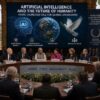
Artificial Intelligence and the Future of Humanity: Nobel Laureates Call for Global Safeguards
"I’m sorry, Dave. I’m afraid I can’t do that.” By bringing the supercomputer HAL 9000 to life in his 1968 film 2001: A Space Odyssey, American director Stanley Kubrick created one of the most powerful symbols of the fear of artificial intelligence (AI) escaping human control.
Global AI Governance Cannot Wait As the Digital Divide Widens
Throughout July 2026, various United Nations (UN) bodies and global experts have underscored the need for increased comprehensive artificial intelligence (AI) governance. Although AI yields significant potential gains for global development, persistent structural barriers continue to impede equitable access and deepen the digital divide.
Efficiency Becomes the World’s ‘First Fuel’ as Leaders at IEA Conference Chart Course for Cleaner, More Secure Energy Future
As geopolitical tensions, rising electricity demand and climate pressures reshape the global energy landscape, more than 600 energy ministers, chief executives, financial leaders and policy experts gathered in Montreal, deliberating upon how to deliver at an unprecedented scale.
From the Nuclear Age to the Age of Artificial Intelligence: Can Humanity Build a New Architecture for Peace?
More than eight decades after the atomic bombings of Hiroshima and Nagasaki ushered humanity into the nuclear age, the world is confronting another technological revolution whose consequences extend far beyond science and industry.
Inside GEF’s Blended Finance Push: Turning Public Money Into Private Capital Leverage
For most of the Eighth Global Environmental Facility (GEF) Assembly last month, the atmosphere inside Samarkand’s sprawling Congress Centre echoed a growing confidence of global environmental policymakers.
UN Senior Members Urge Universal Abolition of Death Penalty
While the movement for the universal abolition of the death penalty advances, this progress “cannot be taken for granted,” said UN Secretary-General António Guterres as he greeted the 9th World Congress Against the Death Penalty.Next Page »





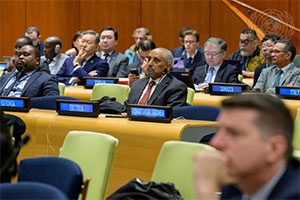 General Assembly Meets to Hear Briefing on UN80 Initiative. Credit: UN Photo/Manuel Elías
Global development conferences are continuing to produce critical frameworks for South-South cooperation and multilateral reform. In January of 2024, the 3rd Global South Nexus (GSN) International Conference was held in Odisha, India, with its theme being “Creating Responsible Professionals for Advancing SDGs: Inputs from Global North and South.” The 2025 UN SDG Report provided a midpoint assessment of the 2030 Agenda, with only 35% of targets on track and 18% having reversed. The 2025 UN Climate Change Conference (COP30) in Belém, Brazil, agreed to mobilize $1.3 trillion annually for climate action by 2035, operationalize the loss and damage fund, triple adaptation finance, and launched the Belém Mission to 1.5°C. In 2025, the Partnership for Economic Policy (PEP) convened its annual Policy Conference in Nairobi, Kenya, addressing the issue of “Financing and Inclusivity in Green Energy Transition in the Global South.” As the Global South advocates increasingly for a South-South framework alongside North-South cooperation, international conferences on sustainability aim to bridge economic and social divides between developed and developing countries in achieving the UN SDGs. Furthermore, to mark the UN’s 80th anniversary, the UN80 Initiative was launched to reshape how the UN system works so that every mandate, dollar, and decision creates greater impact for the global system.

The Week with IPS

NEXT STOP - SDGs
Tracking global progress towards a sustainable world
Tracking global progress towards a sustainable world
