Languages
Friday, July 24, 2026



News and Views from the Global South

Thai University Accepts Rice as Tuition Fees
A private university in Thailand has decided to accept rice as payment for its tuition fees.
The Mythology of Freedom and Democracy
Many US citizens may instinctively believe they still live in the land of the free, but a new global rights rating system shows the country is far less tolerant than they may think.
Peace Fails to Bring Prosperity in Eastern Sri Lanka
It is a Tuesday afternoon and only a handful of devotees have flocked to the Meera Grand Mosque in Katankuddi, about 300 kms east of the capital Colombo.
Did You Try Out Rosemary’s Ceci or Makhlouta with Banana Bread?
The original inhabitants of Planet Earth already knew—and still know how to eat healthy. Modern, urbanised and industrialised people mostly not. Anyway, life can be made easier than one may think. Just see what a world leading specialised body in the field of food and nutrition advises on what to eat and even how to cook it.
Beyond Calais: A Perspective on Migration, Agriculture and Rural Development
Migration is part of the process of development. It is not a problem in itself, and could, in fact, offer a solution to a number of matters. Migrants can make a positive and profound contribution to the economic and social development of their countries of origin, transit and destination alike. To quote the New York Declaration, adopted at the UN Summit on Refugees and Migrants on 19 September, “migrants can help to respond to demographic trends, labour shortages and other challenges in host societies, and add fresh skills and dynamism to the latter’s economies”.
Canadian Indigenous Injustice: A Colonial Problem?
The history of Canada’s indigenous population has been, for the most part, kept in the shadows. According to leading expert on indigenous justice Lisa Monchalin, the consequences of colonialism and dispossession on native communities have been “glossed over”, unacknowledged and dismissed by the “settled” population.
The Perils of Writing about Toilets in India
Journalist Stella Paul was midway through an interview about toilets when she found herself, and the women she was speaking to, under attack from four angry men.
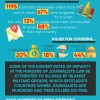
Isn’t It Time We Stop Shooting the Messenger?
Recently, a video of two television journalists being attacked by staff of a popular private hospital in Dhaka has been doing the rounds of social media. The reporters were covering an allegation of sexual harassment against a female patient by a staff of the hospital, and were apparently interviewing someone in the management when a group of hospital employees stormed into the room, questioning the presence of the reporters in the hospital, forcefully demanding that the cameraman shut off his camera, before finally resorting to manhandling them. When they protested that they were journalists who were only doing their job and didn't have any intention to defame the hospital, one of the employees thundered, “Faizlami paisen? Kisher journalist?” [Are you kidding? What journalist?] Reporter Ahmed Saleheen and cameraman Shafiqul Islam, both from Shomoy TV, further claimed that they were verbally abused by the hospital staff; in fact, Shafiqul was also confined in a room for a while where they allegedly beat him up.
Latin America to Take the Temperature of Paris Agreement at Climate Summit
With the ratification and entry into effect of the Paris Agreement still fresh, the countries of Latin America are heading to the climate summit in Marrakesh in search of clear rules that will enable them to decarbonise their economies to help mitigate global warming.
Value of Education
Provincial governments have been trying to get every child enrolled in school. Public education systems, across all provinces, have gone through a plethora of reforms in the last couple of decades to achieve higher enrolments. Teacher salaries have been increased, more infrastructure facilities have been provided, there is more monitoring of teachers, teacher recruitment has been made more transparent, and a lot more has been spent on teacher training. Enrolment drives are conducted almost every year. But we have not been able to achieve universal enrolment as yet. This has been a puzzle for governments: why are the last 10-15 per cent of out-of-school children, in the relevant cohorts, so hard to bring into the system?
Foreign Policy article on Bangladesh: A Most Unfortunate Conclusion
It’s absurd! It's preposterous to suggest that around 40 percent of Bangladeshis favour suicide terrorism. Yet this is what some American think tanks and “expert analysts” have recently come up with in their reports, to the detriment of Bangladesh's reputation. Muslims in Bangladesh – around 90 percent of the population – are peaceful, liberal, devotional, and even syncretistic, unlike their counterparts in the Middle East, Africa, Afghanistan, and Pakistan.
Four Things You Should Know about the Other Election This Week
Next week, millions of people around the world will be glued to their TV screens and social media feeds, watching as the USA decides who will lead the most powerful country on earth. Around 3,000 kilometers away, in a much smaller nation in the middle of Central America, another election will take place just a couple of days earlier. Although Nicaragua’s presidential election lacks the fame of the Clinton-Trump race, it is every bit as controversial.Religious Leaders Call for Peaceful, Integrated World
Abu Dhabi: Religious leaders from the Muslim Council of Elders — an independent international body that aims to promote peace in Muslim societies — and the Anglican Church on Wednesday called for setting up a peaceful and integrated world.
Paris Climate Agreement: “Hard Work Starts Now”
The Paris Climate Change Agreement will enter into force on Friday 4 November, just days before the UN’s 22nd climate change conference begins in Marrakech, Morocco.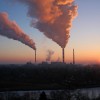
World to Cut Gas Emissions by 25 Percent More Than Paris Agreement
On the eve of the entry into force of the Paris Agreement today Nov. 4, the United Nations sounded new climate alarm, urging the world to ‘dramatically’ step up its efforts to cut greenhouse gas emissions by some 25 per cent more.
South-South Cooperation a Key to SDGs Success, Says G77
The Global South-South Development Expo 2016 (GSSD), which took place in Dubai, was one of the major international events showcasing some of the achievements and best practices of both South-South and Triangular Cooperation.
Hungarian Revolts
Early last month, there was a glimmer of hope in Hungary. Implored to vote in a referendum intended to effectively sanctify the nation’s brutal hostility to refugees from the Middle East, a majority of the eligible electorate opted to disengage from the process, rendering it invalid.
Nicaragua’s Elections Marked by Apathy and Mistrust
In the midst of unusual political tension and apathy, Nicaraguans will go to the polls on Sunday Nov. 6 to vote in elections marked by the absence of the main opposition force and international election observers.
Data Innovation Powering Sustainable Development Goals
The world is awash with data. Today, more data than ever in human history is produced on a daily basis. Every time a person carries a cell phone from one place to another, tops up her mobile airtime or posts on social media, new data is created.
Privatization Cure Often Worse Than Malady
Privatization of SOEs has been a cornerstone of the neo-liberal counterrevolution that swept the world from the 1980s following the economic crisis brought about by US Fed’s sharp hike in interest rates. Developing countries, seeking aid from the International Monetary Fund (IMF) and the World Bank, often had to commit to privatization as a condition for credit support.UAE Has Enabled Religious Minorities to Meet, Teach, Worship and Express Themselves: Archbishop of Canterbury
The UAE has taken practical steps to enable religious minorities to meet, teach, worship and express themselves, the Archbishop of Canterbury said in his opening keynote address on Wednesday at a dialogue on integration, religious freedom and flourishing societies organised by the Muslim Council of Elders and with Christian leaders from the Anglican Communion.« Previous Page — Next Page »


The Week with IPS

NEXT STOP - SDGs
Tracking global progress towards a sustainable world
Tracking global progress towards a sustainable world
