
Monday, September 28, 2026



News and Views from the Global South
Environment
Inside the Funding Model Behind Kenya’s Tana Delta Restoration Project
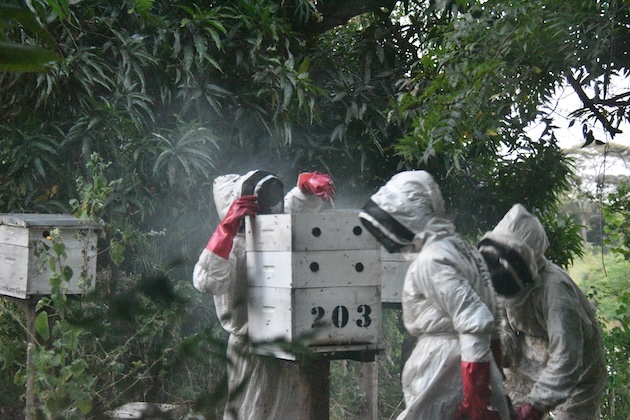
Beekeepers harvest honey from an ABL hive in the Tana Delta, Kenya. Credit: Chemtai Kirui/IPS
- Lydia Hagodana stands next to a bee yard (apiary) in Golbanti, Tana Delta, where she lives. The air carries a low, steady hum as bees move in and out in a constant stream. She lifts the back of one hive slightly, gauging its weight.
“This hive is mine,” she says. “I have two.”
Hagodana is one of 25 members of the Golbanti women’s group, which manages about 50 hives shared between them. Each member keeps a pair, harvesting honey a few times a year. Some of the income is kept individually, while a portion is pooled into group savings to support a small communal vegetable farm.
The apiaries sit along the southern banks of the Tana River, where it begins to split into the channels that form the lower delta. In the rainy season, the land opens into floodplains, drawing migratory birds and supporting wildlife, including hippos, crocodiles and the rare Tana River topi.
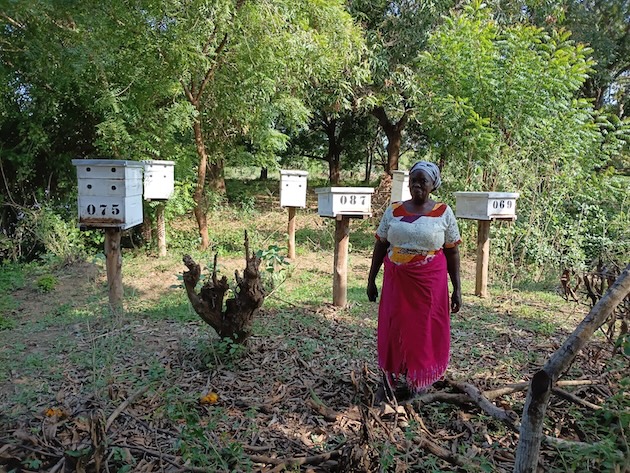
Lydia Hagodana in the area where she keeps one of her beehives in the Tana Delta, Kenya. Credit: Chemtai Kirui/IPS
Patches of gallery forest along the riverbanks are home to two critically endangered primates – the Tana River red colobus and the crested mangabey.
In recent years, beekeeping has offered an alternative source of income in a place where livelihoods have long depended on farming, fishing and livestock. For women in particular, managing hives marks a shift from more physically demanding work and from roles traditionally dominated by men.
Before the bees, these same floodplains were at the centre of proposals for large-scale biofuel plantations – plans that raised concerns about converting wetlands into industrial agriculture.
“This was linked to the European Union policy to blend biofuels with fossil fuels,” said Dr Paul Matiku, executive director of Nature Kenya. “Africa was seen as a place with ‘idle’ land that could be converted to these crops, including jatropha and sugarcane.”
At the time, the Kenyan government framed the projects as part of vision 2030 – a way to bring development and jobs to what officials described as an “empty” region.
Land clearing had begun. In some places, fields were ploughed before indigenous families had gathered their belongings. A wildlife corridor used by elephants and other species was carved into plantation blocks.
Tensions Rose
By 2012, violent clashes had erupted, turning the delta into what investors began calling a “red zone”.
“We woke up to a challenge about where the Tana Delta was going,” said Matiku, who helped lead the legal fight to stop the expansion. “You cannot convert wildlife land and food-producing land into fuel for cars. We had to unleash every bit of machinery we had to stop it.”
A coalition of conservation groups and local communities took the government to court.
In February 2013, Lady Justice Mumbi Ngugi halted the proposed large-scale developments in the delta, ruling that the state had failed to account for the rights of local people.
“The court said no one could move forward without a land-use plan developed with the people,” Matiku said.
Over the next two years, communities, county officials and conservation groups worked together to map the delta – dividing the landscape into zones for grazing, farming and conservation under what became the Tana Delta Land Use Plan (LUP).
For the first time, the delta had a formal set of rules.
But another question followed: could conservation pay?
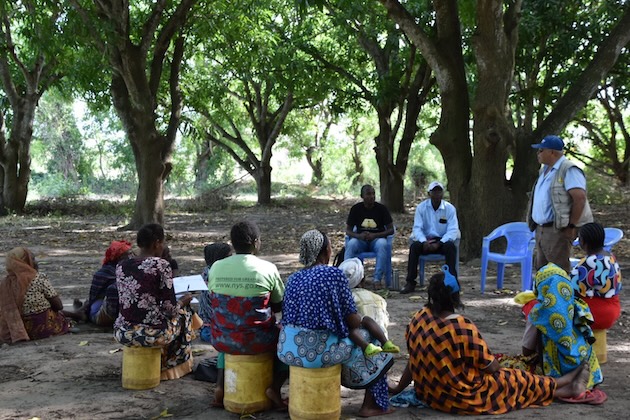
A group of community members gather outside an African Beekeepers Limited facility in Kenya’s Tana Delta to discuss the business of beekeeping. Credit: Chemtai Kirui/IPS
From Idle Land to Natural Economy
With support from the United Nations Environment Programme (UNEP), researchers began calculating the economic value of the delta’s ecosystems – reframing them from “idle land” into a functioning natural economy.
The partners approached the Global Environment Facility (GEF), the world’s largest multilateral fund for the environment. In 2018, after a technical review process, the fund approved a USD 3.3m grant for restoration in the Tana Delta under the Restoration Initiative.
The funding aimed to stabilise a landscape long marked by land disputes and failed biofuel schemes. Working with UNEP and Nature Kenya, the program supported consultations, legal drafting, and the work needed to turn the land-use plan into law.
Between 2019 and 2024, the county enacted 29 policies and legislative instruments aimed at regulating land use, conservation and climate action.
“We have moved from loosely coordinated conservation projects to a law-driven governance framework that integrates land use, climate change and community engagement,” said Mathew Babwoya Buya, Tana River county’s environment executive.
Tana River county has set aside at least 2% of its development budget for climate resilience and ecosystem restoration.
For the 2024/25 fiscal year, the county’s total budget is about KSh 8.87 billion (USD 68.76 million). Of that, roughly KSh 3 billion (USD 23 million) is development spending, implying annual allocations of about KSh 60 million (USD 460,000) for restoration programmes.
The commitment helped secure new funding from the GEF, which approved a grant of about USD 3.35 million for the Tana Delta under its Restoration Initiative.
Project documents show the program mobilised roughly USD 36.8 million in co-financing, about eleven dollars for every dollar of GEF funding, a commonly cited measure of leverage in conservation finance.
“The Tana Delta project shows what is possible when country ownership is strong and priorities are clearly aligned. This level of leverage reflects deep national commitment, strong engagement from a wide range of stakeholders, and clear links to value chains and local business opportunities. The project’s integrated, landscape-based approach allows it to address multiple challenges at once, making it an attractive platform for partners to invest alongside GEF,” said Ulrich Apel, a senior environmental specialist at the GEF.
The composition of that financing shows that the bulk originates from public agencies and development partners, including multilateral programmes and philanthropic funding. Only about USD 341,000 – less than 1 per cent of the total – is attributable to direct private-sector investment.
Apel explained the figures do not necessarily capture the full extent of commercial activity.
“It is important to understand how co-finance is defined and recorded,” Apel said. “Only capital explicitly committed to a project through formal letters is captured. There can be private sector flows into these value chains that do not show up in the co-financing numbers.”
UNEP officials say the structure is intended to use public funding to reduce land-use risk and attract investment over time.
“The GEF grant was designed to play a catalytic role,” said Nancy Soi, a UNEP official involved in the project.
By funding land-use planning, cooperative structures, and governance systems, she said, the program has helped “derisk” the delta for commercial activity in sectors such as honey, chilli, and aquaculture.
In parallel, other partners are beginning to test that approach in specific value chains.
In aquaculture, the Mastercard Foundation, working with TechnoServe, is supporting a program aimed at about 650 young entrepreneurs in Tana River County.
How that model translates into sustained commercial investment is still being tested on the ground.
In Golbanti, where Hagodana’s hives sit along the riverbanks, one of the emerging value chains is honey production. The work is being developed through a partnership with African Beekeepers Limited (ABL).
Under the model, the company supplies modern hives and technical expertise, manages production, and buys the honey at a fixed price – removing one of the biggest risks in rural markets: price volatility.
Nature Kenya says it has deliberately avoided locking farmers into long-term contracts at this stage, allowing time to assess whether production volumes and pricing can prove viable.
“We managed to pay 76 farmers about KSh700,000 (USD 5,400) from honey harvested in the delta,” said Ernest Simeoni, director of ABL, referring to the project’s first production cycle.
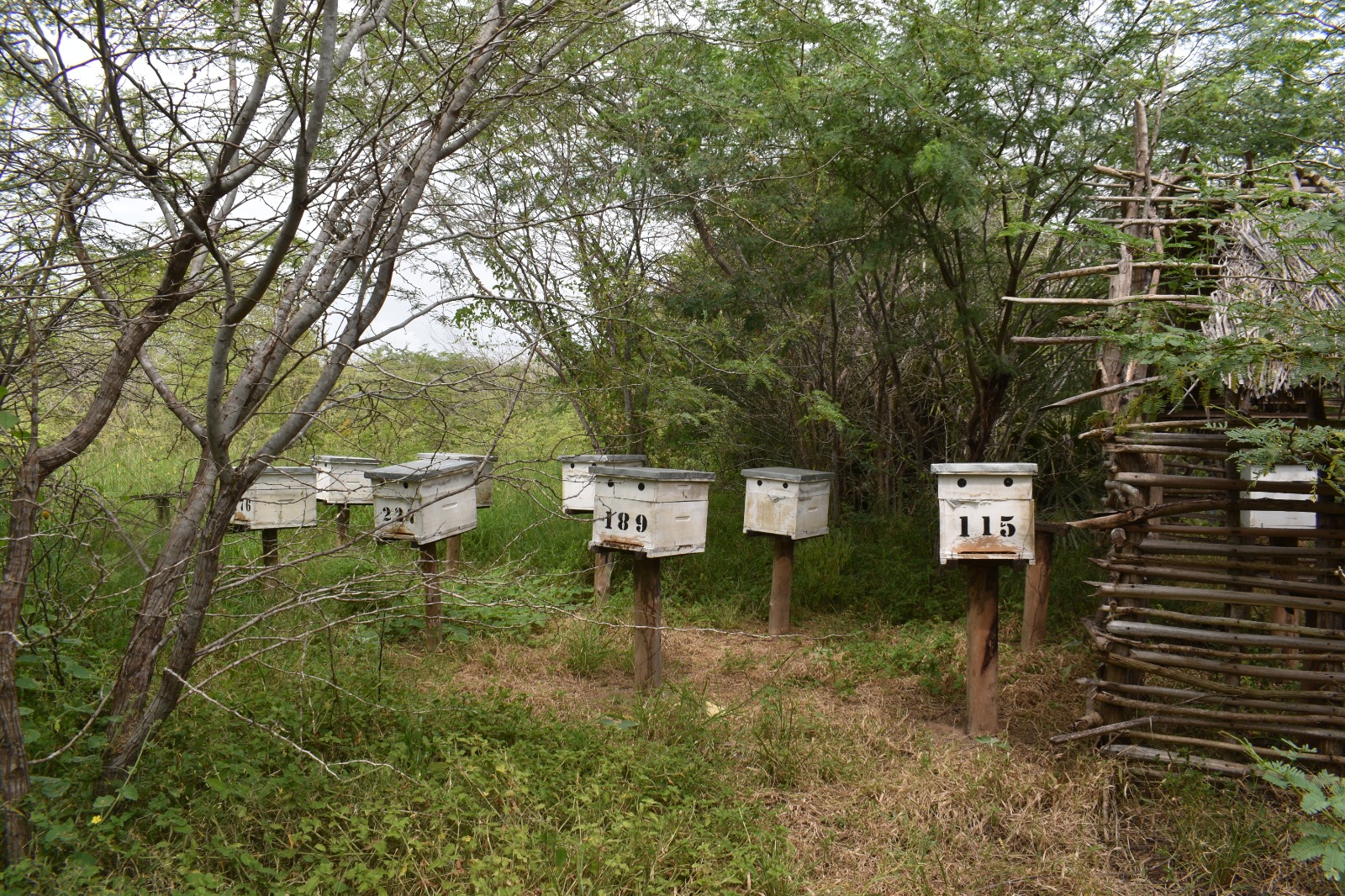
Numbered beehives in a conservation area of Kenya’s Tana Delta. Credit: Chemtai Kirui/IPS
Not Just Beekeeping, It’s the Business of Beekeeping
Simeoni said the approach differs from many donor-led initiatives, which typically focus on training farmers to manage hives independently.
“There are hundreds of modern hives across Kenya, but they don’t produce honey,” he said. “The missing link is expertise.”
Instead, ABL keeps production under the company’s control, deploying its teams to monitor colonies, harvest honey, and oversee processing.
“We’re not training farmers how to do beekeeping,” he said. “What we’re doing is business – showing how to make money from honey.”
Community groups provide land and security for the hives, while the company manages harvesting and processing. Simeoni said that structure helps maintain consistent production volumes.
Even so, he cautioned that the model remains fragile. Access to affordable finance is limited, and much of the sector still depends on donor-backed projects to absorb early risk.
“If donor funding disappears tomorrow, most of these projects stop,” he said.
Looking beyond small-scale value chains, the county is also trying to attract larger investments through a proposed development plan known as the “Green Heart”.
A 60-hectare site in Minjila has been earmarked for an industrial hub intended to support agroprocessing, logistics and green manufacturing, according to Mwanajuma Hiribae, the Tana River county secretary.
“We are working to establish an investment unit to coordinate engagement with private firms,” she said. Funds have also been allocated to develop a masterplan for the site.
But the project remains at an early stage. The land has yet to be formally transferred to the county’s investment authority, and proposals from potential investors are still under review.
Officials say any future development will need to align with the delta’s land-use plan and environmental safeguards.
For now, however, the flow of private capital to the delta remains limited.
Experiences elsewhere in Kenya suggest the model, while technically replicable, depends heavily on political will, security conditions and sustained public financing – factors that vary widely between regions.
In western Kenya, a similar land-use planning approach has been introduced in Yala Swamp, with mixed results. While Busia county has formally adopted the framework, neighbouring Siaya has yet to approve it, with local officials citing competing political and commercial interests around large-scale agriculture.
“The science is replicable,” said Matiku. “But political interests can slow or block implementation.”
In Golbanti, the idea of a restoration economy is beginning to take shape in small ways.
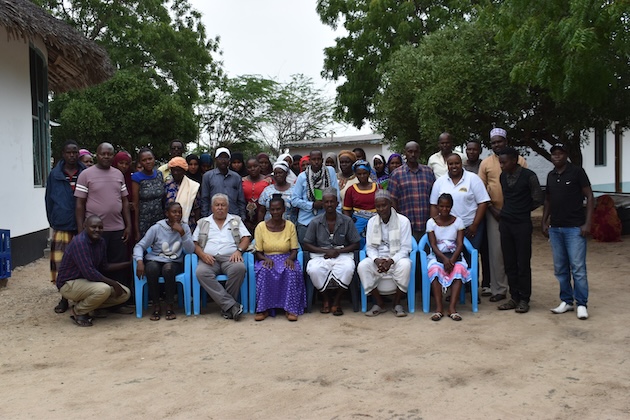
Beekeepers at the African Beekeepers Limited facility in Kenya’s Tana Delta. Credit: Chemtai Kirui/IPS
Welcome Income
Income from honey, though modest and still irregular, is starting to filter into daily life.
For Hagodana, it helps pay school fees for her six children, supports a small farm, and contributes to a shared fund used to grow vegetables. Some of the money is spent, some saved, and some reinvested.
She has been keeping bees for two years. Before that, she says, life was harder. Now there is at least something to rely on.
She does not plan to stop. Whether or not outside support continues, she says she will keep the hives and hopes eventually to learn how to process honey into other products.
Back in the apiary, the bees move in and out of the hives in a steady rhythm.
Note: The Eighth Global Environment Facility Assembly will be held from May 30 to June 6, 2026 in Samarkand, Uzbekistan.
This feature is published with the support of the GEF. IPS is solely responsible for the editorial content, and it does not necessarily reflect the views of the GEF.
IPS UN Bureau Report


 Print
|
Print
|



Pictures for this story
This story includes downloadable print-quality images -- Copyright IPS, to be used exclusively with this story.
- Beekeepers harvest honey from an ABL hive in the Tana Delta, Kenya. Credit: Chemtai Kirui/IPS
- Lydia Hagodana in the area where she keeps one of her beehives in the Tana Delta, Kenya. Credit: Chemtai Kirui/IPS
- A group of community members gather outside an African Beekeepers Limited facility in Kenya’s Tana Delta to discuss the business of beekeeping. Credit: Chemtai Kirui/IPS
- Numbered beehives in a conservation area of Kenya’s Tana Delta. Credit: Chemtai Kirui/IPS
- Beekeepers at the African Beekeepers Limited facility in Kenya’s Tana Delta. Credit: Chemtai Kirui/IPS


