Languages
Sunday, September 20, 2026



News and Views from the Global South
Opinion
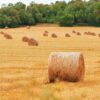
Keep Inputs Moving to Keep Food Affordable
Across Europe, winter wheat is already in the ground. What farmers apply in the coming weeks will determine the size of this year’s harvest. Those decisions are now being made under a sudden surge in costs that did not exist when seeds went in.
Strengthening Financial Integrity: Why It Matters and What Needs to Change
A conversation with Toril-Iren Pedersen, Director of the UNDP Global Policy Centre for Governance, and Michael Jarvis, Executive Director of the Trust, Accountability, and Inclusion (TAI) Collaborative
The Rise of Centenarians: A Challenging Accomplishment
Throughout human history, reaching the age of 100 was considered an exceptional accomplishment. However, in recent decades, the number of centenarians in the world has been on the rise.
Africa’s Youth are Shaping the Continent’s Climate Future
Africa is on the frontlines of the climate crisis, warming faster than the global average and facing disproportionate climate impacts, despite contributing the least to global greenhouse gas emissions.
The UN NGO Committee: Civil Society’s Gatekeeper in Hostile Hands
In January, the government of Algeria succeeded in locking two civil society groups out of access to the United Nations (UN). It raised questions at the UN Committee on Non-Governmental Organizations, known as the NGO Committee, about two civil society groups with accreditation. It alleged that Italian organisation Il Cenacolo was making politically motivated statements at the UN Human Rights Council and the Geneva-based International Committee for the Respect and Implementation of the African Charter on Human and Peoples’ Rights (CIRAC) was selling UN grounds passes. Four days later, it called a vote to revoke their status. Other states urged delay, but the no-action motion failed, and 11 of the body’s 19 members voted to recommend that the UN’s Economic and Social Council (ECOSOC) revoke Il Cenacolo’s accreditation and suspend CIRAC’s for a year.
Migration a Toxic and Divisive Issue in Many Parts of the West
Migration is a strange thing, hard to pin down. It is a complex phenomenon that transforms communities while shaping people’s identities and it is so multifaceted that individuals perceive it and live it in different ways.
Press Freedom: A Story of Lives Lost, Budgets Slashed, Status Eroded
Press freedom is on the retreat across much of the world. As documented by recent global surveys authored by the UN and media institutes, the erosion of an independent, fearless and diversified press is a trend that has worsened for well over a decade.
The Ocean Also Has Memories: From Our Territories to the Global Seafood Marketplace
Coming from an island in southern Chile, where the sea is not an industry—but it is daily life, work, food and memory. Growing up in a family that is part of an artisanal fishers’ cooperative. Learning from a young age how to cultivate oysters, work with mussels, and understand the rhythms of the sea.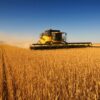
The War in Iran Isn’t Just Raising Food Prices — It’s Revealing Who Really Sets Them
As the United States and Israel’s 2026 attack on Iran remains on pause, most eyes have fixed on oil. Tankers reroute around the Strait of Hormuz, oil benchmarks climb, and insurance costs spike. But while the headlines focus on energy, warning signs are already flashing from the food commodities markets.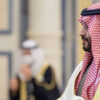
Rivalry Within Limits
While the world watches the Strait of Hormuz and the discord in negotiations between Iran and the United States, the role of the Gulf states is fading into the background. Iran’s attacks on the Arab Gulf states have triggered a threefold shock.
Seychelles’ Blue Bond: Turning Ocean Vision into Action
As the world prepares for the Global Environment Facility (GEF) meeting in Samarkand next month, Seychelles’ pioneering blue bond offers a compelling lesson in practical ocean finance.
Corruption in Bangladesh: Will Development Partners Remain Complicit?
Bangladesh remains one of the most corrupt countries in the world. Its corruption perception index (CPI) score, 24, is 18 points below the global average score of 42, and 21 points lower than the Asia-Pacific region’s average of 45. One of the main sources of corruption is over-priced aid-funded projects as they lack competitive bidding. Projects funded through Government-to-Government deals drive up costs by more than 400% compared to more transparent alternatives, and around 35% of project costs are lost to corruption and inefficiency.
Solidarity for Whom?
The veil has been lifted—but not the one you think. Not the veil the West has spent decades weaponizing. The veil now exposed is the one that concealed Western feminism’s selective solidarity—its silence on the women it was never truly fighting for. The “othering” of women from the South West Asian and North African region. In other words: us.
American-Israeli War on Iran Risks Fuelling the very Nuclear Proliferation it Claims to Prevent
As delegates from 191 countries, including the five permanent members of the UN Security Council, gathered Monday at UN headquarters for a month of diplomacy at the Review Conference of the Nuclear Non-Proliferation Treaty (NPT), the stakes could hardly be higher.
US Military Strategy Document Misleads. Deliberately?
The January 2026 US National Defense Strategy (NDS) departs significantly from those preceding it, including from Trump’s first term. Is it deliberately misleading? Or is actual policy, including war, being driven by other considerations?
No Kings? Meet King Don and King John – Part 3 of 3
This is the third part of a three-part commentary. Read Part 1: No Kings? Meet King Don and King John – Part 1 of 3, Part 2 of 3Whose head?
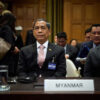
Indonesia’s Genocide Case Shines the Spotlight on Myanmar Atrocities
Yasmin Ullah, from Myanmar’s persecuted Rohingya minority, is determined to see justice. On 13 April, she filed a complaint alleging genocide against Myanmar’s president, Min Aung Hlaing, to Indonesia’s Attorney General’s Office. Min Aung Hlaing led the 2021 coup that ousted a democratically elected government and this month was named president following a sham election held amid intense repression, rubber stamping the army’s continuing grip on power. However secure he appears in his position, Yasmin Ullah’s legal action offers hope his impunity may not be guaranteed.
Africa Faces Mounting Risks Just as Growth Gains Take Hold
Sub-Saharan Africa’s economies entered 2026 with significant momentum. The region had notched its fastest growth rate in 10 years—4.5 percent in 2025—buoyed by reduced macroeconomic imbalances, rising investment levels, and a generally supportive external environment.
No Kings? Meet King Don and King John – Part 2 of 3
This is the second part of a three-part commentary. Read Part 1: No Kings? Meet King Don and King John – Part 1 of 3 to start from the beginning. Part 3 of 3
Why Indigenous Peacebuilding Matters in Today’s World
About 132 wars are happening in the world today, displacing 200 million people. 80 percent of these conflicts are happening in sensitive biodiversity areas where Indigenous Peoples live.
No Kings? Meet King Don and King John – Part 1 of 3
This is the first part of a three-part commentary. Read Part 2: No Kings? Meet King Don and King John – Part 2 of 3, Part 3 of 3 After Donald Trump’s second election as president in November 2024, he said coyly that he wanted to be a dictator … but just for a day. On his first day in office, his sharpie signed an impressive pile of presidential orders, many of dubious legality. The next day he continued to govern like a DIY duce. He has not stopped since.« Previous Page — Next Page »


The views expressed in these articles are those of the authors and do not necessarily represent the views of, and should not be attributed to, IPS-Inter Press Service

The Week with IPS

NEXT STOP - SDGs
Tracking global progress towards a sustainable world
Tracking global progress towards a sustainable world
