Languages
Tuesday, October 27, 2026



News and Views from the Global South
Opinion

APDA Young Leaders Devise Solutions for the Future
Whether you look at society, the environment, or technology – the world is changing rapidly. Global organizations strive to adapt to this change. The United Nations, for example, has developed the Sustainable Development Goals as a blueprint for human development.
What Explains Vaccination Rates in EBRD Regions?
Officially reported deaths from Covid-19 started to rise again in autumn 2021 in a number of economies in the EBRD regions. While in advanced economies in Europe the mortality rate has remained low despite the pick-up in Covid-19 cases, in the EBRD regions the mortality and infection rates continued to move in tandem.
Refugee Voices Matter – Nothing about Us, Without Us
Over the past two years, the global refugee response has been tested. The world is being rocked by the greatest pandemic in over a century, while waves of refugees have fled from Afghanistan, Myanmar, Belarus, and Tigray. So, where do we go from here? Next week, the international community will convene to take stock of the successes and shortcomings of the Global Compact on Refugees (GCR), a unique multilateral mechanism built to ensure the protection of one of the most vulnerable populations. This marquee Compact is up for review, but unlike other review processes, the participation of the people whose lives are shaped by the decisions to be made in the review process will be marginal. Unfortunately, only 1 in 50 of the invited attendees at the UNHCR High-Level Official’s Meeting (HLOM) to discuss the GCR are refugees.
Omicron & Developing Countries – Where Threats are the Greatest
On 25 November, news emerged from South Africa of a new COVID-19 variant. It has since been identified as Omicron, a Greek alphabet derivation the World Health Organization (WHO) reserves for virus variants “of concern”.
Climate Change: Adapt for the Future, Not the Past
Funding for developing countries to address global warming is grossly inadequate. Very little finance is for adaptation to climate change, the urgent need of countries most adversely affected. Also, adaptation needs to be forward-looking rather than only addressing accumulated problems.
Africa Should Bargain Hard for COVID Vaccine Equity: Lessons from Indonesia during Avian Flu
Many countries around the world have punished most of the African continent for the scientific discovery of the Omicron variant through the imposition of travel bans.
Social Distance, Science and Fantasy
In these times of COVID isolation, social distance get on the nerves of several of us and the effects may be long-lasting, even endemic. Many schoolchildren have interacted and still meet with their teachers through computer networks, while the same phenomenon applies to their contact with others. Technical devices are with an ever-increasing scope becoming an integral part of all communication, teaching, and entertainment, in short – of social interaction. When it comes to education, given all the poor and even harmful educators we are forced to encounter during our lifetime, mechanization of education might be perceived as a step forward. Nevertheless, too much dependence on the internet might undoubtedly have its pitfalls; contributing to an abstraction of our existence where real adventures and life-changing encounters with other human beings become all the rarer. The world may be demystified, losing its wonder and magic.
Partnering with Persons with Disabilities Toward an Inclusive, Accessible and Sustainable Post-COVID-19 World
As the world observes the International Day of Persons with Disabilities today, we honour the leadership of persons with disabilities and their tireless efforts to build a more inclusive, accessible and sustainable world. At the same time, we resolve to work harder to ensure a society that is open and accommodating of all.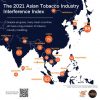
Big Tobacco Industry Rides COVID-19 Pandemic as Countries Grapple for a Response
Almost two years into the COVID-19 pandemic, many countries in the developing world continue to grapple with basic issues such as securing sufficient vaccines and providing essential medical care for their sick. Many economies are in recovery mode as governments scramble to resuscitate them with recovery packages and build back better plans.
Building a Disability-Friendly Workplace: Why Includability Matters
In her famous speech ‘The Danger of a Single Story’, Nigerian writer Chimamanda Ngozi Adichie warns us against a singular narrative of a person—a stereotype. This, Adichie asserts, is not because stereotypes are untrue, but because they are incomplete—“They make one story become the only story.” This is true in all walks of life, including in our interactions with people with disabilities at workplaces.
Clean Energy Alone Won’t Uplift Impoverished Nations — We Must Invest in People
Last month, at the COP 26 climate conference in Glasgow, a consortium of philanthropies, led by The Rockefeller Foundation, announced a massive program to fund renewable electricity projects for impoverished people in developing countries.
Volunteerism: Central to the Creation of a New Social Contract
The International Volunteer Day, on December 5, is not just one of the many internationally observed days that the United Nations commemorates annually.
Inequality is Set to Kill Millions – “We Have to Fight it Together.”
This week I called out to the world to warn them that inequalities are making us all unsafe. I noted starkly our new analysis that we face millions of additional AIDS deaths – 7.7 million in the next decade alone – as well continued devastation from pandemics, unless leaders address the inequalities which drive them. We have to treat this threat as an emergency, as a red alert.
How Inequality Drives HIV in Adolescent Girls and Young Women
Despite the advances that have been made against HIV, the world has 37 million people living with HIV. And 680,000 people died from AIDS-related causes in 2020. While the prevention of mother to child transmission, and provision of treatment as prevention, are great successes, there are still gaps. Over 1.5 million new HIV infections were recorded in 2020.
How to Tackle the Femicide Epidemic
Since the start of the Covid-19 pandemic, the increase in domestic violence rates has led the United Nations to declare a ‘shadow pandemic’ of gender-based violence. In the most brutal cases, the violence has led to murder – or ‘femicide’, as the World Health Organisation calls the killing of women specifically because of their gender.
Profiting from the Carbon Offset Distraction
Carbon offset markets allow the rich to emit as financial intermediaries profit. By fostering the fiction that others can be paid to cut greenhouse gases (GHGs) instead, it undermines efforts to do so.
Pakistan: Gender-Intentional Policy Can Make Agent Banking Work Better
Many women in Pakistan remain financially excluded. In 2020, only 7% of the female population had a formal account. One of the reasons for this is that agent networks — the bridge between the cash economy and digital financial services — remain largely inaccessible to many women. Approaching policy and regulation through a gender-intentional lens that considers prevailing social norms can help regulators affect positive change in this arena.
Gender, Education and Drop Outs
While COVID 19 is keeping the world and news media in its constant grip and national politics often come to the forefront, it might be easy to forget urgent and nevertheless related matters. One is how global education has suffered and how children and youngsters have been forced to cope with a different reality. This aspect like so many other of human existence is gendered and while addressing education it is relevant to talk about changing gender roles as well.
New Pan-African Payments System Provides Big Relief for African Traders
When Fidelis Adele, the CEO of Freetown-based Solid Graphics, a printing and communications company, needed to order some printing equipment from Nigeria in September, he paid an extra $165 on top of a $10,000 bank transfer to the seller. Yet it took three days for the money transferred in Sierra Leone to be credited to the beneficiary’s account in Nigeria.
How to Tackle Africa’s Employment Crisis
The Covid-19 pandemic aggravated Africa's already severe employment crisis. The solution lies in a long-term political and economic transformation.
Feminism Weaponized Against Trans People
There is a resurgence of anti-trans sentiment right now. It’s not only Dave Chapelle’s toxic rants in his most recent Netflix special: we see it across social, political and cultural arenas including in JK Rowling's ongoing embrace of trans exclusionary radical feminists (TERFs); the introduction of bills designed to harm trans kids in the US; Uganda's Sexual Offenses bill, which violates international human rights; and “gender-critical” academics like Kathleen Stock profiting from their inflammatory rhetoric.« Previous Page — Next Page »





The views expressed in these articles are those of the authors and do not necessarily represent the views of, and should not be attributed to, IPS-Inter Press Service

The Week with IPS

NEXT STOP - SDGs
Tracking global progress towards a sustainable world
Tracking global progress towards a sustainable world
