Languages
Sunday, November 8, 2026



News and Views from the Global South
Opinion
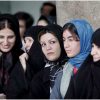
Reforms Will Grant Nationality to Children of Iranian Women
After more than a decade of women’s rights activism, Iran’s Guardian Council has finally approved an amendment that would grant Iranian citizenship to the children of Iranian women married to foreign men.
‘Salty’ Concern: Tackling High Salt Consumption in China
China’s almost meteoric transition from a being a low income to a middle income country within a span of four decades is often perceived as a miracle analogous to the post Second World War Japanese economic development experience.
Three Ways to End HIV Stigma and Discrimination
As a Public Health Doctor, I often meet people who experience stigma simply because they live with HIV. One person who still haunts me is a woman who is HIV positive and when she was in labor, a midwife would not help her. Instead she shouted at her to just push out the baby and then she stood far away from the bedside, disgusted by the woman’s HIV status. No one should go through such stigma at a vulnerable situation when they are about to birth life.
Brief Reflection on Trump’s Impeachment
It is very likely that the idea of impeaching Donald Trump will be a boomerang. Trump fans are listening to a furious campaign which smacks of coup d’etat and call his accusers traitors who deserve to go to jail.
Modern Conflicts Against the Backdrop of Climate Change, Inequalities, Injustice & Human Rights Violations
We will look at how modern conflicts will be affected by the recent unprecedented technological and societal developments. The nature of conflict is also changing. It is becoming more protracted, complex and unpredictable.
The Rise of Phantom Investments
According to official statistics, Luxembourg, a country of 600,000 people, hosts as much foreign direct investment (FDI) as the United States and much more than China. Luxembourg’s $4 trillion in FDI comes out to $6.6 million a person.
Salvaging the SDGs: New Thinking to Spur Action Takes Shape
For the first time since a new development agenda was adopted in 2015 to make the world a better place for everyone, government leaders assembled at the United Nations in late September to take stock of progress. The verdict of this summit was not good.
How Media Technocrats Manipulate Public Opinion
In a 1974 article, Woody Allen poked fun at biblical stories presenting ludicrous paraphrases of The Book of Job, Abraham´s intended sacrifice of his son Isaac, as well as The Book of Proverbs. One of Allen´s invented proverbs was: “The wicked at heart probably know something”, thus implementing that the “pure of heart”, i.e. credulous people, know nothing. 1
China Wants to Mainstream Environmental Protection
In the 2014 China-US joint announcement on climate change, China promised to peak its greenhouse gas (GHG) emissions around 2030. Later this commitment was cemented in the Paris Agreement signed in 2016.
No to Ageism, Yes to Intergenerational Equality
As we are celebrating the International Day of Older Persons today, we recognize that population ageing is a human success story, a story of longer and often healthier lives of the world’s people. The many faces of older persons that we see in Asia and in the Pacific, and, indeed, all over the world, attest to this fact. Still, however, ageing is considered a threat. There is talk about the “burden of ageing”, exploding healthcare costs, and concerns about plummeting economic growth due to the shrinking labour force. In many cities of Asia-Pacific, we see advertisement for “anti-ageing cosmetics” and surgeries. The current ideal is that we must be young, dynamic and without wrinkles or grey hair, especially older women.
Confronting New Climate Reality in Asia & the Pacific
Last week, world leaders gathered at the United Nations in New York for the Climate Action Summit. Their goal was simple: to increase ambition and accelerate action in the face of a mounting climate emergency.
Countercyclical Fiscal Policy Needed to Counter Global Economic Downturn
A conjuncture of developments, short- and medium-term, have conspired to further slow the world economy. In recent months, the International Monetary Fund (IMF), among others, has acknowledged that global economic prospects are worsening, forcing it to make not one, but at least five consecutive growth forecast revisions, all downward.
The Risk of Nuclear War is Increasing
Over the long course of the nuclear age, millions of people around the world, often led by a young generation of clear-eyed activists, have stood up to demand meaningful, immediate international action to halt, reduce, and end the threat posed by nuclear weapons to humankind and the planet.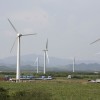
Finance Global Green New Deal for Sustainable Development
The United Nations (UN) Sustainable Development Goals (SDGs) can only be achieved by 2030 with the political will to change international economic rules and mobilize resources needed for a massive public sector-led investment push to reinvigorate world economic progress sustainably, says UNCTAD’s Trade and Development Report 2019 (TDR 2019).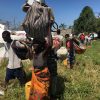
Climate Emergency: A Humanitarian Call to Action
We saw this coming. As humanitarians, our risk assessments in different parts of the world have always factored in the potential for extreme weather events and the spread of vector-borne diseases, of drought, desertification, and mass displacement. Emergency first responders like us work up scenarios for interventions and gain experience each time we put our planning to the test in real crises.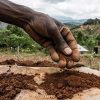
Fighting Climate Change: We Must Not Forget the Soils
Around the world, citizens took to the streets to demand their governments address climate change. In the U.S., this widespread activism illustrates the findings of a newly released report by the Chicago Council on Global affairs which found for the first time that the majority of Americans consider climate change a threat and the most critical foreign policy issue facing the country.
Nature’s Solution to Climate Change
When it comes to saving the planet, one whale is worth thousands of trees.

Jersey, a Gorilla and the Civil War in Cameroon
A month ago I visited Jersey, one of the few European territories still welcoming refugees, though in the case of Jersey they have to be wealthy and are generally fleeing not from war and misery, but from taxes. Once Jersey and the nearby island of Guernsey harbored one of Europe´s most famous political refugees – Victor Hugo (1802-1885), who after he had been too outspoken in his criticism of the autocrat Louis Napoleon found it more convenient to live on the Channel Islands than in France. In spite of being very close to France and with a population that at the time was mainly French-speaking, these islands were nevertheless British territory.
Africa’s Industrial Development: Turning Challenges into Opportunities
When world leaders gathered in New York for the 70th session of the General Assembly back in 2016, and proclaimed the period 2016-2025 as the Third Industrial Development Decade for Africa (IDDA III), it reaffirmed the importance of industrialization in supporting Africa’s own efforts towards sustained, inclusive and sustainable economic growth and accelerated development.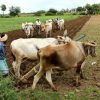
We Need Biodiversity-Based Agriculture to Solve the Climate Crisis
The Earth is living, and also creates life. Over 4 billion years the Earth has evolved a rich biodiversity — an abundance of different living organisms and ecosystems — that can meet all our needs and sustain life.
The Social Impact of Economic Inequality
Increasing economic inequality is a defining challenge of our time. In recent years, it has triggered analysis and reflection by many scholars, politicians and others on its causes and consequences on economic growth and efficiency, politics and democracy, human rights, individual behaviors, access to health, social cohesion and environmental degradation. The perception that the top 1% of income earners are gaining at the expense of the other 99% has resulted in widespread public debates in many countries on the social and political repercussions of inequality.« Previous Page — Next Page »





The views expressed in these articles are those of the authors and do not necessarily represent the views of, and should not be attributed to, IPS-Inter Press Service

The Week with IPS

NEXT STOP - SDGs
Tracking global progress towards a sustainable world
Tracking global progress towards a sustainable world
