Languages
Friday, October 16, 2026



News and Views from the Global South

Violence Arising From Madrassas
The increasing numbers of religious schools is being cited as the main reason behind violent protests in the northern Khyber Pakhtunkhwa province of Pakistan bordering Afghanistan.
Girls Determined to Fight Guns With Books
Shazia Begum, one of three girls injured in the attack on the Pakistani schoolgirl Malala Yousafzai says the Taliban had sought to silence a very influential schoolgirl.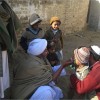
Vaccines Get Past Taliban, Finally
Over thirty thousand children in the remote Tirah area of the Khyber Agency, part of the Federally Administered Tribal Areas (FATA) in Northern Pakistan, have waited four years for protection from polio, a viral disease that is sometimes referred to as ‘infantile paralysis’ due to its crippling effects on children.
Pakistan Parties Uniting Against Drones
Political parties are stepping up opposition to the U.S. drone strikes and a planned operation to cleanse border areas of militants.
Taliban Need No Education
Samina Afridi, a lecturer at the University of Peshawar, regrets that down history the leaders of the Pashtun (also Pakhtun) tribes have conspired to keep them away from education and literacy. The Taliban are only the latest example.
Donors Turn Their Backs on Taliban
For the past five years Sharifullah Shah, a local doctor from the conflict-ridden North Waziristan province in Pakistan, has handed over 500 dollars to the Taliban during the month of Ramadan. But this year, he is putting his money straight into the Edhi Welfare Centre, where he knows it will reach those in need.
Pakistan’s Measles Deaths Hinder Global Goals
Measles outbreaks, which have killed at least 100 children in Pakistan’s militancy-hit border areas since May, have prompted calls by experts for better cooperation in territories adjacent to Afghanistan with international immunisation campaigns.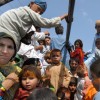
Back Home With Help and Hope
Thousands who fled their homes in the Taliban-led violence over the past three years have now returned to rebuild their lives, and their homes.
Pouring Edible Oil on Pakistan’s Troubled Areas
PESHAWAR, Jul 28 2012 (IPS) -Taking turns to lug a heavy can of edible oil, Mushtari and Sheema Gul, twin sisters aged nine, trip home happily from their school in Ghareebabad village in Pakistan’s troubled Bajaur Agency.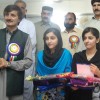
Schoolgirls Beat Taliban
Far from fears that female education is on the decline after the Taliban campaign against girls’ schools, female students outclassed their male counterparts in the secondary school examination for 2012.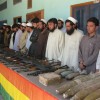
From Arms to Alms
Most families of Taliban men killed in fighting against the army in Pakistan or in Afghanistan have been reduced to living in abject poverty.
Taliban Thwarts Global Polio Eradication
By ordering a ban on polio immunisation, in its strongholds along the Afghanistan-Pakistan border, the Taliban is holding up an ambitious global programme to rid the world of the crippling childhood disease, say World Health Organisation (WHO) doctors.Former Militants in Pakistan Hunted Down by Taliban
“I joined the Taliban six years ago but deserted them last year because I felt that they were wrong. Now, the Taliban are chasing me like a shadow. They want to kill me,” said Abdul Ghafoor, 39, who surrendered to the army in northwest Pakistan in August 2011 and vowed to support the government’s peace efforts.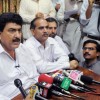
Osama’s Shadow Haunts Doctor
Concerns are mounting over the safety of Dr. Shakil Afridi in Peshawar jail. Afridi is alleged to have given information and DNA evidence to the U.S. authorities that led to identification and then the killing of Osama bin Laden.Pakistanis Blame CIA for Fresh Polio Cases
Pakistan’s efforts to contain polio in areas bordering Afghanistan may have received a setback following the conviction of a doctor who allegedly ran a fake vaccine programme to locate Al-Qaeda chief Osama bin Laden.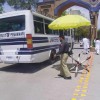
Taliban Seek Support ‘in Rushdie’s Name’
Taliban members have resorted to invoking fictitious links of academics with writer Salman Rushdie in a bid to boost their popularity.Doctor’s Tale Injects New Trouble
The sentencing of the Pakistani doctor believed to have provided the U.S. with vital DNA evidence that led to the tracing and killing of Osama bin Laden has set off new conflicts within Pakistan. The Taliban are now out to get him beyond what the law can.
Vaccination – Pakistan’s Missing Shots
The deaths of 20 children in an outbreak of measles in Pakistan’s Federally Administered Tribal Agency (FATA) are raising concerns over the state of immunisation in the conflict-ridden areas along the Afghanistan border.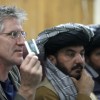
The Political Drones Get Louder
Growing numbers of activists are beginning to counter U.S. Drone attacks into Pakistani territory. The activists are confronting the U.S., but increasingly now the Pakistani government for allowing such attacks to continue.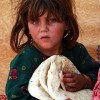
Taking Refuge in Hell Camp
"We have been spending sleepless nights without electricity and clean water. This place is not worth living in but we have no option and will remain here as long as the military operation continues in our area," said Gul Rahim, a former resident of Bara tehsil in Khyber Agency, currently languishing in the Jallozai refugee camp in the Nowshera district of Pakistan’s Khyber Pakhtunkhwa.
War on Terror Traumatises Pakistani Women
Collateral damage caused by the ‘war on terror’, prosecuted by the United States and its allies in Afghanistan since 2001, may well extend to psychological trauma sustained by thousands of women in the bordering areas of northwestern Pakistan.« Previous Page — Next Page »





The Week with IPS

NEXT STOP - SDGs
Tracking global progress towards a sustainable world
Tracking global progress towards a sustainable world
