Languages
Thursday, September 17, 2026



News and Views from the Global South

NGOs Urge Commission of Inquiry to Probe Sexual Abuse in U.N. Peacekeeping
A rising tide of sexual abuse in U.N. peacekeeping operations has triggered the launch of a high-level campaign to end the continued attacks on women and children and an urgent call for the creation of an independent commission of inquiry.
Q&A: Nuclear Disarmament a Non-Starter, “But I Would Love to Be Proven Wrong”
Albert Einstein, the internationally-renowned physicist who developed the theory of relativity, once famously remarked: “I know not with what weapons World War III will be fought, but World War IV will be fought with sticks and stones.”
Faith-Based Organisations Warn of Impending Nuclear Disaster
As the month-long review conference on the Nuclear Non-Proliferation Treaty (NPT) continued into its second week, a coalition of some 50 faith-based organisations (FBOs), anti-nuclear peace activists and civil society organisations (CSOs) was assigned an unenviable task: a brief three-minute presentation warning the world of the disastrous humanitarian consequences of a nuclear attack.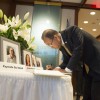
U.N. Staffers Secure at Home, Moving Targets Overseas
When the United Nations spent over 2.2 billion dollars refurbishing its ageing 65-year-old Secretariat building, one of its primary goals was to strengthen security to prevent any violent attacks on the glass house by New York city’s East River.
As Nuke Talks Begin, U.N. Chief Warns of Dangerous Return to Cold War Mentalities
Against the backdrop of a new Cold War between the United States and Russia, two of the world’s major nuclear powers, the United Nations is once again playing host to a four-week-long international review conference on the Nuclear Non-Proliferation Treaty (NPT).
Middle East Conflicts Trigger New U.S.-Russia Arms Race
The escalating military conflicts in the Middle East – and the month-long aerial bombings of Yemen by an Arab coalition led by Saudi Arabia – have triggered a new arms race in the politically-volatile region.
Riches in World’s Oceans Estimated at Staggering 24 Trillion Dollars
The untapped riches in the world’s oceans are estimated at nearly 24 trillion dollars – the size of the world’s leading economies, according to a new report released Thursday by the World Wide Fund for Nature (WWF).
Saudis Compensate Civilian Killings with 274 Million in Humanitarian Aid to Yemen
Saudi Arabia’s right hand does not know what its left foot is up to, belittles an Asian diplomat, mixing his metaphors to describe the political paradox in the ongoing military conflict in Yemen.
U.N. Helpless as Crises Rage in 10 Critical Hot Spots
The United Nations is fighting a losing battle against a rash of political and humanitarian crises in 10 of the world’s critical “hot spots.”
U.N. Struggles to Cope with New Humanitarian Crisis in Yemen
The United Nations, which is providing humanitarian aid to over 50 million refugees worldwide, is struggling to cope with a new crisis in hand: death and destruction in Yemen.
U.N. Warns of Growing Divide Between Nuclear Haves and Have-Nots
As she prepared to leave office after more than three years, High Representative for Disarmament Affairs Angela Kane painted a dismal picture of a conflicted world: it is “not the best of times for disarmament.”
U.N.’s Next Stop: Humanitarian Summit to Resolve Exploding Refugee Crisis
As the world's spreading humanitarian crisis threatens to spill beyond the borders of Syria and Iraq into Libya and Yemen, the United Nations is already setting its sights on the first World Humanitarian Summit scheduled to take place in Istanbul next year.
Pledges for Humanitarian Aid to Syria Fall Short of Target by Billions
When United Nations Secretary-General Ban Ki-moon stood before 78 potential donors at the Bayan Palace in Kuwait Tuesday, his appeal for funds had an ominous ring to it: the Syrian people, he remarked, "are victims of the worst humanitarian crisis of our time."
U.N. Staffers Caught in Deadly Crossfire in Ongoing Conflicts
The deadly Syrian military conflict - now entering its fifth year - which has claimed the lives of over 200,000 mostly civilians, including women, children and aid workers, has not spared the United Nations either.
Nuclear Threat Escalating Beyond Political Rhetoric
As a new cold war between the United States and Russia picks up steam, the nuclear threat is in danger of escalating – perhaps far beyond political rhetoric.
Cash-Strapped U.N. to Seek Funds for Syria at Pledging Conference in Kuwait
A cash-strapped United Nations, which is struggling to reach out to millions of Syrian refugees with food, medicine and shelter, is desperately in need of funds.
Hold the Rich Accountable in New U.N. Development Goals, Say NGOs
When the World Economic Forum (WEF) met last January in Switzerland, attended mostly by the rich and the super-rich, the London-based charity Oxfam unveiled a report with an alarming statistic: if current trends continue, the world’s richest one percent would own more than 50 percent of the world’s wealth by 2016.
World’s Richest One Percent Undermine Fight Against Economic Inequalities
The growing economic inequalities between rich and poor – and the lopsided concentration of wealth and power in the hands of the world’s one percent - are undermining international efforts to fight global poverty, environmental degradation and social injustice, according to a civil society alliance.
Middle Income Nations Home to Half the World’s Hungry
Nearly half of the world’s hungry, amounting to about 363 million people, live in some of the rising middle income countries, including Brazil, China, India, Indonesia and Mexico, according to a new report released Wednesday by the Washington-based International Food Policy Research Institute (IFPRI).
Veto Costs Lives as Syrian Civil War Passes Deadly Milestone
As the long drawn-out Syrian military conflict passed a four-year milestone over the weekend, the New York-based Global Centre for the Responsibility to Protect (R2P) summed it up in a striking headline: 4 years, 4 vetoes, 220,000 dead.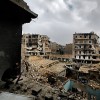
Middle East Conflicts Give Hefty Boost to Arms Merchants
The ongoing conflicts in Syria, Iraq, Libya and Yemen have helped spiral arms sales upwards to the Middle East, according to a study released Monday by the Stockholm International Peace Research Institute (SIPRI).« Previous Page — Next Page »


The Week with IPS

NEXT STOP - SDGs
Tracking global progress towards a sustainable world
Tracking global progress towards a sustainable world
