Languages
Tuesday, November 10, 2026



News and Views from the Global South
Active Citizens

Cassava Combating Rural Hunger in Zambia
In Zambia, a silver lining has emerged for widespread rural hunger and poverty, thanks to homegrown agricultural research. Local scientists have successfully developed four new, early-maturing and high- yielding cassava cultivars in an ambitious research project conducted in the cassava-rich Luapula Province, under the on-going Root and Tuber Improvement Programme (RTIP).
HUMAN RIGHTS: Mauritian Sex Workers Demand Rights
"Sex workers rights are human rights", close to a hundred people shouted during a recent march in Rose-Hill, a major town in Mauritius. Their aim was to sensitise the population, particularly the parliamentarians, to the state of sex workers on the island.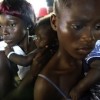
KENYA: Mobile Phones to the Rescue for Pregnant Women
Pumwani Maternity Hospital, in the impoverished Nairobi neighbourhood of Eastlands, is the site of a trial project using mobile phones to help HIV-positive mothers avoid passing the virus on to their children.
WATER: Miracle Man Eases Village’s Water Woes
Hermes Chimombo, a welder in his 50s, is a revered man in the impoverished Naotcha Township. Armed with rudimentary tools and a passion to ease people’s suffering, he has tapped a spring in the mountain above the slum to provide water for its 25,000 residents.
EDUCATION: Meet TESSA, Ugandan Teachers’ Best Friend
Beatrice Namuzibira’s class of 90 pupils is not even considered a large one, compared to classes in other schools. Universal primary education has filled classrooms beyond capacity across Uganda, putting a strain on teachers.
/UPDATE*/: Bypass Under Way At Mozambique Smelter
Aluminium giant BHP Billiton’s Mozal smelter has begun bypassing its fume treatment centres, emitting potentially dangerous fumes into the air without treating them first - despite a pending court case on the matter.
MIDEAST: The People Speak
The focus on people's movements in Palestine continues to gain momentum with growing non-violent demonstrations in Gaza, the occupied West Bank and occupied East Jerusalem, and with a Palestine-wide call for Boycott, Divestment and Sanctions (BDS) against Israel.
SOUTH AFRICA: Neglected Johannesburg Neighbourhood Rises Again
A month after property developer Alex Montwedi bought a 42-unit high-rise apartment building in Johannesburg’s Berea neighbourhood, he found himself chased out of the building by his own tenants.
SOUTH AFRICA: Draft Bill Is ‘A Charter for Rogues’
A coalition of civil society groups marched to South Africa's Parliament on Oct. 27 to protest against the draft version of a new Protection of Information Bill. "This bill is a betrayal of all the democratic principles we fought for," anti-apartheid stalwart Kader Asmal told the crowd.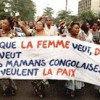
DR CONGO: ‘An Opportunity to Say Never Again’
Civil society in the DRC's eastern province of South Kivu is determined that meaningful action will follow from the publication of the U.N.'s Mapping Project, a report detailing some of the most serious human rights violations by state and non-state actors in the DRC between 1993 and 2003.Proposed Pension Bill Outrages Malawi Workers
A draft pension bill has created great concern among workers in Malawi, with some hurriedly seeking early retirement before it will be passed. The bone of contention is a section pegging the retirement age for women at 55 and men at 60.KENYA: Room to Improve on Governance
Kimani Wanyama*, a homosexual man living in Nairobi, knows what human rights violations are all about. His attempts over three years to receive treatment for reoccurring rectal gonorrhoea had resulted in verbal abuse and intense stigmatisation from the very people who were meant to help him.MALAWI: Village Chief Leads Fight For Maternal Health
In Ntcheu, a rural district in central Malawi, villagers have taken the fight against the country's high maternal mortality rate into their own hands. They have almost eradicated maternal deaths in the area by urging pregnant women to give birth in hospitals, under medical supervision.
MOZAMBIQUE: BHP Billiton Plans Six Month Bypass of Smelter Smokestack Scrubbers
Civil society groups are challenging a six-month authorisation granted aluminium giant BHP Billiton to emit potentially dangerous fumes from its Mozal smelter into the air without treating them first.MALAWI: Women Candidates Hard Hit by Election Postponement
News that Malawi’s November local government elections are to be postponed yet again has hit female candidates hard – and mostly in their pockets. And it could mean that the country will have less female candidates to vote for when they finally go to the polls.
ZAMBIA: Election Violence Could Mean Fewer Women Participants
There are growing fears that increasing numbers of women candidates and voters may not participate in the 2011 general elections because of an upsurge in election-related violence.MALAWI: Innovative Campaigning by Women Candidates
You will find Beauty Kasonda on her campaign trail at funerals, weddings, church functions or just about any local gathering in her community. Kasonda does not have the sort of funding her male counterparts have for campaigning in the country’s November 2010 elections but she is not letting that stop her.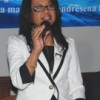
MADAGASCAR: Women Form Own Political Parties for Fair Representation
Brigitte Rasamoelina and Yvette Sylla are women with two different approaches to politics in Madagascar. One formed a political party, while the other decided to legalise her organisation as an association. But both women are considering running in Madagascar's November elections.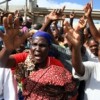
ZAMBIA: Calls for Political Parties to Field 50 Percent Female Candidates
With women having achieved little in terms of representation in decision-making positions in Zambia, a national women’s lobby group is hoping to change this in the 2011 general elections.
INDIAN OCEAN ISLANDS: Women Join Forces for Political Equality
"Instead of moaning all the time, why don’t you create your own (political) party?" some men asked Brigitte Rabemanantsoa Rasamoelina, a female politician from Madagascar. She accepted the challenge and in February formed Ampela Mano Politika, a political party which started with only 22 female members and now has over 5,000 female members ... and 10 men.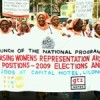
MALAWI: Women Candidates Desperate to Finance Freebies for Voters
Mable Malinda wants to contest the local government elections but the independent candidate who is using her life savings to fund her campaign only has 500 dollars left in her bank account. She has already spent three times as much buying handouts for voters – an unofficial requirement when contesting elections in Malawi.« Previous Page — Next Page »





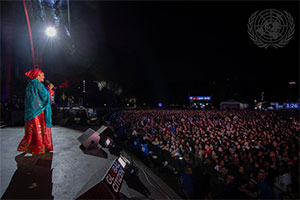 Global Citizen Festival in New York. Credit: UN Photo/Eskinder Debebe
Active citizens are committed to social change because they know that it is achievable. However, major political challenges face active citizens across the world. For example, in authoritarian regimes in Latin America where the hegemonic party has been in power for decades on end, protestors and human rights activists face enormous repression and struggle to materialize their advocacy into concrete results. The same can be said for Africans, where a shift towards elected government in recent decades has yet to translate into an effective voice in decision-making. Now, the Strengthening Citizen Demand for Good Governance, which uses evidence-based approaches – funded by DFID's Governance and Transparency Fund – seeks to raise their voices.
In 2025, the CIVICUS Monitor’s People Power Under Attack report revealed that civic freedoms are severely limited in 122 of 198 countries and territories, and only 7.2% of the global population now lives in countries where civic space is open. Through partnership with the Overseas Development Institute (ODI) and CIVICUS, IPS reporters across the continent will seek to define the extent and limits of state capability, government accountability and the responsiveness of leaders to the needs of citizens.

The Week with IPS

NEXT STOP - SDGs
Tracking global progress towards a sustainable world
Tracking global progress towards a sustainable world
