Languages
Saturday, November 14, 2026



News and Views from the Global South
Active Citizens
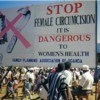
RIGHTS-UGANDA: Female Circumcision Still a Vote Winner
Over three decades ago a 14-year-old girl, her sister and a group of young teenagers from Bukwo headed to the River Amana for a ceremony that would change their lives forever.AFRICA: Government on Collision Course with Civil Society
The acquittal of former President Frederick Chiluba on charges of theft after a seven-year long landmark case, and the refusal by the Zambian government to appeal, has put government and civil society on a collision course.UGANDA: The Media is Not Free
Every Saturday afternoon at a public house in the capital city, Lynne Anite, a journalism student at Makerere University, would join senior government officials, academics, and even business people to debate about current affairs.
RIGHTS: Police Force HIV Tests for Sex Workers
It was, Malawian police say, a routine sweep for criminals at one of the country’s busiest border posts. They were looking for criminals.SIERRA LEONE: Journalists at War with Highest Court
Umaru Fofana looks dishevelled. His hair is overgrown and people who do not know him could be mistaken for thinking he just joined an Afro band. And his hanging beard will surely solicit suspicious glances.AFRICA: Youth Wars Cause Turmoil in Jonglei
There was no moon the night the armed men from the Murle tribe attacked the fishing village: it took place in complete darkness. Nyakong Both grabbed her two youngest boys and fled across the nearby river, as the men from the Murle tribe burnt down huts.CORRUPTION-SIERRA LEONE: Anti Graft Now in the Hands of Civil Society
The fight against corruption in Sierra Leone has taken on a new face. Government and civil society are now working together to stamp out rampant fraud.
MALAWI: Surplus Crop, But We Are Starving – Farmers
In a country where maize crop surplus fills the national storehouses to capacity, farmers Ida and Montfort Salijeni and their four children have turned to wild tubers for food.RIGHTS-UGANDA: Suppressing ‘Enemies' of the State
In the wee hours of one Saturday morning, Mary Serumaga was woken up by a disturbing phone call. Her younger brother Robert Kalundi Serumaga had just been abducted by four unknown gun-wielding men the previous night.UGANDA-RIGHTS: Bride Price: You Feel You Are Family Property
John Owor is a paid spokesperson for brides and grooms. His job is to represent one of the parties during traditional marriage negotiations, which involves the payment of a bride price.SIERRA LEONE: Banned Opposition Radio Station Goes to Court
Sierra Leone's largest opposition party has taken the country's media monitoring body to court for banning its radio station.
RIGHTS-AFRICA: Uganda Women Seek Gender Recovery Plan
After two decades of war during which thousands of children were used as child soldiers and many women raped, northern Uganda’s recovery plan is to be spent on building roads rather than helping the country’s most vulnerable.MALAWI: Non-Voters Denied Farm Subsidies
Gina Champiti, a widowed mother of eight children aged between three and 12 did not register to vote in the May presidential and parliamentary elections. This is going to cost her her livelihood.
ETHIOPIA: Ethnic Federalism Could Lead to Election Violence
Criticised as system of dividing and ruling people according to their ethnic groups, Ethiopia’s federalism has just become a bone of contention.RIGHTS-AFRICA: Ugandan Court Asked to Declare Bride Price Unconstitutional
Deborah Awori could not stop her husband from selling their 14-year-old daughter away in marriage using the time-honoured tradition of asking for a "bride price".DEVELOPMENT-AFRICA: Airwaves Changing Lives of the Physically Challenged
In the past physically challenged Theophilus Ayim would have been kept behind closed doors by his family because they feared he would be scorned and ridiculed by the community.
RIGHTS-UGANDA: Women Score Victory Against Gender-Based Violence
Women are celebrating a hard-won victory for gender rights after intense public protests led to today’s re-arrest of the country’s police boss – a self-confessed wife-killer.HEALTH-AFRICA: South Sudan At Risk from Blindness
In the war-devastated South Sudan, a region with a population of over eight million people, Yeneneh Mulugeta is the only permanent ophthalmologist.ZAMBIA: NGO Bill Still Inspires No Confidence
As the Zambian parliament resumes, civil society organisations (CSOs) have come out strongly to oppose the Non-Governmental Organisation (NGO) Bill, which seeks to regulate their operations.MEDIA: African Journalists Reject EU-sponsored Observatory
A project to create a Pan-African Media Observatory (PAMO), sponsored by the European Union in cooperation with the African union, has been rejected by numerous African journalist organisations.RIGHTS-UGANDA: Women Press for Domestic Violence Bill
"Man forces wife to breastfeed puppies," screams one headline. "Police boss shoots wife," shouts another; and a third: "Man batters wife over meat". These are typical headlines in Uganda’s newspapers today. Women daily report surviving different forms of violence in their homes: physical, sexual, emotional or even economic abuse.« Previous Page — Next Page »


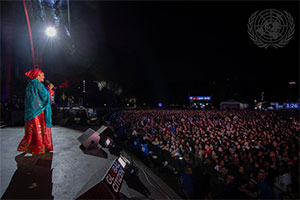 Global Citizen Festival in New York. Credit: UN Photo/Eskinder Debebe
Active citizens are committed to social change because they know that it is achievable. However, major political challenges face active citizens across the world. For example, in authoritarian regimes in Latin America where the hegemonic party has been in power for decades on end, protestors and human rights activists face enormous repression and struggle to materialize their advocacy into concrete results. The same can be said for Africans, where a shift towards elected government in recent decades has yet to translate into an effective voice in decision-making. Now, the Strengthening Citizen Demand for Good Governance, which uses evidence-based approaches – funded by DFID's Governance and Transparency Fund – seeks to raise their voices.
In 2025, the CIVICUS Monitor’s People Power Under Attack report revealed that civic freedoms are severely limited in 122 of 198 countries and territories, and only 7.2% of the global population now lives in countries where civic space is open. Through partnership with the Overseas Development Institute (ODI) and CIVICUS, IPS reporters across the continent will seek to define the extent and limits of state capability, government accountability and the responsiveness of leaders to the needs of citizens.

The Week with IPS

NEXT STOP - SDGs
Tracking global progress towards a sustainable world
Tracking global progress towards a sustainable world
