Languages
Wednesday, November 18, 2026



News and Views from the Global South
Civil Society
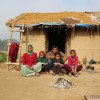
Clean Cookstoves Could Change the Lives of Millions in Nepal
 When 26-year-old Laxmi married into the Archaya household in Chhaimale village, Pharping, south of Nepal’s capital Kathmandu, she didn’t think she would be spending half the day in the kitchen inhaling smoke from the stove.

Women Farmers Rewrite Their History in Chile’s Patagonia Region
More than 100 women small farmers from Chile’s southern Patagonia region have joined together in a new association aimed at achieving economic autonomy and empowerment, in an area where machismo and gender inequality are the norm.
Rural Women in Latin America Define Their Own Kind of Feminism
Rural organisations in Latin America are working on defining their own concept of feminism, one that takes into account alternative economic models as well as their own concerns and viewpoints, which are not always in line with those of women in urban areas.

Investigation Tears Veil Off World Bank’s “Promise” to Eradicate Poverty
An expose published Thursday by the International Consortium of Investigative Journalists (ICIJ) and its media partners has revealed that in the course of a single decade, 3.4 million people were evicted from their homes, torn away from their lands or otherwise displaced by projects funded by the World Bank.
1.7 Billion Dollars Needed to Improve Ebola-hit Countries’ Health Care, Says Oxfam
The international humanitarian charity Oxfam is calling on the World Bank and major donors to raise 1.7 billion dollars to improve poor health systems in Ebola-affected countries and strengthen community networks for preventing another epidemic.Europe’s Unregulated Lobbying Opens Door to Corruption, Says Rights Group
Lobbying is an integral part of democracy, but multiple scandals throughout Europe demonstrate that a select number of voices with more money and insider contacts can come to dominate political decision-making – usually for their own benefit.
Clean Cookstoves Could Change the Lives of Millions in Nepal
When 26-year-old Laxmi married into the Archaya household in Chhaimale village, Pharping, south of Nepal’s capital Kathmandu, she didn’t think she would be spending half the day in the kitchen inhaling smoke from the stove.
Acid Attacks Still a Burning Issue in India
Vinita Panikker, 26, considers herself "the world's most unfortunate woman".
Latin America Heralds New Era with United States
Latin America presented its own recipes for development in the new era of relations with the United States in the Seventh Summit of the Americas, where Cuba took part for the first time and the U.S. said it would close the chapter of “medd[ling] with impunity” in its neighbours to the south.
Cyclone Pam Worsens Hardship in Port Vila’s Urban Settlements
Severe Tropical Cyclone Pam, which swept through the South Pacific Island state of Vanuatu in mid-March, has deepened hardships faced by people living in the informal settlements of the capital, Port Vila. Winds of up to 340 kph and torrential rain shattered precarious homes, cut off fragile public services and flooded communities with unsealed roads, poor drainage and sanitation.Spiritual Leaders Urge Action On Nuclear Disarmament
Religious leaders addressed the United Nations in New York last week, pleading on moral grounds for global nuclear disarmament.
U.N. Warns of Growing Divide Between Nuclear Haves and Have-Nots
As she prepared to leave office after more than three years, High Representative for Disarmament Affairs Angela Kane painted a dismal picture of a conflicted world: it is “not the best of times for disarmament.”
Economic Slowdown Threatens Progress Towards Equality in Latin America
Predictions of a sharp slowdown in Latin America’s economic growth this year make it even more necessary for the region’s leaders to make commitments to boost prosperity with equality during the Seventh Summit of the Americas, currently taking place in the Panamanian capital.
Nepal: A Trailblazer in Biodiversity Conservation
At dusk, when the early evening sun casts its rays over the lush landscape, the Chitwan National Park, a UNESCO World Heritage Site about 200 km south of Nepal’s capital, Kathmandu, is a place of the utmost tranquility.
781 Million People Can’t Read this Story
If you are reading this article, consider yourself one of the lucky ones; lucky enough to have received an education, or to be secure in the knowledge that your child will receive one. Lucky enough to be literate in a world where – more often than not – the ability to read and write can mean the difference between a decent life and abject poverty.
Opinion: Shared Action for a Nuclear Weapon Free World
From the end of April, the Nuclear Non-Proliferation Treaty (NPT) Review Conference will be held in New York. In this year that marks the seventieth anniversary of the atomic bombings of Hiroshima and Nagasaki, I add my voice to those urging substantial commitments and real progress toward the realisation of a world without nuclear weapons.Mexican Human Rights Fight Illustrated in New Graphic Novel Series
A Dublin-based human rights group has launched a series of graphic novels highlighting the stories of activist groups and rights struggles around the world.
In Belize, Climate Change Drives Coastal Management
A five-year project launched here in Belize City in March seeks to cement a shift in view of climate change and its impact on Belize’s national development.U.N. Rapporteur Calls for Action on Discrimination of Roma
The United Nations rapporteur for minorities has anti-Roma and anti-'Gypsy' bias in her sights.At Least 18 Already Killed in Yarmouk Attacks: Amnesty International
At least 18 civilians have already been killed in the attack on the Syrian refugee camp of Yarmouk, according to Amnesty International.
In Bangladesh, Gender Equality Comes on the Airwaves
Judging by how often they make headlines, one might be tempted to believe that women in Bangladesh don’t play a major role in this country’s affairs.« Previous Page — Next Page »


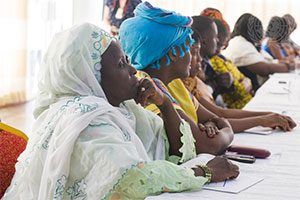 Representatives of Civil Society, Sierra Leone. Credit: UN Photo/Eskinder Debebe
Civil society faces mounting threats worldwide, even as it remains essential for democratic accountability, especially in countries struggling with economic instability and social inequality. However, at the same time, nations with weak democratic governance structures also systemically suppress the power of civil society. Human rights activists across the Global South frequently challenge issues such as political persecution and gender oppression, but in return face state-sanctioned punishment for their advocacy. Imprisonment and exile are common mechanisms of punishment that seek to erode the strength of civil society. The 2026 World Press Freedom Index has reached its lowest level in 25 years, with more than half of the world’s countries now falling into the "difficult" or “very serious” category for press freedom. IPS seeks to highlight the work of civil society across the Global South as well as the challenges that they face.
Updated by Yilan Batista and Shuli Wong August 2026

The Week with IPS

NEXT STOP - SDGs
Tracking global progress towards a sustainable world
Tracking global progress towards a sustainable world
