Languages
Friday, November 27, 2026



News and Views from the Global South
Civil Society
BALKANS: Apologising to Sterilised Roma Women – Slovakia’s Turn
Rights activists are hoping a landmark announcement by the Czech government regretting forced sterilisation of Roma women in the past will push politicians in neighbouring Slovakia to follow suit.ROMANIA: Business Crowds Out Bucharest Life
Competing with the destruction caused by former Romanian dictator Nicolae Ceausescu’s ‘systematisation’ plans might be hard. But an official report says that "the aggression on Bucharest’s architectural heritage, documented since 1989, exceeds Ceausescu’s acts.’’GUATEMALA: Sex Education, Family Planning Finally Available
Social organisations in Guatemala are celebrating the entry into effect of a family planning law that will usher sex education into the country's classrooms and facilitate access to birth control methods, as a victory in the fight against the country's high birth and maternal and infant mortality rates.BURMA: Civil Society Makes Its Mark in Aftermath of Cyclone Nargis
Eighteen months after the powerful Cyclone Nargis tore through military-ruled Burma, one question that dogged early relief efforts has lost relevance: does the country have an active civil society to help victims?SOUTH AFRICA: ‘Shoot to Kill’ Comment Shocks Judge
In more than 34 years as a judge, he has not been as deeply concerned by anything as he was by the recent comment of a South African deputy minister of police that police officers should shoot and "kill the bastards".Q&A: “We Have Linked Machismo and Femicide in the Public Mind in Chile”
More than 500 Chilean women have been killed by their partners, ex-partners or strangers since 2001. This year alone, there have been 52 "femicides", economist Gloria Maira said on Wednesday, the International Day for the Elimination of Violence against Women.ZAMBIA: Electoral Commission Accused of Bias
The Electoral Commission of Zambia (ECZ) is once again under fire from opposition political parties and some civil society organisations, which accuse it of bias in favour of the ruling party during elections.SRI LANKA: Rights Groups Blame Gov’t Apathy for Migrant Woes
Dozens of Sri Lankan migrant workers languishing under a flyover in Jeddah in Saudi Arabia, claiming to be stranded, exemplify the crisis of migration that Sri Lankan authorities have faced over the years.ENVIRONMENT: Gov’t Silence Dooms Whales to Slaughter
Latin American governments are considering a bloc response to the Japanese whaling fleet's departure for Antarctica, in a new season of what it claims is "hunting for scientific purposes" and which threatens to kill 1,000 whales in the protected Southern Ocean sanctuary.CORRUPTION-UGANDA: Leaders’ Integrity Questioned
Seated at a u-shaped table is an assembly of middle-aged men and women clad in business suits, faces stern and expressionless. Refreshments - bottled water, sodas and giant flasks of tea - clutter the long table, competing for space with piles of documents.US-COLOMBIA: Activists Target “World of Coca-Cola”
Activists from the U.S. and Colombia are targeting the World of Coca-Cola museum, located near its headquarters in Atlanta, Georgia, accusing the company of "union busting", paying its workers "poverty wages", and engaging in environmentally destructive practices.THAILAND: ‘Media’s Election Coverage: Numbers High, Quality Low’
Elections are always a period of intense coverage by the Thai media. The sheer surfeit of stories on candidates of every political stripe and selected issues is guaranteed to raise media visibility a notch or two higher.ASIA: Civil Society Steps Up Efforts Towards Alternative Economy
Amid worsening poverty, income inequality and a host of environmental hazards that are afflicting many countries, what does the world need today?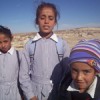
MIDEAST: Palestinian Children Face Daily Settler Attacks Getting to School
Being able to travel to school in relative safety is something children all over the world take for granted. But, for Palestinian children living in the shadow of the ubiquitous and illegal Israeli settlements dotting the West Bank, simply walking to school can be a terrifying experience.Q&A: ‘MDGs Don’t Recognise Role of Human Rights in Poverty Fight’
As the number of people living in poverty swell to over two billion, Amnesty International Secretary-General Irene Khan makes a strong argument for human rights to be made central to development and eradication of poverty.Q&A: Wanted: Economy at the Service of Mankind
The outbreak of the global financial crisis that followed the collapse of the U.S.'s major financial institutions last year sent many economies into a downward spiral. Many were also forced to rethink their economic development models.POLITICS: Realities Collide at Halifax “War Conference”
While the world's top military elites gather inside a fortified hotel to discuss NATO's future, protesters question the organisation's legitimacy, secrecy, and the lack of democratic debate about the increasingly unpopular war in Afghanistan.
PERU: Fighting Hunger with Native Crops
As if he were showing off a treasure, Dionicio Sarmiento holds up his seed potatoes with a smile. "Look how nice they are, all ready to plant. It'll be a good harvest," says the peasant farmer from Huancavelica, Peru's poorest province, where most of the population depends on subsistence farming.CHILE: Mapuche Detainees Say They Were Framed
"This lie has got to end," said a sobbing Luisa Marilef, a 55-year-old Mapuche woman who says her son's arrest and prosecution under Chile's anti-terrorism law was part of a set-up by the police and prosecutors.CLIMATE CHANGE-MEXICO: A Policy of Pretence
Although it is the second largest emitter of greenhouse gases in Latin America and the Caribbean, after Brazil, and will be hosting next year's United Nations climate meeting, Mexico is heading to the Cophenhagen summit practically empty-handed.
RIGHTS-LAOS: How Women Cope With Disability – Part 1
Before 2002, Chanhpheng Sivila held training workshops for the many Lao disabled women and men at her own house.« Previous Page — Next Page »


 Representatives of Civil Society, Sierra Leone. Credit: UN Photo/Eskinder Debebe
Civil society faces mounting threats worldwide, even as it remains essential for democratic accountability, especially in countries struggling with economic instability and social inequality. However, at the same time, nations with weak democratic governance structures also systemically suppress the power of civil society. Human rights activists across the Global South frequently challenge issues such as political persecution and gender oppression, but in return face state-sanctioned punishment for their advocacy. Imprisonment and exile are common mechanisms of punishment that seek to erode the strength of civil society. The 2026 World Press Freedom Index has reached its lowest level in 25 years, with more than half of the world’s countries now falling into the "difficult" or “very serious” category for press freedom. IPS seeks to highlight the work of civil society across the Global South as well as the challenges that they face.
Updated by Yilan Batista and Shuli Wong August 2026

The Week with IPS

NEXT STOP - SDGs
Tracking global progress towards a sustainable world
