Languages
Saturday, November 28, 2026



News and Views from the Global South
Civil Society
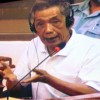
CAMBODIA: Corruption Allegations Undermine Khmer Rouge Tribunal
The voice of Comrade Duch reverberates daily through the speakers at the 500- seat courtroom in Phnom Penh as he gives testimony in his trial for crimes against humanity.SINGAPORE: Evangelical Christians Take on Civil Society
For 25 years, the Association of Women for Action and Research (AWARE) has been Singapore's most important civil society campaigner for gender justice.FIJI: Women Sidelined By Military Regime
Fiji, a multi-racial, multi-cultural country of 300 islands in the South Pacific, has undergone another coup - the fourth in 22 years. The women of Fiji want their voices to be heard as they work on ways to bring peace back to their country, and they are asking for the United Nations to support their efforts.SRI LANKA: Media Kept on Tight Leash
As the latest round of Asia’s longest-running guerrilla war winds down, scores of journalists here are experiencing intimidation and harassment for being critical of the military campaign against the separatist Liberation Tigers of Tamil Eelam (LTTE).ZIMBABWE: Urban Residents Left Behind by Dollarisation
Cash-strapped residents of Bulawayo, Zimbabwe's second city are digging in their heels and refusing to pay utility bills despite the municipality teetering on the brink of bankruptcy. At the heart of the dispute are dismal service delivery and the conundrum of using multiple currencies in an economy that boasts world record inflation.BRAZIL: University Racial Quotas Bogged Down in Congress
Claudio Fernández is able to study law thanks to affirmative action quotas at the Rio de Janeiro State University (UERJ). But a draft law to expand race quotas to all public institutions of higher education is stalled in the Senate.
ZIMBABWE: Who Speaks for the People on New Constitution?
"Are you still unemployed? Take charge and complete the change. We the people shall write our own constitution," read the many bright posters now adorning street walls, lampposts and rubbish bins in Zimbabwe’s capital, Harare.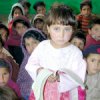
RIGHTS-PAKISTAN: Back to School in Swat, But for How Long?
Tiny Sheema is happy to be back in school in Swat, a volatile northern district in the North West Frontier Province (NWFP).HEALTH-ASIA: Taiwan Blazes a Trail to Help Drug Users with HIV
Taiwan is emerging as a beacon of hope for countries across Asia grappling to stop the spread of the AIDS epidemic among injecting drug users (IDUs), a major risk group.HEALTH: Final Push to Control Malaria by 2015
About one million people die every year from malaria, including a child every 30 seconds. Half a billion people are infected annually. Africa alone, according to studies, loses 12 billion dollars in productivity and to treating the disease. And almost all of it is easily preventable.RIGHTS: Some Common Hopes Lie With Lords
Human rights campaigners are looking to the House of Lords to thwart, or at least dilute, a proposed new law to enable secret inquest.POLITICS-SOUTH AFRICA: ANC Scores Another Victory: Now Deliver, Voters Say
As results of South Africa's fourth democratic elections held on Apr. 22 come in, the ruling African National Congress (ANC) is poised to return to power in the 400 seat National Assembly. The party is also on course to emerge as the governing party in all but one of the nine provinces. The main opposition party, the Democratic Alliance, is likely to take the Western Cape.DISARMAMENT: New Promise of a Nuclear-Free World
Leading supporters of disarmament see new hope arising from the announcement by the U.S. and Russian presidents that they are willing to replace the Strategic Arms Reduction Treaty (START) with a new one.RIGHTS-MEXICO: Major Blow to Child Porn Ring
Seven Mexicans who allegedly created and ran a child porn ring that sent on-line images to Argentina, Brazil, Bulgaria, Colombia, Chile, Spain, the United States and Venezuela were arrested in Mexico.COLOMBIA: Paramilitary Chief Says He Helped Finance Uribe’s Campaign
Former Colombian paramilitary chief and drug lord Diego Murillo, alias "Don Berna", testified in a U.S. court that he helped finance President Álvaro Uribe’s first election campaign, in 2002.RIGHTS-BRAZIL: Gay-Bashing Murders Up 55 Percent
In 2008, 190 homosexuals were killed in Brazil, one every two days, representing a 55 percent increase on the previous year – a veritable "homocaust" according to gay rights activists.
HUMAN RIGHTS: Ominous Silence About Domestic Violence
Over a quarter of Armenian women have been hit or beaten by a family member and about two thirds have experienced psychological abuse, yet the state grossly fails to prevent, investigate and punish domestic violence, say researchers and rights activists.
BRAZIL: Pilot Project Helps Men Abandon Violence
Some men interpret an overly long glance from another man as "a gay thing," others as "a provocation" to fight - ideas that are part of the "machista" mindset that a government initiative in Brazil is trying to break down.RIGHTS: Racism Conference Recovers from Bad Start
The United Nations racism conference regained its momentum Tuesday with the approval of the final declaration, leaving behind the unpleasantness of the first day, when Iranian President Mahmoud Ahmadinejad made a divisive opening speech.SOUTH AFRICA: Communities Draft Health Map to Push for Better Services
The quality of South African public health services cannot improve if community-based organisations (CBOs) are not given a greater role in shaping, developing and implementing national and provincial health policies.DEVELOPMENT: Asian NGOs Must Lead in Asia
In a spirit of South-South Cooperation Asian NGOs must take the lead from international and western NGOs working in war-torn Sri Lanka and across Asia, as they understand the local dynamics and culture much more deeply than anyone else, an experienced Asian NGO leader told IPS.« Previous Page — Next Page »


 Representatives of Civil Society, Sierra Leone. Credit: UN Photo/Eskinder Debebe
Civil society faces mounting threats worldwide, even as it remains essential for democratic accountability, especially in countries struggling with economic instability and social inequality. However, at the same time, nations with weak democratic governance structures also systemically suppress the power of civil society. Human rights activists across the Global South frequently challenge issues such as political persecution and gender oppression, but in return face state-sanctioned punishment for their advocacy. Imprisonment and exile are common mechanisms of punishment that seek to erode the strength of civil society. The 2026 World Press Freedom Index has reached its lowest level in 25 years, with more than half of the world’s countries now falling into the "difficult" or “very serious” category for press freedom. IPS seeks to highlight the work of civil society across the Global South as well as the challenges that they face.
Updated by Yilan Batista and Shuli Wong August 2026

The Week with IPS

NEXT STOP - SDGs
Tracking global progress towards a sustainable world
