Languages
Saturday, November 28, 2026



News and Views from the Global South
Civil Society
CHINA: Book Release Stirs Resentment
At first it was nothing out of the ordinary. A book intriguingly titled ‘China Is Not Happy’ was expected to generate a buzz because it claimed to detail the world’s most populous nation and aspiring superpower’s resentment of foreign abuses.RIGHTS: Racism Conference Caught in the Crossfire
The United Nations racism conference, trapped from its rocky start between the caution of Western countries and the inflamed speech of Iranian President Mahmoud Ahmadinejad, could still avoid failure, say independent experts.DEVELOPMENT: IMF, Reform Thyself, Groups Say
Ahead of the annual meetings of the world's biggest international financial institutions this weekend, calls are growing for the United Nations to take new initiatives on financing for development in poor countries.CHILE: Transparency Law Opens Access to Information
The Law on Transparency and Access to Public Information came into force in Chile on Monday. Although experts say there is room for improvement, and they foresee some difficulties in its implementation, they do not hesitate to describe it as a useful step forward.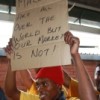
SOUTH AFRICA: Thousands of Traders Might Lose Jobs as Market Turns into Mall
Hundreds of traders at the Early Morning market in Durban fear the municipality’s plans to turn the area into an upscale shopping mall that will cost them their livelihoods. The redevelopment is one of many currently underway in South Africa’s urban centres to upgrade city infrastructure for the 2010 Soccer World Cup.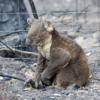
AUSTRALIA: Forgotten Victims of Bushfires’ Fury
The fires which swept across 400,000 hectares of bush in the south-eastern Australian state of Victoria in February left 173 people dead and ruined more than two thousand homes. But while they razed businesses, schools and kindergartens to the ground, wildlife and their habitats were also destroyed.
Q&A: ‘To Be an Independent Activist Was One of My Dreams’
As an activist in China, Yuan Feng actively advocates women's rights. Yuan is now the director of Combating Domestic Violence against Women and a leading figure of Gender and Development (GAD) group in China. She visited South Korea to join a newly established feminist network, Network for GloCal Activism and School of Feminism. Excerpts from the interview.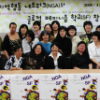
CIVIL SOCIETY: New Feminist Network for 'Glocal' Activism
Feminist activists have adopted ‘glocal’, a relatively new geolexical construct, to bridge activism from across Asia, Latin America and Africa.THAILAND: With Censorship, Thais Turn to Websites and Foreign Media
When the Thai government imposed an emergency law cracking down on rampaging red-shirted protesters on the streets of Bangkok, the military, in combat gear, was not its only weapon. The state’s censors were given liberty to silence critical media.ENVIRONMENT-BRAZIL: Protecting the Jungle Has a Price
Government officials, business leaders and non-governmental organisations agreed in Brazil on the need for rich countries and companies to "pay" the people of the Amazon jungle as "providers of environmental services" for contributing to the fight against climate change by not deforesting.RIGHTS-US: No Impunity for Torturers, Groups Urge
Human rights advocates were quick to praise President Barack Obama for Thursday's release of the infamous "torture memos" used by the Bush-era Justice Department to justify cruel, inhuman and degrading treatment of war-on-terror prisoners. However, they appear unanimously critical of the president’s decision not to prosecute the Central Intelligence Agency operatives who used these techniques.
HAITI: Fanmi Lavalas Banned, Voter Apprehension Widespread
Weekend senatorial elections in Haiti are mired in controversy as Fanmi Lavalas (FL), the political party widely backed by the poor majority, has been disqualified.RIGHTS: Ivory Tower Not Always a Safe Haven
Universities are places for teaching, studying and learning, but for a prominent scholar in Belarus, researching and publishing on topics that the government considered unpopular led to a progression of abuse that began with being snubbed by academic conferences and isolated at the university and ended with his termination and even death threats.Q&A: Indigenous People in Colombia “Have Become a Strong Force”
There is a heavy turnover of social movement leaders in Colombia, given the frequency with which they are killed, displaced or forced into exile. And because of the dangers, those who step up to the plate can be considered veritable heroes – one of whom is indigenous leader Aída Quilcué.GREECE: ‘Culture of Control’ Taking Over
The government of the right-wing New Democracy has announced massive security measures that legal experts warn can corrode social and political rights.DISARMAMENT: Norway Seeks a New Push
Norway's foreign affairs minister Jonas Gahr Støre has called for giving new priority to nuclear disarmament that has been assigned to oblivion since the fall of the Berlin Wall in 1989.SRI LANKA: Economic Crisis Ramping Up, As War Winds Down
Government troops are closing in on the last remnants of Tamil Tiger resistance in northern Sri Lanka as an upsurge of more that two years of fighting winds down. But, the country’s economic woes aren’t over. More and more pressure it being put on President Mahinda Rajapaksa’s cash-strapped administration.BRAZIL: New Offensive for Faster Land Reform
Brazil’s landless movement (MST) has launched its annual April demonstrations to demand an acceleration of land reform efforts and commemorate the Eldorado de Carajás massacre, in which 19 rural protesters were killed by the police and hundreds injured.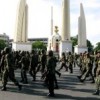
THAILAND: Anti-Govt Protesters Cede Ground to Military
For nearly two weeks, Pairoj Chotsripanporn joined the ranks of anti-government protesters gathered outside the prime minister’s office, wearing the trademark red shirt of the movement.CHINA: Macau Moves One Step Closer to Beijing
China’s entrepreneurial south has always been Chinese leaders’ favourite spot for conducting experiments. Ever since markets advocate Deng Xiaoping launched experimental economic zones in the country’s south in 1992, paving the way for China’s emergence as an export powerhouse, the industrious Pearl River Delta has established itself as the epitome of daring in this nominally communist country.RIGHTS-AUSTRALIA: Parliament Tightens Protest Ban at Spy Base
Despite ongoing community concerns over the highly secretive Pine Gap spy station in central Australia, the nation’s parliament has moved to effectively ban protest at the joint Australia-United States base.« Previous Page — Next Page »


 Representatives of Civil Society, Sierra Leone. Credit: UN Photo/Eskinder Debebe
Civil society faces mounting threats worldwide, even as it remains essential for democratic accountability, especially in countries struggling with economic instability and social inequality. However, at the same time, nations with weak democratic governance structures also systemically suppress the power of civil society. Human rights activists across the Global South frequently challenge issues such as political persecution and gender oppression, but in return face state-sanctioned punishment for their advocacy. Imprisonment and exile are common mechanisms of punishment that seek to erode the strength of civil society. The 2026 World Press Freedom Index has reached its lowest level in 25 years, with more than half of the world’s countries now falling into the "difficult" or “very serious” category for press freedom. IPS seeks to highlight the work of civil society across the Global South as well as the challenges that they face.
Updated by Yilan Batista and Shuli Wong August 2026

The Week with IPS

NEXT STOP - SDGs
Tracking global progress towards a sustainable world
