Languages
Saturday, November 28, 2026



News and Views from the Global South
Civil Society
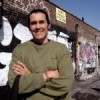
MEXICO: Chronicler of Oaxaca Struggle Finds Himself in a Lead Role
Photographing revolutionary movements seems to run in Gustavo Vilchis's family. Four generations ago, his great-grandfather snapped a picture of Emiliano Zapata. Vilchis, a 29-year-old photographer and human rights activist from Guerrero, Mexico, keeps the photo of the mustachioed Mexican revolutionary hero taped to the inside cover of his notebook.MUSIC-VENEZUELA: “The System” Continues to Collect Accolades
"Another prize...let’s go get ice cream to celebrate," said their mother, and the boys jumped up to get their shoes on and head out for their reward, as the TV set in their tiny living room broadcast the news about the tribute paid at OAS headquarters to the Simon Bolivar Youth Orchestra of Venezuela.EAST TIMOR: Indonesian Artist Adopts Local Talents
Yahiya Lambert won’t leave East Timor until he’s set up the country’s first art academy. He’s been here for 28 years, so a few more won’t be a problem for the 37-year-old Indonesian, a native of the Maluku Islands.RIGHTS-COLOMBIA: Fact-Finding Mission “Shocked”
A delegation of seven British Labour members of parliament and 10 trade union leaders from the U.S., Canada and Britain said they were in a "state of shock" over what they heard during a week-long fact-finding mission to Colombia.CHILE: Portrait of Community Leaders in Slums
Over 70 percent of community leaders in Chilean shanty towns are women. Their average age is 42, and most of them do not identify with any political party. Forty-five percent believe that the prevailing economic system makes the rich get richer and the poor get poorer.
PERU: Where the Poor Pay More for Water
In Lomas de Manchay, an area of slum-covered hills outside of the Peruvian capital that is home to 50,000 people, mainly poor indigenous migrants from the highlands, clean water is worth gold – almost literally.PERU: Bailout of Mining Co. Eclipses Environmental Disaster
The Peruvian government refused to bail out the U.S. mining and metallurgical company Doe Run, which has caused severe pollution in the highlands city of La Oroya, from its severe financial troubles.PERU: Rights Groups Applaud Fujimori Conviction
Human rights groups welcomed the conviction of former Peruvian president Alberto Fujimori, who was sentenced to 25 years in prison Tuesday on charges of murder and kidnapping.
PARAGUAY: Women Growing in Politics – at Pace Set by Men
The global tendency towards greater participation by women in politics has reached Paraguay, but the pace continues to be set by men, and there are still tough barriers to equal access to elected posts.CHILE: Teachers and Students Fight New Education Law
Teachers and students marched in protest against a new education law passed by the Chilean parliament nearly three years after the so-called "penguin revolution," named for the uniforms of the secondary school students who led it.
BRAZIL: Walling Off the Slums…or ‘Eco-Barrier’?
While the government of the state of Rio de Janeiro insists that a wall being built around a poor neighbourhood is designed to protect what remains of Brazil’s Atlantic rainforest from further encroachment by the slum, human rights groups say it is designed to further separate the rich and poor.RIGHTS: Engaging Men in Gender Equality Efforts
How many men work in day care centres, looking after children? How much paternity leave are men entitled to? How many government programmes to combat domestic violence include violent men themselves as part of the treatment?
MEXICO: Indigenous Woman on the Offensive
Two years ago, Eufrosina Cruz was kept from running for mayor of her home village by the "traditions and customs" of her indigenous community in southern Mexico, just because she is a woman.NICARAGUA: Universal Primary Education Still Far Off
Damaris Aguilar had to pull her daughter out of school this year. "My oldest child is already in fifth grade; now we're waiting for the situation to improve so that she can go on learning," says the 34-year-old Nicaraguan mother of two.
FINANCE: Guns 'n Nurses in Namibia's Budget
Tax relief for lower income groups in Namibia should not conceal that the 2009/10 budget falls short in addressing structural problems in the economy, civil society organisations have charged.POLITICS-THAILAND: Back to Street Protests
Any hope of political peace returning to Thailand has been shattered by a week of street protests, exposing an emotional fault line that runs through this South-east Asian nation. What began in Bangkok on Mar. 26 had spread to 10 provinces by Mar. 30.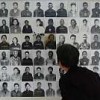
CAMBODIA: Trial of Khmer Rouge Leader Starts Healing Process
Om Chantha,69, says she has waited far too long before finally seeing, with her own eyes, Khmer Rouge leader Duch face trial for torture, crimes against humanity and murder.
Q&A: ‘Khmer Rouge Trials Important for All Humanity’
Theary Seng, orphaned by the Khmer Rouge, believes in the invisible bonds that suffering weaves among people. She calls it the "fellowship of suffering".ZAMBIA: Media Resists Calls for State Regulation
After almost a decade of fighting for self-regulation, the Zambian media may finally have its wishes entrenched with constitutional protection.CAMBODIA: Khmer Rouge Trials May Expose US, China
Limits placed on a United Nations-backed war crimes tribunal in prosecuting surviving leaders of the genocidal Khmer Rouge regime may not prevent revelations about international actors linked to Cambodia's dark period.AUSTRALIA: ‘Chinese Asylum Seekers’ Rights Were Violated’
A yet-to-be released report by Australia’s human rights watchdog into the 2005 treatment of a group of Chinese asylum seekers held at the immigration detention here has concluded that serious breaches of civil and political rights were made by the immigration department.« Previous Page — Next Page »


 Representatives of Civil Society, Sierra Leone. Credit: UN Photo/Eskinder Debebe
Civil society faces mounting threats worldwide, even as it remains essential for democratic accountability, especially in countries struggling with economic instability and social inequality. However, at the same time, nations with weak democratic governance structures also systemically suppress the power of civil society. Human rights activists across the Global South frequently challenge issues such as political persecution and gender oppression, but in return face state-sanctioned punishment for their advocacy. Imprisonment and exile are common mechanisms of punishment that seek to erode the strength of civil society. The 2026 World Press Freedom Index has reached its lowest level in 25 years, with more than half of the world’s countries now falling into the "difficult" or “very serious” category for press freedom. IPS seeks to highlight the work of civil society across the Global South as well as the challenges that they face.
Updated by Yilan Batista and Shuli Wong August 2026

The Week with IPS

NEXT STOP - SDGs
Tracking global progress towards a sustainable world
