Languages
Saturday, November 28, 2026



News and Views from the Global South
Civil Society
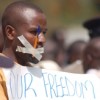
KENYA: Press Freedom: Going, Going, Gone
Dark clouds are forming against freedom of expression in Kenya, following the recent passing of a controversial Bill by parliament. The Kenya Communications (Amendment) Bill, awaiting presidential assent to become law, gives the state powers to invade media houses, seize broadcast equipment, control broadcast content, even taking a station off air.ANGOLA: Deadly Countdown for Small Parties
Angola’s vast, confusing party landscape is about to undergo a major transformation: as of January, 22 parties and coalitions will simply vanish from the political map.VENEZUELA: Human Rights Watch Report Under Fire
A Human Rights Watch report on alleged setbacks in human rights in Venezuela since President Hugo Chávez first took office 10 years ago has been severely questioned by 118 academics from the United States and several other countries.RELIGION: Liberal and Conservative Anglicans Fall Out – and Apart?
On the brink of a split in the global Anglican Communion that no one is eager to enlarge on, the Province of the Southern Cone of South America has become a temporary refuge for conservative bishops from the United States who refuse to countenance the liberal positions taken by the Church in their country.RIGHTS-PHILIPPINES: Stalled Talks With Muslim Rebels Hard on Civilians
With the government insisting that the Moro Islamic Liberation Front (MILF) in conflict-ridden Mindanao disarm prior to resumption of peace talks - and the rebels refusing to do so - prospects for quick resettlement of some 300,000 internally displaced people (IDP) seem bleak.ARGENTINA: Controversy Over Court Order to Release Rights Abusers
An Argentine court order to release on bail nearly 20 officers accused of committing human rights abuses during the 1976-1983 dictatorship shows the slow-moving justice system’s limitations in dealing with cases against those prosecuted for crimes against humanity, say activists.RIGHTS-INDIA: New Anti-Terror Laws Draconian Say Activists
Following the late November terror attacks in Mumbai, India has passed two tough laws being seen by rights activists as potentially eroding the country’s federal structure and limiting fundamental liberties.ENVIRONMENT-CHILE: Widespread Opposition to Power Plants
Not only the five mega-dams planned for two pristine rivers in southern Chile have drawn opposition from environmentalists, local residents and indigenous groups, but other major hydropower and thermoelectric projects have as well.MEDIA-VIETNAM: Blogging Boom Faces Gov't Blockages
As Internet usage grows in communist Vietnam, fostering a vibrant community of bloggers, the government is looking at ways to regulate blogs, particularly those that tend to be political rather than personal.
COLOMBIA: New Meaning in Life for Young Shantytown Dwellers
After three of Viviana’s friends were killed, and one of them dismembered, she began to think things over, and decided to join the Legión del Afecto project in Colombia, leaving six years of gang life behind her.RIGHTS-AUSTRALIA: Anti-Terror Laws Under Increasing Fire
As the Rudd government continues to speak of the need to balance concerns for civil liberties with maintaining intrusive counter-terror legislation to protect Australia, rights groups are stepping up their campaign against the laws.
Q&A: Failure to Translate Women’s Legal Rights into Action
Each year, for 16 days in December, the world’s focus shifts towards taking action against gender-based violence. Governments and civil society organisations raise awareness around women’s rights and lobby for gender equality. But activists lament that little action is taken throughout the rest of the year and women’s legal rights often fail to be implemented and put to action.
COLOMBIA: "There Was No Checkpoint" Where Army Shooting Took Place
Colombian soldiers killed the husband of a leading indigenous activist Tuesday when they opened fire on the pickup truck he was driving.Q&A: "We Should Go Beyond Development Aid" Vis-a-vis Africa
"Portugal does not own the European Union’s strategy for Africa, but we do feel a special affection for that continent and recognise that our relationship with them is unlike that with any other region in the world."VENEZUELA: “Children Can’t Even Play on Their Front Stoops”
Johana Bracamonte never had a chance to learn to read. She was just five years old the morning her uncle took her to kindergarten and they were both shot by thieves who stole his motorbike, in 23 de Enero, a shantytown on the west side of the Venezuelan capital.GENDER-KENYA: Renewed Campaign to Protect Women's Land Rights
Pressure is mounting to include a National Land Policy that ensures equal access to land between women and men in Kenya's new constitution.POLITICS-AFRICA: Constitutions Affirmed as Essential for Democracy
One of Africa's main challenges is ensuring that constitutions reflect a consensus amongst all sectors of the population, including vulnerable groups such as women, are rarely taken into account in constitutional strengthening initiatives.POLITICS-MALAYSIA: Badawi’s ‘Toothless Bills’ Harm Reform Agenda – Critics
By tabling two of three reform bills, Prime Minister Abdullah Badawi has shown his hand and, not surprisingly, both have run into strong opposition within and outside parliament.ENVIRONMENT-AUSTRALIA: Anti-Whalers Take Campaign to Japan
As Japan’s whaling fleet sails south for the annual hunting season, Greenpeace and the Australian government are concentrating their anti-whaling actions on diplomacy and public opinion in Japan.POLITICS: Thai Elites Install Their Man as Premier
Almost a year after his party suffered its third consecutive electoral defeat, Abhisit Vijjajiva rode to victory to become Thailand’s new prime minister, the third this year. It was not a choice of the voters, though.POLITICS: Thailand’s Poor Discover Vote Power
Prateep Ungsongtham recalls a vastly different mood a decade ago when she tested the political pulse of the urban poor living in Klong Toey, Bangkok’s largest slum.« Previous Page — Next Page »


 Representatives of Civil Society, Sierra Leone. Credit: UN Photo/Eskinder Debebe
Civil society faces mounting threats worldwide, even as it remains essential for democratic accountability, especially in countries struggling with economic instability and social inequality. However, at the same time, nations with weak democratic governance structures also systemically suppress the power of civil society. Human rights activists across the Global South frequently challenge issues such as political persecution and gender oppression, but in return face state-sanctioned punishment for their advocacy. Imprisonment and exile are common mechanisms of punishment that seek to erode the strength of civil society. The 2026 World Press Freedom Index has reached its lowest level in 25 years, with more than half of the world’s countries now falling into the "difficult" or “very serious” category for press freedom. IPS seeks to highlight the work of civil society across the Global South as well as the challenges that they face.
Updated by Yilan Batista and Shuli Wong August 2026

The Week with IPS

NEXT STOP - SDGs
Tracking global progress towards a sustainable world
