Languages
Sunday, November 29, 2026



News and Views from the Global South
Civil Society
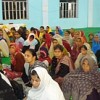
INDIA: Public Hearings Grant Justice to Rural Women
The Indian state of Rajasthan is historically known for its cultural traditions and the epic tales of valour of its womenfolk are legendary. But sadly, today, this state fails to present a vibrant picture with regard to the status of its women who lead a backward existence.MEDIA: Midwife for an Inclusive Society
Changing society to bring about greater respect for diversity requires the participation of the mainstream press, despite the combination of alternative media and the various forums, blogs and networks on the Internet that promote a more democratic flow of information.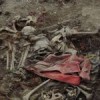
RIGHTS-PERU: Unburying the Evidence of Biggest ‘Dirty War’ Massacre
It was not hard to find the remains of the victims, some of whose bones were actually exposed to the elements. But it took 24 years for the people of the highlands village of Putis in southern Peru to get a response to their insistent requests for exhumation and identification of the remains.DEVELOPMENT: Japan-Africa Outcome ‘Inadequate’
A key document emerging from the fourth round of the Tokyo International Conference on African Development (TICAD) has failed to address HIV/AIDS in the region, says a non-governmental organisation.BOLIVIA: Indigenous Demands Overshadowed by Autonomy Movement
The autonomy movement in Bolivia’s wealthier eastern provinces has overshadowed the demand for empowerment and greater participation in political decision-making for indigenous people, who are worriedly observing the confrontation between the government of President Evo Morales, an Aymara Indian, and the rightwing opposition.POLITICS-THAILAND: Rumours Rife of Another Coup
The rumour mill in Thailand is on overdrive with speculation of another coup in the offing.
EAST TIMOR/INDONESIA: Reconciliation at the Cost of Justice?
East Timor President Jose Ramos Horta's decision to pardon those involved in the 1999 killings, and the violent incidents of 2006, has thrown a shadow over the fledgling country's justice system and efforts at reconciliation with former occupiers Indonesia.DEVELOPMENT: NGOs Marginalised at Japan-Africa Meet
If the fourth round of the Tokyo International Conference on African Development (TICAD IV) concluding Friday is seriously flawed, it is because non-governmental organisations have at best been allowed to influence the policy dialogue between Japan and the African governments only from the margins.PERU: Indigenous Groups Challenge Private Investment Decree
More than 5,000 indigenous and peasant communities in Peru launched a petition drive this week with the aim of getting President Alan García’s decree promoting private investment in communally owned land declared unconstitutional.ARGENTINA: Bad Trips for Most, High Speed Trains for the Few
The Argentine government has given the go-ahead for a high-speed electric train which may be the first in Latin America. But experts and, above all, commuters who travel daily on slow, shabby suburban trains are angry, because the multi-million dollar project will only benefit an elite few.
Q&A: "But They Never Killed My Spirit"
On Sep. 7 last year, as she walked to her home, parliamentary candidate Flora Igoki Terah was attacked and tortured by a gang of five men. Terah's case is one of several case studies highlighted in Amnesty International's 2008 report on the state of the world's human rights, released on May 28.
Q&A: 'Development Aid Is No Panacea'
Celine Tan is a Lecturer in Law at the University of Birmingham. Her doctoral research has focussed on development financing, in particular its impact on global governance and international relations.RIGHTS-AFRICA: Security Council Urged to Protect Civilians
As diplomats prepare to leave for Africa where the U.N. Security Council is due to meet next week, calls from activists are growing for strong international action to address the worsening human rights situation in many parts of the continent.PAKISTAN: Quake Orphans Still Dependent on Charity, NGOs
Thousands of children orphaned by the earthquake that hit northern Pakistan in October 2005, leaving 85,000 people dead, continue to be dependent on charity and support provide by donors and non-government organisations (NGOs).RIGHTS-CHILE: Amnesty Report Highlights Impunity
The Amnesty International Report 2008 on the state of the world’s human rights, released Wednesday, expresses disappointment in Chile’s delay in seeking truth, justice and reparations for the victims of crimes committed during the dictatorship of General Augusto Pinochet (1973-1990).LATIN AMERICA: The Legacy of May ’68
Nearly 190 years after the storming of the Bastille, Zhou En-lai, premier of China from 1949 to his death in 1976, said it was "too soon to tell," when asked about the significance of the French Revolution. Perhaps the same can be said of May 1968.RIGHTS: ‘US Sets Standards, Fails to Meet Them’
The annual report of Amnesty International (AI) released Wednesday holds the United States responsible for setting world standards on human rights - and then failing in that task.INDIA: Urged to Lead UNEP Upgrade
India is sitting out on an opportunity to take the lead in ensuring its own and developing countries’ interests in the ongoing debate to upgrade the United Nations Environment Programme (UNEP) into a stronger body, says a leading expert on international environment law.ECONOMY-CAMBODIA: Resource Curse or Blessing?
Cambodia is facing a natural resource boom, prompting donors and non-government organisations (NGOs) to warn that without measures to improve financial transparency, promote better governance and curb corruption, the potential windfall could be squandered.PERU: Indigenous Organisations Aim for the Presidency
Peru’s indigenous associations are pursuing a political project of their own, and hope to win power in the 2011 presidential elections in order to defend their collective rights.BOLIVIA: Local Indigenous Leaders Beaten and Publicly Humiliated
Bolivia may have its first-ever indigenous president, but racism is alive and well in this country, as demonstrated by the public humiliation of a group of around 50 indigenous mayors, town councillors and community leaders in the south-central city of Sucre.« Previous Page — Next Page »


 Representatives of Civil Society, Sierra Leone. Credit: UN Photo/Eskinder Debebe
Civil society faces mounting threats worldwide, even as it remains essential for democratic accountability, especially in countries struggling with economic instability and social inequality. However, at the same time, nations with weak democratic governance structures also systemically suppress the power of civil society. Human rights activists across the Global South frequently challenge issues such as political persecution and gender oppression, but in return face state-sanctioned punishment for their advocacy. Imprisonment and exile are common mechanisms of punishment that seek to erode the strength of civil society. The 2026 World Press Freedom Index has reached its lowest level in 25 years, with more than half of the world’s countries now falling into the "difficult" or “very serious” category for press freedom. IPS seeks to highlight the work of civil society across the Global South as well as the challenges that they face.
Updated by Yilan Batista and Shuli Wong August 2026

The Week with IPS

NEXT STOP - SDGs
Tracking global progress towards a sustainable world
