Languages
Sunday, November 29, 2026



News and Views from the Global South
Civil Society
RIGHTS-TIBET: China, US Clash in UN Council
Western diplomats and civil society representatives unexpectedly brought up the question of Tibet in the United Nations Human Rights Council debates in this Swiss city.CAMBODIA: Locus Standi For Victims at Khmer Rouge Trials?
Since the start of this year, a team of local researchers has been travelling the Cambodian countryside trying to revive two-decade old petitions in the hope they will form crucial evidence at the international tribunal into the crimes committed by the Khmer Rouge.BRAZIL: Growing Foreign Appetite for Land
It is a question of "national sovereignty, not xenophobia," said the president of Brazil’s land reform agency, INCRA, explaining the need to regulate foreign land ownership in Brazil.AUSTRALIA: Mock Refugee Camp Brings Home Grim Realities
Moving aggressively before the locked wire gate, the border guards used large sticks to keep the refugees in check. Eventually, with the aid of bribes, the participants were allowed to cross the border in order to seek refuge in the camp on the other side.AUSTRALIA: Calls to Boycott Beijing Olympics
The crackdown by Chinese authorities on protesters in Tibet has elicited calls within Australia, a major sporting power, to boycott the Beijing Olympics.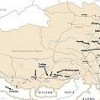
CHINA: Under Pressure to Rethink Tibet Policy
As continuing Tibetan protests testify to the failure of China’s policy of accelerated economic development with harsh political controls in the Himalayan region, pressure on Beijing to begin dialogue with the Dalai Lama, the exiled Tibetan leader, is growing.MEXICO: New Rules Pave the Way for Transgenic Crops
After a three-year-long process, Mexico is about to clear the way for legal cultivation of transgenic crops, in spite of resistance from environmentalists and several small farmer associations.NICARAGUA: Fighting Over Society’s Scraps
Thousands of people who eke out a living by selling recyclable trash scavenged from the municipal dump in the Nicaraguan capital are staging a protest over control of the city’s waste, blocking access to the dump by the garbage trucks.RIGHTS-ANGOLA: Free Rein for Human Traffickers
There is little awareness on the problem of trafficking in persons, mainly women and children, in Angola, and no laws for cracking down on the growing phenomenon.KYRGYZSTAN: Opposition Runs Separate Parliament
A nation of five million, Kyrgyzstan has ended up with two parliaments: the official one, and the second that many consider the more legitimate one.RIGHTS: Europe ‘Looking the Other Way’
Formal discussions on human rights between the European Union and several governments are at risk of turning into a "meaningless ritual", an internal EU paper has admitted.ENVIRONMENT-PORTUGAL: Enjoying the Outdoors in a Greener Lisbon
Steered by a city government that proudly proclaims its environmental credentials, the Portuguese capital is planning to develop wind energy, restore and connect its green areas, and promote clean transport and the outdoor life.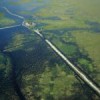
ENVIRONMENT-ARGENTINA: Privatise Wetlands to Protect Them?
The vast Esteros del Iberá wetland, in northeast Argentina, is the focus of a controversy pitting conservationist goals against business interests, with private and public entities found on both sides.MALAYSIA: Poll Setback Finally Prompts Reforms
His political career seriously threatened by the outcome of this month’s general elections, Prime Minister Abdullah Badawi seems ready to institute badly needed reforms, going by his inclusion of some of his bitterest critics in the new cabinet.CHILE: Bachelet to Help Seek Humanitarian Solution for Colombia’s Hostage Crisis
Chilean President Michelle Bachelet promised to work "quickly" and "efficiently" to obtain the release of the hostages held by the FARC, according to Juan Carlos Lecompte, the husband of former Colombian presidential candidate Ingrid Betancourt, who was taken hostage by the Colombian guerrilla group in 2002.
Q&A: "The Issue of Humiliation Is Tricky"
Launched by the United Nations in 2005, the Alliance of Civilisations (AoC) works to improve understanding and strengthen cooperative relations among nations and peoples across cultures and religions worldwide.DEATH PENALTY-GUATEMALA: Colom Had Second Thoughts – Will Congress?
The Guatemalan Congress must decide, after Mar. 26, whether to overrule President Álvaro Colom’s veto of a law that gave the green light to resuming executions of prisoners on death row.RIGHTS-AUSTRALIA: Detaining, Deporting Citizens
The Rudd government is hoping that the high-profile case of an Australian resident wrongfully detained in the country’s immigration detention system for more than ten months has been brought to a close. But this alarming case is far from being an isolated one.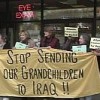
POLITICS-US: Anti-War Grannies Arrested Trying to Enlist
As part of actions across the United States to mark the fifth anniversary of the U.S. invasion of Iraq in 2003, 10 "Grandmothers for Peace", ranging in age from 57 to 80, were arrested Monday while trying to enlist in the United States Army. Acts of civil disobedience are planned this week in at least 17 other U.S. cities.
POLITICS-IRAN: "The Government Suffers From Delusions"
If your grandfather was the founder of the first Islamic Republic of Iran, you would probably expect to have a very comfortable life in the land of Ayatollahs, where Mahmoud Ahmadinejad is president and Khomeini's successor has absolute power. But you would be wrong.CUBA: Transvestites and Crossdressers Key Workers Against AIDS
Activism against AIDS is uniting a group of transvestites and crossdressers in western Cuba in a project that is going beyond peer education and making inroads into the world of culture.« Previous Page — Next Page »


 Representatives of Civil Society, Sierra Leone. Credit: UN Photo/Eskinder Debebe
Civil society faces mounting threats worldwide, even as it remains essential for democratic accountability, especially in countries struggling with economic instability and social inequality. However, at the same time, nations with weak democratic governance structures also systemically suppress the power of civil society. Human rights activists across the Global South frequently challenge issues such as political persecution and gender oppression, but in return face state-sanctioned punishment for their advocacy. Imprisonment and exile are common mechanisms of punishment that seek to erode the strength of civil society. The 2026 World Press Freedom Index has reached its lowest level in 25 years, with more than half of the world’s countries now falling into the "difficult" or “very serious” category for press freedom. IPS seeks to highlight the work of civil society across the Global South as well as the challenges that they face.
Updated by Yilan Batista and Shuli Wong August 2026

The Week with IPS

NEXT STOP - SDGs
Tracking global progress towards a sustainable world
