Languages
Wednesday, September 23, 2026



News and Views from the Global South
Civil Society

International Women’s Day, 2024
In a Fearless Gesture, Woman Police Officer Averts Mob Lynching
Since the start of the year, there has been very little to celebrate for Pakistanis. Disrupted social media, escalating electricity, fuel, and food prices, and newly-held elections mired in controversy. But then, Assistant Superintendent of Police (ASP), Syeda Shehrbano Naqvi, did something that brightened the days of despair.
The 31-year-old’s courageous overture and foresight in the face of a potentially explosive situation have given Pakistan a reason to stand among the countries on this year’s Women’s Day with pride.

Freedom of Speech Is Silenced in Nicaragua
Almost six years after the outbreak of the April 2018 protests, there are no signs left in Nicaragua of the violence that reigned in those days. There is no graffiti on walls or banners with demands or opinions against the leftist regime that has ruled the country since 2007.
International Women’s Day, 2024
Progress Hinges on Feminist Leadership
Investing in inclusion requires more than electing and initiating women leaders. It requires a coordinated effort to change mindsets and systematically increase investments. This will allow feminist leaders, individually and collectively, to fully exercise their agency and counter targeted attacks on their safety and legitimacy.

UN Environmental Assembly Call for Action to Address Planetary Triple Threat
The Sixth United Nations Environmental Assembly (UNEA-6) ended with delegates calling for firm actions to address the triple planetary crisis of climate change, nature loss, and pollution. The assembly also reaffirmed its call for “environmental multilateralism” in seeking solutions to the threats, noting that time was running out fast before the threats could besiege the planet and make life a bigger nightmare, especially for the underprivileged.
From Gas to Ash: The Struggle of Nigerian Women Amidst Surging Cooking Gas Prices
One sunny mid-morning in Omu-Aran village, a community in Kwara State, North Central Nigeria, Iyabo Sunday sat beside a firewood stand observing her pot of beans with rice (a combination enjoyed by many in Nigeria). The 52-year-old widow used her plastic dirt parker to fan the flames, occasionally blowing air through her mouth for speed and frantically shielding her face from the wisps of smoke that curled from the firewood.
Greece: Another First for LGBTQI+ Rights
After almost two decades of civil society campaigning, Greece’s parliament has passed a law enabling same-sex couples to marry and adopt children. It’s the first majority-Orthodox Christian country to realise marriage equality.
Air Quality Sensors Boosting Nairobi’s Fight Against Air Pollution
Deborah Adhiambo (43) has been battling mild asthma since 2022, a condition she describes as “both a health and economic burden.’’ The mother of three lives within Dandora Estate, nine miles east of Kenya’s capital, Nairobi. Dandora is home to Kenya’s largest open landfill, which receives more than 2,000 metric tonnes of waste daily.
Bearing Witness: No Safety for Children in Gaza
Nothing could prepare me for my recently concluded mission into the Gaza Strip, where children face catastrophic conditions. In my twenty years with UNICEF, traveling from one humanitarian crisis to the next – from famines to floods and war zones to refugee camps – I’ve simply never seen such devastation and despair as is happening in Gaza.
Bali’s Ancient Canine Guardians on the Brink of Extinction
Bali's Island's ancient canine guardians, the proud descendants of lineages tracing back tens of thousands of years, stand on the brink of extinction. Culling triggered by rabies outbreaks and interbreeding is pushing these living cultural treasures towards a tragic end.
Female Genital Mutilation Continues Amid Sudan’s Conflict and Forced Displacement
Female genital mutilation (FGM) stands as one of the most egregious violations of human rights, particularly affecting women and girls worldwide. However, when conflict and forced displacement enter the equation, the horrors of FGM are exacerbated, creating a dire situation that demands urgent attention and action. Where instability and insecurity prevail, the prevalence of FGM often intensifies, exacerbated by factors such as displacement, poverty, and the breakdown of social systems.
Parcels for Prisoners: Exiled Myanmar Activists Keep the Revolutionary Faith
Rangoon Nights is rocking. The bar is on its feet and the cocktail shaker is shaking in abandon as the band Born In Burma starts pumping out its beat. Except we’re not in Rangoon or Burma (officially called Myanmar), but in the northern Thai town of Chiangmai which has evolved into a hub for activists, fugitives, and those taking a break from the war tearing their country apart.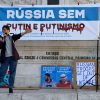
Russia: Moments of Dissent after Two Years of War
Russia’s full-scale invasion of Ukraine marked its second anniversary on 24 February. And while civil society is offering an immense voluntary effort in Ukraine, in Russia activists have faced intense constraints. The suspicious death of opposition leader Alexei Navalny is part of a great wave of repression. He’s the latest in a long list of people who’ve come to a sudden end after falling out with Vladmir Putin.
Call for Scaled Up Funding for Much-Needed, Successful Joint Program in Nigeria
Nigeria is home to 15 percent of the world’s out-of-school children. More than 7.6 million girls are not in school, and only nine percent of the poorest girls in the country are in secondary school. The Boko Haram insurgency and other armed groups fuel the out-of-school crisis in northeast Nigeria, disrupting the education of nearly two million school-age children.
Voices from the World Social Forum 2024 – PODCAST
 After interviewing a member of the Nepal organizing committee ahead of opening day, I was excited about covering my first ever World Social Forum (WSF). He suggested that at least 30,000 and as many as 50,000 activists from over 90 countries would attend the three-day event.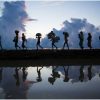
Funding, Policy Changes Could Result in Countries Reaping Benefit of Migration
Amid an escalation of global conflict and climate change-induced displacements, the International Organization for Migration (IOM) is escalating its donor campaign. For the first time since the organization’s formation in 1951, the IOM says it is "proactively approaching all partners to fund this vital appeal," at a time when the number of migrants making perilous intercontinental journeys has increased.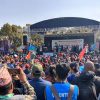
The World Social Forum: The counterweight to the World Economic Forum
This week the 2024 annual meeting of the World Social Forum (WSF) was held in Nepal. There were fifty thousand participants from over 90 countries, exchanging strategies to address the multiple global crises, from climate catastrophes to unfettered capitalism, inequality, social injustice, wars and conflict.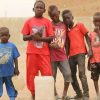
Children’s Futures at a Crossroads
At the start of 2024, we stand at a critical juncture: Geopolitical tensions are escalating, economic integration is unravelling, and multilateral cooperation is faltering. This global fragmentation threatens to undermine decades of progress made for children worldwide.
Pakistan’s Election Outcomes Leave Many Unhappy
Pakistan’s 8 February election has resulted in an uneasy compromise that few wanted or expected. There’s little indication the outcome is going to reverse recent regression in civic freedoms.
#UNmute: Over 350 Civil Society Organizations Ask for Real Inclusion in UN Summit of the Future Negotiations
A coalition of over 350 civil society organisations part of the #UNmute initiative, shared concerns over the current engagement mechanisms for civil society at the UN – particularly in light of the upcoming Summit of the Future.
Coastal Indigenous and Minority Women Driving Kenya’s Blue Forest Conservation Efforts
Tsunza Peninsula is a natural wonder that sits just inside the many inlets of Mombasa Island on the border between Mombasa and Kwale Counties—a little-known spectacle of lagoons, islands, and thick mangroves in Kinango Sub-County, Kwale County, on Kenya’s coastal region.
Inside Kenya’s Seed Control Battle: Why Smallholder Farmers Want to Share Indigenous Seeds
A group of 15 smallholder farmers in Kenya petitioned the country’s High Court, seeking to compel the government to review sections of a law that bans the sharing and exchange of uncertified and unregistered seeds.« Previous Page — Next Page »


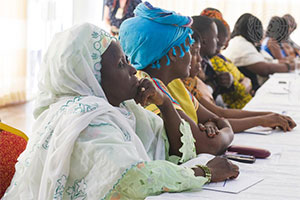 Representatives of Civil Society, Sierra Leone. Credit: UN Photo/Eskinder Debebe
Civil society faces mounting threats worldwide, even as it remains essential for democratic accountability, especially in countries struggling with economic instability and social inequality. However, at the same time, nations with weak democratic governance structures also systemically suppress the power of civil society. Human rights activists across the Global South frequently challenge issues such as political persecution and gender oppression, but in return face state-sanctioned punishment for their advocacy. Imprisonment and exile are common mechanisms of punishment that seek to erode the strength of civil society. The 2026 World Press Freedom Index has reached its lowest level in 25 years, with more than half of the world’s countries now falling into the "difficult" or “very serious” category for press freedom. IPS seeks to highlight the work of civil society across the Global South as well as the challenges that they face.
Updated by Yilan Batista and Shuli Wong August 2026

The Week with IPS

NEXT STOP - SDGs
Tracking global progress towards a sustainable world
Tracking global progress towards a sustainable world
