Languages
Wednesday, September 30, 2026



News and Views from the Global South
Civil Society

Parcels for Prisoners: Exiled Myanmar Activists Keep the Revolutionary Faith
Rangoon Nights is rocking. The bar is on its feet and the cocktail shaker is shaking in abandon as the band Born In Burma starts pumping out its beat. Except we’re not in Rangoon or Burma (officially called Myanmar), but in the northern Thai town of Chiangmai which has evolved into a hub for activists, fugitives, and those taking a break from the war tearing their country apart.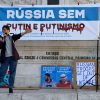
Russia: Moments of Dissent after Two Years of War
Russia’s full-scale invasion of Ukraine marked its second anniversary on 24 February. And while civil society is offering an immense voluntary effort in Ukraine, in Russia activists have faced intense constraints. The suspicious death of opposition leader Alexei Navalny is part of a great wave of repression. He’s the latest in a long list of people who’ve come to a sudden end after falling out with Vladmir Putin.
Call for Scaled Up Funding for Much-Needed, Successful Joint Program in Nigeria
Nigeria is home to 15 percent of the world’s out-of-school children. More than 7.6 million girls are not in school, and only nine percent of the poorest girls in the country are in secondary school. The Boko Haram insurgency and other armed groups fuel the out-of-school crisis in northeast Nigeria, disrupting the education of nearly two million school-age children.
Voices from the World Social Forum 2024 – PODCAST
 After interviewing a member of the Nepal organizing committee ahead of opening day, I was excited about covering my first ever World Social Forum (WSF). He suggested that at least 30,000 and as many as 50,000 activists from over 90 countries would attend the three-day event.
Funding, Policy Changes Could Result in Countries Reaping Benefit of Migration
Amid an escalation of global conflict and climate change-induced displacements, the International Organization for Migration (IOM) is escalating its donor campaign. For the first time since the organization’s formation in 1951, the IOM says it is "proactively approaching all partners to fund this vital appeal," at a time when the number of migrants making perilous intercontinental journeys has increased.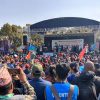
The World Social Forum: The counterweight to the World Economic Forum
This week the 2024 annual meeting of the World Social Forum (WSF) was held in Nepal. There were fifty thousand participants from over 90 countries, exchanging strategies to address the multiple global crises, from climate catastrophes to unfettered capitalism, inequality, social injustice, wars and conflict.
Children’s Futures at a Crossroads
At the start of 2024, we stand at a critical juncture: Geopolitical tensions are escalating, economic integration is unravelling, and multilateral cooperation is faltering. This global fragmentation threatens to undermine decades of progress made for children worldwide.
Pakistan’s Election Outcomes Leave Many Unhappy
Pakistan’s 8 February election has resulted in an uneasy compromise that few wanted or expected. There’s little indication the outcome is going to reverse recent regression in civic freedoms.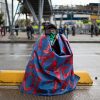
#UNmute: Over 350 Civil Society Organizations Ask for Real Inclusion in UN Summit of the Future Negotiations
A coalition of over 350 civil society organisations part of the #UNmute initiative, shared concerns over the current engagement mechanisms for civil society at the UN – particularly in light of the upcoming Summit of the Future.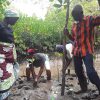
Coastal Indigenous and Minority Women Driving Kenya’s Blue Forest Conservation Efforts
Tsunza Peninsula is a natural wonder that sits just inside the many inlets of Mombasa Island on the border between Mombasa and Kwale Counties—a little-known spectacle of lagoons, islands, and thick mangroves in Kinango Sub-County, Kwale County, on Kenya’s coastal region.
Inside Kenya’s Seed Control Battle: Why Smallholder Farmers Want to Share Indigenous Seeds
A group of 15 smallholder farmers in Kenya petitioned the country’s High Court, seeking to compel the government to review sections of a law that bans the sharing and exchange of uncertified and unregistered seeds.
New Anti-Rape Crisis Centre Brings Hope for Sexual Abuse Survivors in Pakistan
Medical experts and women's rights activists are pinning hopes on the establishment of an anti-rape crisis centre for the provision of medical and legal aid to victims of sexual assaults in a timely manner will ensure convictions. Currently, it takes years to bring the perpetrators of rape to justice due to a lack of evidence and more often than not, the accused get acquitted.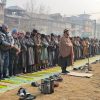
Snowless Winter and a Climate Crisis: Kashmir’s ‘Unprecedented’ Weather
Abdul Gani Malik, a 75-year-old goldsmith living in Kashmir’s capital, Srinagar, has witnessed eras of tranquility and turbulence in the Himalayan region. What he has not seen, however, is a snowless Kashmir during the winter.
Forced Migration Grows, Justice Withers, Say Activists at World Social Forum
As involuntary migration rises around the world, partly in response to the impacts of climate change, justice for those leaving their homes and families to earn a living is largely missing, said activists meeting at the World Social Forum (WSF) in Kathmandu on Sunday.
Another World Seen Through the Lenses of Gender and Sexuality
On a white canvas, people were painting different structures, objects and creatures in a range of colours. Kavita Sada Musahar’s creation was on its way to becoming a painting — with houses, humans, birds, trees and rivers — and a bright red heart.
World Social Forum Activists Unravel Roots of Israel’s Occupation of Gaza
Romi Ghimire has a busy life running a non-profit organization dedicated to Nepal’s rural people, but she also feels driven to do something about Gaza. “There are a lot of issues happening in the world, but right now the genocide in Gaza is the most urgent one,” she said inside the Palestine tent at the World Social Forum (WSF) in Kathmandu on Saturday.
Local Knowledge and Women’s Leadership are Key to Food Justice: Activists
Manjula Dungdung is explaining why she is fighting for land and agricultural rights for herself and other members of the Kharia tribe, who grow the food they eat. “Women’s right to land is especially important because it is an issue of our dignity, and since we are the ones who do most of the agricultural work, it is to maintain food security.”
Grassroots Voices Unite to Call for Climate Justice
Kiprotich Peter from the East African country of Kenya is trying to convey his climate crisis message using the platform of the World Social Forum (WSF) taking place in the mountain nation of Nepal, which has also been battered by the impacts of climate change.
World Social Forum Insists: Another World is Possible!
These are the worst of times, but they can become the best of times, said speaker Dr. Walden Bello, seeking to inspire thousands of progressives who gathered for the World Social Forum (WSF) in Kathmandu on Thursday with the planet under clouds of armed conflict and assaults on democracy.
Tracking Global Development in Child Benefits Through New Monitoring and Information Platform
Inclusive social protections for children would be a positive signifier of social development in a time where 1.4 billion children globally are denied them. A step towards realizing this has been taken through a new monitoring tool on current social protection and child poverty statistics.
Last Chance Saloon? Myanmar Junta Imposes Military Conscription
The news travelled like wildfire. In the teashops, bars, and market stalls that make Thailand’s border town of Mae Sot feel far more Burmese than Thai, the feared rumours circulating at the weekend were suddenly confirmed. Military conscription would be imposed on young men and women for two to five years, regime-controlled broadcasters in Myanmar announced on the Saturday night airwaves. Details were sparse.« Previous Page — Next Page »


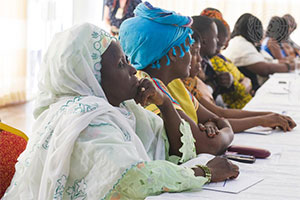 Representatives of Civil Society, Sierra Leone. Credit: UN Photo/Eskinder Debebe
Civil society faces mounting threats worldwide, even as it remains essential for democratic accountability, especially in countries struggling with economic instability and social inequality. However, at the same time, nations with weak democratic governance structures also systemically suppress the power of civil society. Human rights activists across the Global South frequently challenge issues such as political persecution and gender oppression, but in return face state-sanctioned punishment for their advocacy. Imprisonment and exile are common mechanisms of punishment that seek to erode the strength of civil society. The 2026 World Press Freedom Index has reached its lowest level in 25 years, with more than half of the world’s countries now falling into the "difficult" or “very serious” category for press freedom. IPS seeks to highlight the work of civil society across the Global South as well as the challenges that they face.
Updated by Yilan Batista and Shuli Wong August 2026

The Week with IPS

NEXT STOP - SDGs
Tracking global progress towards a sustainable world
Tracking global progress towards a sustainable world
