Languages
Tuesday, October 27, 2026



News and Views from the Global South
Civil Society
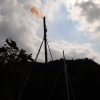
Unstoppable Gas Leaks in Mexico
A dark mole dots the brown earth, among the green scrub at this spot in southeastern Mexico. A repetitive “glug, glug,” a noise sounding like a thirsty animal, and an intense stench lead to this site, hidden in the undergrowth, where a broken pipe has created a pool of dense oil.
Taking Humanitarianism Hostage – the Case of Afghanistan & Multilateral Organisations
Can you imagine what it would be like if women were simply not allowed to step outside of their homes, let alone to work for a living? When women choose to do so, and they can afford it, then it is a matter of choice. When women mostly cannot, as is the case in Afghanistan now, not only is half the population imprisoned, but children go hungry, and communities sink deeper into poverty.
Deportees Start Businesses to Overcome Unemployment in El Salvador
While grilling several portions of chicken and pork, Salvadoran cook Oscar Sosa said he was proud that through his own efforts he had managed to set up a small food business after he was deported back to El Salvador from the United States.
Gender Parity at the UN Willfully Ignores the Facts
There are two sides to the problem of Gender Parity at the United Nations. On the one hand, member states need to appoint more women to their senior ambassadorial ranks. There is always tremendous competition for the post of UN ambassador, especially if a member state is on the UN security Council.
Gender Inequality: A Question of Power in a Male-Dominated World, Declares UN Chief
UN Secretary-General Antonio Guterres has singled out Gender Parity as one of his key priorities in his second term in office, beginning 2023. Describing it as “a strategic goal of the Organization,” he pointed out some of the “notable advances achieved in the past five years.”
Thoughts for 2023: Promoting Innovation & New Technologies
Promoting innovation and technology to promote inclusive development means using new technologies to enhance equal access to services, eliminate discrimination, increase transparency, and create a stable and just future for all – especially the most vulnerable and marginalized.
Biodiversity Agreement Historic But Difficult to Implement
The pillar coral (Dendrogyra cylindrus), which takes its name from its shape, is found throughout the Caribbean Sea, but its population has declined by more than 80 percent since 1990. As a result, the International Union for Conservation of Nature (IUCN) has listed it as "critically endangered" due to the effects of the human-induced climate crisis.
Digital Treatment of Genetic Resources Shakes Up COP15
In addition to its nutritional properties, quinoa, an ancestral grain from the Andes, also has cosmetic uses, as stated by the resource use and benefit-sharing permit ABSCH-IRCC-PE-261033-1 awarded in February to a private individual under a 15-month commercial use contract.
COP15: Unsustainable Infrastructure Threatens Biodiversity
Created in 2016, the Mexican Caribbean Biosphere Reserve (MCBR) hosts 1900 species of animals and plants and contains half of the Mesoamerican Barrier Reef System, the second largest in the world after Australia's Great Barrier Reef.
Solar Energy Benefits Children and Indigenous People in Northern Brazil
Solar energy is booming in Roraima, a state in the far north of Brazil, to the benefit of indigenous people and children in its capital, Boa Vista, and helping to provide a stable energy supply to the entire populace, who suffer frequent electricity shortages and blackouts.
Experts Seek Appropriate Circular Solutions to Plastic Pollution
Experts agree that African economies need to develop innovative approaches to deal with plastic production, which is set to double in 20 years – adversely impacting rural communities.
European Court of Justice Ruling on Beneficial Ownership, a Major Blow to the Fight Against Environmental Crimes
The European Court of Justice on November 22, 2022, made a ruling that reversed much of the progress we have made in a decade in the fight against corruption, economic and natural resource crimes, tax abuses and other forms of illicit financial flows across the world. In the ruling, the court declared invalid the part of the European Union’s Anti Money Laundering Directive that allowed public access to registries about companies’ beneficial owners (that is, the real people who own or actually control them).
A Little Land Helps Indigenous Venezuelans Integrate in Brazil
A group of Warao families are, through their own efforts, paving the way for the integration of indigenous Venezuelans in Brazil, five years after the start of the wave of their migration to the border state of Roraima.
Volunteerism: Path to Achieve UN’s Agenda 2030
The International Volunteer Day, a worldwide event commemorated every year on the 5th of December, comes at the end of a long line of special commemorations, each of them relevant and paramount to achieve the UN’s Agenda 2030.
Three Ways to End Gender-based Violence
How are the multiple shocks and crises the world is facing changing how we respond to gender-based violence? Almost three years after the COVID-19 pandemic triggered high levels of violence against women and girls, the recent Sexual Violence Research Initiative Forum 2022 (SVRI) shed some light on the best ways forward.
AGRA Gets Make-Up, Not Make-Over
Despite its dismal record, the Gates Foundation-sponsored Alliance for a Green Revolution in Africa (AGRA) announced a new five-year strategy in September after rebranding itself by dropping ‘Green Revolution’ from its name.
UN Deploys Unarmed Weapon in Humanitarian & Peacekeeping Operations
A sign outside the United Nations reads, perhaps half-seriously, that it is a “No Drone Zone”—and “launching, landing or operating Unmanned or Remote-Controlled aircraft in this area is prohibited”. The “warning” comes even as Unmanned Aerial Vehicles (UAVs) – or drones – are some of the new weapons of war deployed mostly by the US, and more recently, by Iran, Ukraine and Russia in ongoing military conflicts.
The World Cup of Opportunity
The sun is shining, and the temperature sits at an idyllic 28 degrees Celsius. The Uber driver taking me to work is from Pakistan and devastated about the recent loss to England in the T20 Cricket World Cup final in Australia.
Pandemic Aggravated Violence against Women in Latin America
Violence against women has failed to decline in the Latin American region after the sharp rise recorded during the COVID-19 pandemic, while preventing the causes of such violence remains a major challenge.
US to Fight Sexual Abuse in International Organizations
The United States, which recently laid down a set of guidelines to monitor sexual exploitation and abuse (SEA) by US citizens in international organizations, including the United Nations and its agencies worldwide, has implicitly accused the UN of faltering on a high-profile case last month.
Loss and Damage Fund Saves COP27 from the Abyss
They were on the brink of shipwreck and did not leave happy, but did feel satisfied that they got the best they could. The countries of the global South achieved something decisive at COP27: the creation of a special fund to address the damage and loss caused by climate change in the most vulnerable nations.« Previous Page — Next Page »





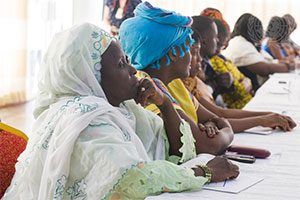 Representatives of Civil Society, Sierra Leone. Credit: UN Photo/Eskinder Debebe
Civil society faces mounting threats worldwide, even as it remains essential for democratic accountability, especially in countries struggling with economic instability and social inequality. However, at the same time, nations with weak democratic governance structures also systemically suppress the power of civil society. Human rights activists across the Global South frequently challenge issues such as political persecution and gender oppression, but in return face state-sanctioned punishment for their advocacy. Imprisonment and exile are common mechanisms of punishment that seek to erode the strength of civil society. The 2026 World Press Freedom Index has reached its lowest level in 25 years, with more than half of the world’s countries now falling into the "difficult" or “very serious” category for press freedom. IPS seeks to highlight the work of civil society across the Global South as well as the challenges that they face.
Updated by Yilan Batista and Shuli Wong August 2026

The Week with IPS

NEXT STOP - SDGs
Tracking global progress towards a sustainable world
Tracking global progress towards a sustainable world
