Languages
Friday, November 13, 2026



News and Views from the Global South
Civil Society
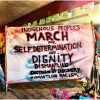
UN’s Empty Promises to World’s Indigenous Peoples
The United Nations, as in so many other areas, gives lip service in support of Indigenous issues while lacking the political will and enforcement power over individual member states to comply with the protection of fundamental human rights for the Original Nations of Indigenous Peoples of the world.
‘You Cannot Muzzle the Media’: Nigerian Journalists on Press Freedom under Buhari
When Nigeria's incumbent president Muhammadu Buhari won re-election this year, he campaigned (as he did in 2015) on an image of good governance and anti-corruption. Billboards in the capital, Abuja, bore the smiling faces of the president--who first led Nigeria as military ruler from 1983-1985--and his vice-president Yemi Osinbajo, and called for voters to let them "continue" their work and take the country to the "Next Level."
Pakistan’s Battle Against Climate Change
Pakistan, which has been listed as the 7th most vulnerable country affected by climate change, is now seriously tackling the vagaries of weather, both at the official as well as non-official level. Pursuant to an initiative launched by the Pakistan Parliament’s Upper House, the Senate, which specially entrusted a sub-Committee of the Standing Committee on Climate Change to focus on “Green and Clean” Islamabad, media, civil society and students have taken up the cudgels on combating climate change.
Nicaraguans “Will Not Be Silenced”
A year since Nicaragua spiralled into a socio-political crisis, human rights leaders have called on the country to refrain from violence and uphold the human rights of its citizens.
Why the Prosecution of Julian Assange is Troubling for Press Freedom
After a seven-year standoff at the Ecuadorean embassy in London, British police last week arrested WikiLeaks founder Julian Assange--a development press freedom advocates had long feared.
Q&A: Achieving “Togetherness”
Increasingly facing restrictions and assault, civil society from around the world have come together to celebrate and promote people power.
Global Governance and Information
The past seventy years since the end of the second world war have been marked by profound changes in our international system. Relations between states have become more horizontally structured interactions with a rising significance of the common good articulated and pursued by newly-created international programmes and organisations.
Civil Society Under Attack in Name of Counterterrorism
Counterterrorism measures are not only affecting extremist groups, but are also impacting a crucial sector for peace and security in the world: civil society.
When Youth Take on The Fight to Defend Rights
Abraham M. Keita says he was nine years old when a girl of thirteen was sexually assaulted and strangled in his home community in Liberia.
Hard Battle Ahead for Independent Arab Media
Sometimes a peak into the future reminds us just how stuck we are in the past and present. It was the talk of the Middle East’s largest annual media industry gathering: a robot journalist – the region’s first – that wowed some 3,000 industry leaders and practitioners at the Arab Media Forum (AMF) in Dubai recently.
Civil Society, Press Freedom & Human Rights Under Attack in Africa
The civic space in several African countries, including Tanzania, Burundi, Zambia, Sudan, Mozambique, Somalia and Eritrea, is gradually shrinking – and mostly under authoritarian leaders and repressive regimes.
Shining a Spotlight on the Strengths & Challenges of Civil Society in the Balkans
It is an incredible privilege to welcome you all to the ‘International Civil Society Week’. I am going to remind us of the reasons that make it so important for us to be here in Belgrade this week.
No Story Worth Dying For?
“Stay safe. There’s no story worth dying for.” That’s the message to journalists from Nada Josimovic, programme coordinator of Amsterdam-based media rights organisation Free Press Unlimited.
People Do Not “Deserve to Die”: Injustice of Death Penalty Persists
While figures have dropped, the “inhuman” use of the death penalty still remains too common worldwide, a human rights group said.
Attacks on Media in the Balkans Sound Alarm Bells for Democracy
Anti-government protesters invading Serbia’s state-owned television station, demanding that their voices be heard. Journalism bodies writing to the Albanian prime minister over plans to censor online media outlets. A Belgrade corruption-busting reporter forced to flee his house that had been torched; a Montenegrin investigative journalist shot in the leg outside her home.
Fridays for Future – Following Greta Thunberg!
What happens worldwide on Fridays, a regular working day and consequently, a school day? We are all witnessing that students do not attend their classes: during the week of March 15, 2019, according to fridaysforfuture, there were at least 1.6 million striking students in more than 125 countries on all continents.
Smears, Laws, Lack of Cooperation: Tools Against Activists
The murder of Brazilian politician and human rights activist Marielle Franco just over a year ago and attacks on other rights activists around the world have galvanised civil society organisations, with the United Nations heightening its own strategy to protect rights defenders.
Civil Society, Once the “World’s New Superpower,” is Battling Against Heavy Odds
A former UN Secretary-General, the late Kofi Annan, once described civil society organizations (CSOs), as “the world’s new superpower” – perhaps ranking behind the US and the former Soviet Union.
Migrant Farm Workers, the Main Victims of Slave Labour in Mexico
"They mislead the workers, tell them that they will be paid well and pay them much less. The recruiters and the employers deceive them," complained Marilyn Gómez, a migrant farm worker in Mexico.
Rise in Cyberlaws Across Southeast Asia Spell Bad News for Human Rights & Democracy
Around the globe, cyberspace has become the new battleground in the fight for the heart and soul of democracy. And Southeast Asia is fast becoming one of the global hotspots where the screws are being tightened on freedom of expression online.
Mobilizing Men as Partners for Women, Peace & Security
In the first month of Bangladesh joining the Security Council in January 2000, President Nelson Mandela was in New York to report to the Council in his capacity as the UN-mandated facilitator of the Burundi Peace Process. In an informal setting, he shared with us that his efforts to include women in the peace table were not working as participating men stonewalled.« Previous Page — Next Page »


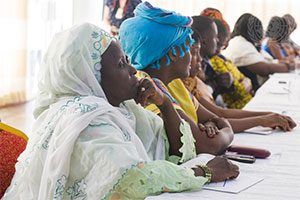 Representatives of Civil Society, Sierra Leone. Credit: UN Photo/Eskinder Debebe
Civil society faces mounting threats worldwide, even as it remains essential for democratic accountability, especially in countries struggling with economic instability and social inequality. However, at the same time, nations with weak democratic governance structures also systemically suppress the power of civil society. Human rights activists across the Global South frequently challenge issues such as political persecution and gender oppression, but in return face state-sanctioned punishment for their advocacy. Imprisonment and exile are common mechanisms of punishment that seek to erode the strength of civil society. The 2026 World Press Freedom Index has reached its lowest level in 25 years, with more than half of the world’s countries now falling into the "difficult" or “very serious” category for press freedom. IPS seeks to highlight the work of civil society across the Global South as well as the challenges that they face.
Updated by Yilan Batista and Shuli Wong August 2026

The Week with IPS

NEXT STOP - SDGs
Tracking global progress towards a sustainable world
Tracking global progress towards a sustainable world
