Languages
Sunday, November 8, 2026



News and Views from the Global South
Education

ZIMBABWE: Teachers' Strike Infringes Children’s Right to Education
The crisis of Zimbabwe’s education sector is deepening by the day, as the country’s schools remain closed due to the unremitting teachers strike.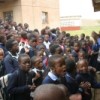
SWAZILAND: Free Education? Maybe Next Year…
Although the Swazi constitution stipulates free primary education from 2009, parents will have to pay school fees this year. Only three days before the start of the January term, the country's government announced it will continue to charge for primary education, contrary to the law.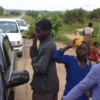
ZIMBABWE: ‘Life Is Like A Casino – We Live Each Day As It Comes’
Long lines of stalls, run by women, have sprung up next to many of Zimbabwe’s highways, selling honey, milk, mushrooms, tomatoes, onions and chickens. As prices in towns skyrocket due to unprecedented inflation levels running in the millions, people leave their towns to purchase basic commodities.DEVELOPMENT-AFRICA: Better Education Improves Health of Mothers and Children
A new UNICEF report reveals there is still much to be done to reduce infant and maternal mortality in sub-Saharan Africa. Failure to improve care for pregnant women and newborns threatens to undermine progress on all health-related development goals.POLITICS-US: The Youth Are Getting Restless
Young voters were an important factor in Barack Obama's victory last Nov. 4, but will their new political enthusiasm stand the test of time?ECONOMY-TANZANIA: Investing The Money Under The Mattress
Omari Saidi heard bad news about the global financial crisis, but the 34-year-old Tanzanian taxi driver felt too far removed from the world market to worry.DEVELOPMENT: Africa May Face ‘Centuries’ of Poverty
Extreme poverty will continue to blight sub-Saharan Africa for another 200 years unless action to overcome it is intensified, a new report has suggested.CUBA: Racism – “Taboo, Complicated and Thorny” Issue
The persistence of racism in Cuba is disturbing to some of the island's thinkers, who are calling for a debate on the problem in this country, where equal rights have not guaranteed equal opportunities for all social groups.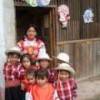
PERU: Coffee Growers Cultivate Education
"Without coffee there is no future," say coffee growers in the Selva Alta, in the central Peruvian region of Junín, where they are setting up schools near their farms so that their children don't abandon their studies.
BULGARIA: Students Demand an Environment for Education
The killing of a student in front of a nightclub in Studentski Grad (Student City) in Sofia has brought to the fore the chaotic and insecure living conditions of tens of thousands of students housed in the quarters.FILM-BRAZIL: “An Artist Only Bows His Head to Thank the Audience”
The first three times he saw the film he could not watch it through to the end; he was so overcome by emotion he burst into tears. The next five times he did manage to see the whole movie, but tears were constantly streaming down his cheeks. Brazilian Maestro Mozart Vieira was "extraordinarily" moved by seeing his own story on screen.
RELIGION-INDONESIA: ''My Roommate, the Terrorist''
For one Indonesian journalist, the acts of terror unleashed on the resort island of Bali in October 2002, that killed 202 people, were more than a major story to cover.
EDUCATION: Zimbabwe’s School System Crumbles
Glen View 5 Primary School in one of Harare's high-density suburbs is deserted. Classrooms are empty, desks and chairs are piled up in corners and instruction charts are peeling off the walls. Yet, the school's third term is in full swing.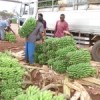
TRADE: Kibuzi Bananas Follow Ugandans to London
‘‘We have lots of orders for apple banana. There is a ready market for kibuzi in London. It is eaten from Monday to Monday. But how to get it there is the issue. Almost 60 percent of the cost goes to freight.’’EDUCATION-BRAZIL: Pockets of Illiteracy, Despite Strides
Staying illiterate even after going to school is the plight of thousands of boys and girls in Brazil and is proof of the shortfalls of the country’s educational system, in particular in poverty-ridden areas. But the tide is beginning to turn, as can be observed among the country’s youngest children.
SOMALIA: Women 'Keep Life Going' in Violent Streets of Mogadishu
On the fifth day of every month a group of women entrepreneurs gather to share their experiences and discuss matters of trade. What makes this exceptional is that the women are from south-central Somalia and they meet in Mogadishu, one of the world's most devastated and dangerous cities.EDUCATION-KENYA: Nomadic Schools for Mobile Girls
Five years after the introduction of free primary education (FPE) in Kenya, the enrolment of girls in schools continues to lag behind in Garissa, in Kenya's North Eastern region.EDUCATION-US: Credit Crunch Hits College Students
The credit crunch is limiting college access for some students in the United States by making it more difficult for them or their parents to obtain student loans to finance the steep cost of a four-year education.
MIDEAST: Israel Targets Palestinian Students
The letter of acceptance that 28-year-old Hazem Hussain got for a business graduate programme in a Californian university once brought joy. Now he does not know what to do with it.KENYA: Failing Grade For Free Primary Education?
When in 2003 Kenya followed its neighbours Ethiopia, Tanzania, Uganda and Malawi in introducing free and compulsory primary education for all, the response from the public as well as international donors was overwhelming.DEVELOPMENT-SIERRA LEONE: Living Off Scraps
Each morning, Mariama Kamara and her two teenaged sons walk to Freetown’s main rubbish dump. Their mission: to dig through the mounds of garbage in search of scrap metal.« Previous Page — Next Page »





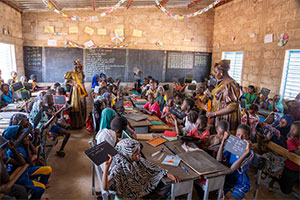 Two teachers work in a classroom in Forces Vives School in Dori, Burkina Faso. Credit: UNICEF/UNI978361
Safe and uninterrupted education is a fundamental right for all children. Education is paramount to global development, as it has been proven that investing in education – especially for girls and children – contributes significantly to economic growth and prosperity. Although more than 1 billion children go to school, many are subjected to conditions that are not conducive to a proper learning environment, including makeshift facilities, a lack of supplies, violence in classrooms, inadequate sanitation, untrained instructors, and widespread school closures. Since 2015, there have been immense gains in education with an increase of 109 million children in school. However, as of 2023, 272 million children are still out of school.
High poverty levels in developing countries also impede children’s access to a proper education. For example, from the early to mid 2000s, Sub-Saharan African nations witnessed a dramatic decline in trained teachers due to inadequate funding in the education sector. Furthermore, major cuts to United States international aid threaten an estimated 23 million additional children's access to education, as USAID‑funded school programmes across Africa and Asia face closure.
Various other factors contribute to the decline of education, notably hunger, which has increased as conflict and climate change interfere with global food production and dissemination. Meanwhile, certain social and cultural practices also impede children’s access to education, with gender inequality, discrimination, child labour, and child marriages preventing millions of children from attending school. Economic conditions such as the inaccessibility of higher education also affect disenfranchised communities across the world. In extreme situations, such as warfare where educational facilities are destroyed in their totality, notably in Gaza and Sudan, entire generations of children might grow up without access to education. Rebuilding educational infrastructure is a long and arduous process, especially when violence persists across generations, and this significantly stunts the development of societal prosperity and stability.
IPS is dedicated to telling the shocking truths about worldwide education through impassioned opinion pieces and comprehensive articles, highlighting global issues that impede worldwide education and the courses of action being taken by organizations such as UNICEF and Education Cannot Wait.

The Week with IPS

NEXT STOP - SDGs
Tracking global progress towards a sustainable world
Tracking global progress towards a sustainable world
