Languages
Sunday, November 8, 2026



News and Views from the Global South
Education
EDUCATION: Illiteracy Rising in Parts of Europe
A global event to promote literacy has drawn attention to the fact that an increasing number of Romanian and Bulgarian children are not getting minimal education.BALKANS: Religion Makes a Worrying Call
Five-year-old Admir does not come from a Muslim family, and so among the early lessons he is learning in school in Sarajevo is that he is out while most others are in.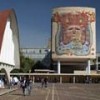
MEXICO: Nation’s Future Hinges on Near-Empty Science Classrooms
Many solutions for sustainable development in Mexico lie in the scientific and technological training of its younger generations, say academics. But students in this country, where everyone wants to be a doctor or accountant, are ignoring those fields.
Q&A: “Politics Is the Key to All Doors to Equality” for Women in Latin America
"People have to imbibe with their mother’s milk the idea that women have an equal right to participate in politics," says Gladys Acosta, UNIFEM head for Latin America and the Caribbean, who underscores that politics is the key that opens all doors to equality.
ARGENTINA: Hundreds of Thousands of Teenage Girls "in Limbo"
Cintia, 17, already has three children and is trying to go back to school, which she dropped out of several times because of the births and when her kids were sick. But the principal of her high school is not optimistic.MAY DAY-ARGENTINA: ‘My Mom Is a Taxi Driver’
A new collection of children’s books in Argentina shows women in jobs and professions that are traditionally held by men, challenging sexist preconceptions.BRAZIL: University Racial Quotas Bogged Down in Congress
Claudio Fernández is able to study law thanks to affirmative action quotas at the Rio de Janeiro State University (UERJ). But a draft law to expand race quotas to all public institutions of higher education is stalled in the Senate.
NICARAGUA: Literacy Campaign Changing Women’s Lives
Lorena Castillo was 10 years old when she was told that her lot in life was to become a good homemaker and a devoted wife and mother. But she would learn none of that at school, her father said when she asked to be allowed to go with her brothers to the school in her rural Nicaraguan village.
TECHNOLOGY-BRAZIL: E-Waste Can Produce Marvels
Using pieces from all sorts of useless equipment, students at the Computer Recovery Centre in the southern Brazilian city of Porto Alegre have put 1,700 computers into operation in three years.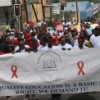
SWAZILAND: Govt Pleads for More Time On Free Primary Education
"This demonstration is close to my heart because the cause we’re fighting for affects me directly," said Thabile Ngwenya, a teacher at a rural primary school teacher in central Swaziland.RIGHTS: Ivory Tower Not Always a Safe Haven
Universities are places for teaching, studying and learning, but for a prominent scholar in Belarus, researching and publishing on topics that the government considered unpopular led to a progression of abuse that began with being snubbed by academic conferences and isolated at the university and ended with his termination and even death threats.EAST TIMOR: Indonesian Artist Adopts Local Talents
Yahiya Lambert won’t leave East Timor until he’s set up the country’s first art academy. He’s been here for 28 years, so a few more won’t be a problem for the 37-year-old Indonesian, a native of the Maluku Islands.PARAGUAY: Debt for Education
The start of the new school year in Paraguay in March once again highlighted the serious shortcomings plaguing the educational system, like rundown school buildings and a shortage of classrooms. But an agreement to swap debt for education will help the government begin to address the problems.CHILE: Teachers and Students Fight New Education Law
Teachers and students marched in protest against a new education law passed by the Chilean parliament nearly three years after the so-called "penguin revolution," named for the uniforms of the secondary school students who led it.NICARAGUA: Universal Primary Education Still Far Off
Damaris Aguilar had to pull her daughter out of school this year. "My oldest child is already in fifth grade; now we're waiting for the situation to improve so that she can go on learning," says the 34-year-old Nicaraguan mother of two.FRANCE: Young Face a Jobless Future
Carole is an 18-year-old student of African descent at a high school in central Paris. She is currently studying for the baccalauréat, an exam at the end of secondary school. When she graduates, she would like to leave France as soon as possible, preferably for the United States.ASIA PACIFIC: Know Your Indonesia – Australians Urged
One is cohesive, has a relatively small population and has been democratic since its foundation; the other is fragmented, is one of the world’s most-populous nations and only emerged from years of authoritarian rule a decade ago.
BRAZIL: Happiness Is Promoting Health and Development in the Amazon
On his fourth trip to Brazil, Prince Charles plans to visit a project in the Amazon jungle that has cut infant mortality and illiteracy nearly in half by organising poor communities to get involved in their own development.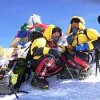
DEVELOPMENT-NEPAL: Women Everesters Talk Gender Equality
Seven young women have started a seemingly commonplace programme of video presentations at schools in this mountainous Himalayan country. The programme’s contents however are unique.
Q&A: 'Move Beyond Goodwill To Action'
Efforts to free fiscal resources for social spending over the past few years have started to pay off in Zambia, where government is reporting a positive trend of poverty alleviation and social development. But progress is uneven.EDUCATION-ZAMBIA: Communities Doing it For Themselves
"My mother has no job and she cannot afford the cost of educating me and my sister at the government school," says 12-year-old Muyunda Nyamba. But the little boy is one of 37,000 children from Zambia's poorest neighbourhoods beginning the new school year calendar at community-run schools.« Previous Page — Next Page »





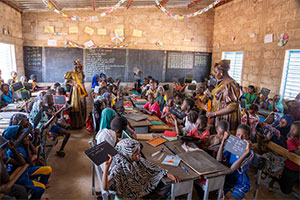 Two teachers work in a classroom in Forces Vives School in Dori, Burkina Faso. Credit: UNICEF/UNI978361
Safe and uninterrupted education is a fundamental right for all children. Education is paramount to global development, as it has been proven that investing in education – especially for girls and children – contributes significantly to economic growth and prosperity. Although more than 1 billion children go to school, many are subjected to conditions that are not conducive to a proper learning environment, including makeshift facilities, a lack of supplies, violence in classrooms, inadequate sanitation, untrained instructors, and widespread school closures. Since 2015, there have been immense gains in education with an increase of 109 million children in school. However, as of 2023, 272 million children are still out of school.
High poverty levels in developing countries also impede children’s access to a proper education. For example, from the early to mid 2000s, Sub-Saharan African nations witnessed a dramatic decline in trained teachers due to inadequate funding in the education sector. Furthermore, major cuts to United States international aid threaten an estimated 23 million additional children's access to education, as USAID‑funded school programmes across Africa and Asia face closure.
Various other factors contribute to the decline of education, notably hunger, which has increased as conflict and climate change interfere with global food production and dissemination. Meanwhile, certain social and cultural practices also impede children’s access to education, with gender inequality, discrimination, child labour, and child marriages preventing millions of children from attending school. Economic conditions such as the inaccessibility of higher education also affect disenfranchised communities across the world. In extreme situations, such as warfare where educational facilities are destroyed in their totality, notably in Gaza and Sudan, entire generations of children might grow up without access to education. Rebuilding educational infrastructure is a long and arduous process, especially when violence persists across generations, and this significantly stunts the development of societal prosperity and stability.
IPS is dedicated to telling the shocking truths about worldwide education through impassioned opinion pieces and comprehensive articles, highlighting global issues that impede worldwide education and the courses of action being taken by organizations such as UNICEF and Education Cannot Wait.

The Week with IPS

NEXT STOP - SDGs
Tracking global progress towards a sustainable world
Tracking global progress towards a sustainable world
