Languages
Sunday, November 8, 2026



News and Views from the Global South
Education
CARIBBEAN: Brain Drain – No Solution in Sight
Like other developing regions, the Caribbean is no stranger to brain drain. Besides the impact on local economies, the exodus of university graduates has profound social implications, and there is no solution in sight.RIGHTS-MEXICO: Tlatelolco Massacre – 40 Years of Impunity
The rivers of ink that have been spilled in investigations, trials and the collection of testimony on the Oct. 2, 1968 massacre of student demonstrators in Tlatelolco square in Mexico City have made it clear that the state was responsible. But not one person has been sentenced, and no one even knows exactly how many young protesters died.
SIERRA LEONE: Ghost Schools, Phantom Progress On Education
Magnus Kamara is a school inspector with a difference. He has been hired to find schools that don't exist.
DEVELOPMENT-TANZANIA: Lighting Up Women’s Lives
Anneth Laizer shoved her kerosene lantern onto the top shelf and switched on the lights after her home in Tanzania's third-largest city, Arusha, was connected to electricity earlier this year.
EDUCATION-ZAMBIA: Food Insecurity Hits Schools
"Sometimes there is barely any food at home, so I only eat at school, at lunch," said Justin Banda, a 12 year old student, at Chikumboso school in Lusaka’s Ngombe township.
DEVELOPMENT: Poverty Hearings Show People Behind the Numbers
Benjamine Agbodjan Ablavi of Togo says she scraped together the money to pay her own school fees by selling fruit.
TRADE-AFRICA: Art Creating Hope in the Midst of Death and Disease
Zulu artists working at the Ardmore Ceramic Studio in South Africa’s coastal province of KwaZulu Natal have gone from poverty to international acclaim.
UGANDA: Women Wield Fair Trade Tools to Beat Poverty
Producing baskets and mats in central Uganda has traditionally been women’s work. Women made these items for use in homes. The National Association of Women Organisations in Uganda (NAWOU) has changed this practice into a powerful force fighting poverty.
CHILE: Salvador Allende – Greatest Chilean, by Popular Acclaim
The late socialist President Salvador Allende, who was overthrown by the armed forces on Sept. 11, 1973, was elected the "greatest Chilean in history" in a viewers' poll organised by a television programme that stirred up controversy.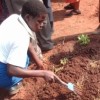
AGRICULTURE-SWAZILAND: Young Farmers Improving Food Security
When her friends go out to play with skipping rope during break, 12 year old Noncedo Masina takes her watering can and goes to work on her plot at the school vegetable garden.DEVELOPMENT: Millions More Children Attending School
Despite the world not being on track to meet the Millennium Development Goals (MDGs), there has been real progress - even in some of the world's poorest countries.
MIDEAST: Teachers Trapped Between Fatah and Hamas
A strike call has trapped thousands of teachers between Fatah unions and a Hamas government.
Q&A: Zimbabwean Women Have Had ‘‘More Trauma'' After Independence
Zimbabwean women have experienced higher levels of trauma, including violence and lack of food, after the country's independence from Britain in 1980 than before.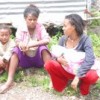
DEVELOPMENT-ETHIOPIA: Understanding Poverty's Impact on Children
When the school bell rings, Alemtsehay and her three younger sisters rush home to change out of their school uniforms and into tattered clothes to go out begging around Bole Road, one of Addis Ababa's smarter areas.RIGHTS: Fighting the ‘War on Terror’
The "war on terror" in the aftermath of the attacks of Sep. 11, 2001 has undermined human rights globally, according to activists and experts who attended a UN conference in Paris.CHILE: Keeping Indigenous Languages Alive
"Mari, mari!" shout the excited group of 20 Chilean, Peruvian and Ecuadorean three- and four-year-olds, using the Mapuche language greeting to welcome a visitor to their intercultural day care centre in Santiago.CUBA: Shoring Up the Educational System
In the new school year, which begins next Monday, Cuba’s educational system will be trying out several changes aimed at overcoming the decline in the quality of teaching, blamed on a shortage of teachers and other problems.EDUCATION-MEXICO: Teachers and Students Failing Exams
Assessments of student performance at primary and secondary schools in Mexico have produced dismal results, as have evaluations of new teachers, who have to pass exams before being appointed to a teaching post.SOUTH AFRICA: Rights Work Hampered by Closure Threat
The University of KwaZulu-Natal (UKZN) last week lifted a funding ban on its Centre for Civil Society (CCS) after national and international intellectuals protested loudly against the leftist centre’s potential closure. Yet, the uncertainty of the past few weeks has already impacted negatively on CCS’ operations.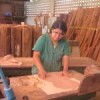
BRAZIL: Producing Guitars and Luthiers in the Rainforest
Cuban instrument-maker or luthier Raúl Lage came for six months, but has already spent seven and a half years in Manaus, the city in the heart of the Brazilian Amazon. "The project is really fantastic," he says, explaining why he plans to renew his work contract again in September.SOUTH AMERICA: Architecture Students Visit 50 Cities in 40 Days
A group of advanced architecture students and graduates from Argentina will tour more than 50 cities in their own country, Brazil, Uruguay and Paraguay to discover common characteristics in the architectural heritage of the Mercosur (Southern Common Market) countries.« Previous Page — Next Page »





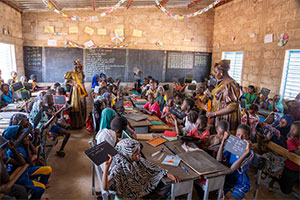 Two teachers work in a classroom in Forces Vives School in Dori, Burkina Faso. Credit: UNICEF/UNI978361
Safe and uninterrupted education is a fundamental right for all children. Education is paramount to global development, as it has been proven that investing in education – especially for girls and children – contributes significantly to economic growth and prosperity. Although more than 1 billion children go to school, many are subjected to conditions that are not conducive to a proper learning environment, including makeshift facilities, a lack of supplies, violence in classrooms, inadequate sanitation, untrained instructors, and widespread school closures. Since 2015, there have been immense gains in education with an increase of 109 million children in school. However, as of 2023, 272 million children are still out of school.
High poverty levels in developing countries also impede children’s access to a proper education. For example, from the early to mid 2000s, Sub-Saharan African nations witnessed a dramatic decline in trained teachers due to inadequate funding in the education sector. Furthermore, major cuts to United States international aid threaten an estimated 23 million additional children's access to education, as USAID‑funded school programmes across Africa and Asia face closure.
Various other factors contribute to the decline of education, notably hunger, which has increased as conflict and climate change interfere with global food production and dissemination. Meanwhile, certain social and cultural practices also impede children’s access to education, with gender inequality, discrimination, child labour, and child marriages preventing millions of children from attending school. Economic conditions such as the inaccessibility of higher education also affect disenfranchised communities across the world. In extreme situations, such as warfare where educational facilities are destroyed in their totality, notably in Gaza and Sudan, entire generations of children might grow up without access to education. Rebuilding educational infrastructure is a long and arduous process, especially when violence persists across generations, and this significantly stunts the development of societal prosperity and stability.
IPS is dedicated to telling the shocking truths about worldwide education through impassioned opinion pieces and comprehensive articles, highlighting global issues that impede worldwide education and the courses of action being taken by organizations such as UNICEF and Education Cannot Wait.

The Week with IPS

NEXT STOP - SDGs
Tracking global progress towards a sustainable world
Tracking global progress towards a sustainable world
