Languages
Saturday, November 7, 2026



News and Views from the Global South
Energy

CLIMATE CHANGE: Cut GhGs or Face Extreme Events – Scientists
Scientists attending a major United Nations conference on climate change on this Indonesian resort island warn that unless greenhouse gas (GhG) emissions are contained extreme geo-climatic events are only expectable.POLITICS: Lawmakers Call a Halt to Indo-US Nuclear Deal
The Manmohan Singh government’s hopes of garnering at least a semblance of support for the controversial United States-India nuclear cooperation deal from elected political representatives outside the ruling United Progressive Alliance (UPA) have crashed.CLIMATE CHANGE: CO2 Cuts Needed Across the Earth
Imagine that the world's leading industrial nations stopped spewing greenhouse gases tomorrow. Now stop smiling: Severe climate change would still plague the world within a generation because of pollution in developing countries.
Q&A: The Senselessness of Tax-Free Oil and Subsidised Ethanol
Protectionist measures for renewable fuels are unacceptable while trade in polluting and costly fossil fuels is completely free, says Marcos Sawaya Jank, president of an organisation representing the most competitive producers of sugar and ethanol in the world, in this interview with Mario Osava.BRAZIL: Auction of Oil Blocks in the Crossfire
Foreign and national companies bid Tuesday for oil exploration rights in Brazil in an auction opposed by social movements, which are demanding the reinstatement of the state-run Petrobras’s monopoly over the country’s oil and natural gas reserves.ENVIRONMENT: Palm Oil Not Green For Asia – UN Report
European Union (EU) demand for supposedly green-friendly fuels, such as palm oil, is coming at a high social and environmental cost in Asia, warns a new report released Tuesday by the United Nations Development Programme (UNDP).DEVELOPMENT: U.S. Key to Balanced Carbon Budget, UN Says
Calls for profound change in the environmental behaviour of the United States are on the rise as world leaders prepare to attend a major summit on climate change in Bali, Indonesia next month.CLIMATE CHANGE: Today, the Poor – Tomorrow, the Next Generation
Although climate change threatens the international community as a whole, the heaviest human costs are borne by the poor, who have contributed least to the problem, according to the United Nations.
ENERGY-BRAZIL: Pray, Cheer, and Do the Rain Dance to Stave Off Crisis
An energy crisis will hit Brazil in 2009 or 2010, and not even the discovery of vast undersea oil and gas reserves with "enormous potential yields," as announced by the government, can stave it off, warn experts.AUSTRALIA: Uranium Supply to India – Hot Election Issue
Analysts say that the stalling in the Indian parliament of the India-United States civilian nuclear agreement could prove convenient for the opposition Australian Labor Party (ALP) - if it wins the Nov. 24 elections - to avoid supplying uranium to India.CHILE: Stepping Up the Focus on Alternative Energy
Chile is rich in natural resources with energy potential, like the wind, ocean and rivers, the sun and biomass, but the country only began to take them into account in 2004, while importing 72 percent of the energy its population consumes.ENVIRONMENT-CHILE: Riders Against the Dams
A group of activists set out on a nine-day horseback ride Monday between two cities in the southern Chilean region of Aysén to protest the construction of five hydroelectric dams on two large rivers in the area.EGYPT: Mubarak Brings Up Peaceful Nuclear Programme Again
Late last month, President Hosni Mubarak reiterated Egypt's intention to launch a peaceful nuclear programme to offset rising domestic energy demand.ENERGY-CONGO: Extracting Honesty for an Extractive Resource
As 2007 draws to a close, citizens of Congo can look back on another year in which the challenge of introducing greater accountability into the Central African country's opaque and corrupt oil sector loomed large.ENERGY: OPEC Looks to the Future, Its Clients to the Present
The Organisation of Petroleum Exporting Countries (OPEC) is not likely to give in to pressure from consumer nations to curb record high oil prices after this weekend’s meeting of OPEC heads of state and government in Riyadh.ENERGY: Coal Plants Dominate the “Dirty Dozen”
The Dirty Dozen. That is what they are called by independent environmentalists researching the role of power companies responsible for the highest levels of carbon dioxide (CO2) emissions in the United States.BRAZIL: Awash With Oil – Good for Revenues, Bad for Climate Change?
The discovery of a huge oilfield 250 kilometres off the southeastern coast of Brazil will not have an immediate effect on world crude markets, but it opens up future prospects of a new oil frontier in the South Atlantic which may deter the pursuit of clean energy sources, experts say.
ENVIRONMENT: Mekong River Commission Remiss – Activists
The campaign to save South-east Asia’s largest waterway from being blocked by a series of massive dams picked up pace this week, with activists accusing a regional river authority of abandoning its mission to protect the Mekong River.ECONOMY-CHINA: Jittery as Fuel Prices Surge
China’s fast-growing economy might appear impervious to rising oil prices but government leaders are jittery as crude surges toward the sensitive 100 US dollar mark.ENERGY: Fossil Fuel Train Heads into Overdrive
Today's skyrocketing fossil fuel use will accelerate far faster in the coming decades, driving oil prices higher and virtually guaranteeing catastrophic climate change in the decades to come, energy experts say.SPAIN: Biofuels – Good for Business, Bad for the Poor, Say Activists
Making fuels from plants is strongly supported by the business community in Spain, but equally strongly criticised by environmental organisations because of its negative impact on food production.« Previous Page — Next Page »





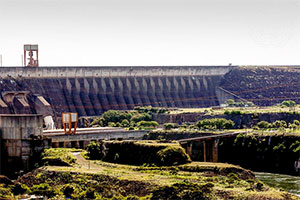 UN Power Plant, Paraguay. Credit: UN Photo/Evan Schneider
Energy has posed a great challenge for economies around the world. As global energy consumption skyrockets throughout the years, so does the need for sustainable solutions. The Sustainable Development Goals are essential in providing people with access to safe, affordable, and sustainable energy sources that minimize harm on the planet. Progress towards these goals opens the door for an advancement in modernization for communities on a global level and allows for a potential mitigation of tensions between nations.
The UN’s Summit of the Future in 2024 offered new initiatives that are being taken to achieve these goals, including a decreased reliance on fossil fuels, a switch to renewable energy sources, and improved climate financing.
IPS is well positioned to provide relevant, insightful, and compelling analysis of recent updates and measures being taken around the world to achieve a cleaner future.

The Week with IPS

NEXT STOP - SDGs
Tracking global progress towards a sustainable world
Tracking global progress towards a sustainable world
