Languages
Sunday, November 8, 2026



News and Views from the Global South
Energy

Q&A: South-South Cooperation 'Can Change the Geography of the Planet'
Brazil's Foreign Minister Celso Amorim, who also heads his country's delegation in multilateral trade negotiations, believes cooperation among developing countries can change the way people perceive the world.ENERGY-SOUTH AMERICA: Mega Gas Pipeline Plans Held Up
The South American mega-pipeline project to transport natural gas from the Caribbean to the River Plate, supplying a large part of Brazil en route, "has cooled down because of attacks from within South America itself" and due to attempts by the United States to delay the plans, complained Venezuelan President Hugo Chávez.
DEVELOPMENT-UGANDA: A Dam That Activists Simply Can’t Make Peace With
As preparations for construction of the Bujagali dam on the Nile River in Uganda gain momentum, a local civil society coalition is calling on the World Bank and the African Development Bank (AfDB) to reconsider their decision to release funds for this hydro-electric project - which the World Bank estimates will cost 799 million dollars.ENERGY: ‘Gas OPEC’ Still a Long Way Off
A cartel of natural gas-producing nations similar to OPEC (Organisation of Petroleum Exporting Countries), an idea floated by countries like Iran, Russia and Venezuela, remains a distant possibility due to the nature of the market.US-INDIA: ‘123’ Nuclear Agreement Completed
India and the United States have announced a bilateral agreement permitting the export of U.S. civilian nuclear technology to India in exchange for a promise that the South Asian giant will allow International Atomic Energy Association (IAEA) inspectors access to its nuclear facilities.ENERGY: Biofuels Pushing Up Food Aid Prices
A dramatic increase in the production of biofuels has led to rising food prices with serious implications for developing countries reliant on food aid to combat famine.BRAZIL: In Search of Sustainable Ethanol
To curb international criticism of its cane alcohol industry, the Brazilian government announced that it will ban new sugarcane fields in the Amazon region and in the vast Pantanal wetland.ENVIRONMENT-NIGERIA: Rich in Oil, Dependent on Firewood
It is a paradox of note: the fact that while Nigerians live in the world's sixth-largest oil producer, most of them still rely on wood for their fuel.INDIA/US: Nuke Deal – Breakthrough or Bad Bargain?
After tortuous negotiations spread over four days in Washington, the United States and India have reported "substantial progress" on a bilateral agreement on civilian nuclear cooperation, but said they would now "refer the issue to our governments for final review."ENVIRONMENT-JAPAN: Quake Devastates Nuclear Power Plans
Reports of radiation leakages at a nuclear power plant, following the Niigata earthquake on Monday, have raised widespread public alarm and dealt a devastating blow to the government’s plans to boost the nuclear power industry, both domestically and abroad.
ENERGY: Nuclear Power No Panacea, Critics Say
The nuclear mishap caused by Monday's earthquake in Japan has unleashed another wave of environmental concerns about the use of nuclear technology to meet the world's energy needs.ECONOMY-MALAWI: Uranium Mining Sparks Controversy
Malawi will have its first-ever modern mining project located in the northern town of Kayelekera in Karonga by early next year if plans by an Australian mining company, Paladin (Africa) Limited, are successful. In April this year, the Malawi government granted the mining company a licence to exploit up to 34,5 million tons of uranium.
HAITI: A Land Crumbling Beneath Their Feet
Dardy Saint-Jean gazes at the rock-strewn river coursing through his village and shakes his head in disgust.MALAWI: ”All-Day Electricity”-As Long As It Is Not Peak Time
Patients have over many years frequently been denied scheduled surgical operations at the Holy Family Hospital in Malawi’s southern region due to abrupt power cuts.TRADE: Following Oil Boom, Biofuel Eyed In Africa
While oil profits have flooded into countries such as Angola and Nigeria in recent decades, some African observers see new potential for the continent in the form of increasingly in-demand biofuels.ALBANIA: Thermal Plant Threatens Tourism
The building of a thermal power plant in Vlora could reduce Albania's electricity deficit, but it would also damage one of the country's most beautiful tourist destinations. The local population is fighting to have the factory built elsewhere.GERMANY: Breakdowns Renew Case Against Nuclear Energy
A series of technical breakdowns in two of the oldest nuclear power stations in Germany has led to renewed demands to phase out nuclear energy.
ENERGY-SOUTH AFRICA: Putting Sunshine in Your Taps
Solar water heaters offer people the chance to save money, increase the security of the local and national energy supply - and cut down on greenhouse emissions said to cause climate change. Yet, roofs throughout South Africa are noticeably bare.ENVIRONMENT: Clean or Not Thailand Sees Dollars in Palm Oil
The new governor of this southern province has set his sights on another prize to add to its list of unique features. ‘’We are aiming to be the palm oil capital of Thailand,’’ says Siwa Sirisoawaluk who has been Krabi’s chief administrator for nine months.
Q&A: "Species Are Moving Southwards"
For South African author Leonie Joubert, global warming is a grass roots issue - literally.CLIMATE CHANGE: U.S. Backs Clean Energy – In Asia
The United States and the Asian Development Bank (ADB) are joining forces to coax Asian nations to switch to cleaner forms of energy, in hopes of averting a predicted spike in carbon emissions by the world's fastest-growing region.« Previous Page — Next Page »





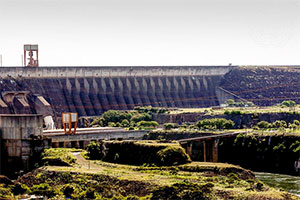 UN Power Plant, Paraguay. Credit: UN Photo/Evan Schneider
Energy has posed a great challenge for economies around the world. As global energy consumption skyrockets throughout the years, so does the need for sustainable solutions. The Sustainable Development Goals are essential in providing people with access to safe, affordable, and sustainable energy sources that minimize harm on the planet. Progress towards these goals opens the door for an advancement in modernization for communities on a global level and allows for a potential mitigation of tensions between nations.
The UN’s Summit of the Future in 2024 offered new initiatives that are being taken to achieve these goals, including a decreased reliance on fossil fuels, a switch to renewable energy sources, and improved climate financing.
IPS is well positioned to provide relevant, insightful, and compelling analysis of recent updates and measures being taken around the world to achieve a cleaner future.

The Week with IPS

NEXT STOP - SDGs
Tracking global progress towards a sustainable world
Tracking global progress towards a sustainable world
