Languages
Friday, October 23, 2026



News and Views from the Global South
Energy

Solar Energy Drives Social Development in Brazil’s Favelas
"We can't work just to pay the electric bill," complained José Hilario dos Santos, president of the Residents Association of Morro de Santa Marta, a favela or shantytown embedded in Botafogo, a traditional middle-class neighborhood in Rio de Janeiro.
Venture Capital Can Turbo Charge Growth in Emerging Markets
Global poverty is undoubtedly the most critical economic and moral challenge of the 21st century. While economists debate how to raise up the world’s poorest – the more than 800 million people living on less than US$1.25 a day.-- entrepreneurs are spurring innovation and growth in emerging markets.
Earth’s Biodiversity: A Pivotal Meeting at a Pivotal Time
The quality of the air we breathe, the food we eat and the water we drink depend directly on the state of our biodiversity, which is now in severe jeopardy. We need a transformational change in our relationship with nature to ensure the sustainable future we want for ourselves and our children.
Will the Iran sanctions work?
Last month, a flotilla of ships carrying more than 20 million barrels of Iranian oil headed off to China's north-eastern Dalian port in a bid to stave off the impending US sanctions that just came into effect on November 4. According to Russian media, the Iranians were quite confident that the country would be able to sell its oil bypassing the latest round of sanctions. Obviously, a deal has been reached with China because the port of Dalian typically saw shipments of oil between 3 and 4 million barrels a day. So, a jump of this magnitude can only mean one thing.
South Korea Looks at How to Accelerate its Transition to Renewable Energy
While major countries have pledged to be powered entirely by renewable energies in order to stop greenhouse gas emissions by 2050, there are a number of states that are investigating ways to implement this transition quickly in order to achieve their goals ahead of this deadline.
Youth in Latin America Learn About Paths to Clean Energy
Young Peruvians plan to take advantage of the knowledge acquired in Brazil's semi-arid Northeast to bring water to segments of the population who suffer from shortages, after sharing experiences in that ecoregion on the multiple uses of renewable energies in communities affected by climatic phenomena.
Africa’s Bumpy Road to Sustainable Energy
For years, Kenyans freely used and disposed of plastic bags. The bags were ubiquitous—in the markets, in the gutters and in the guts out of 3 out of every 10 animals taken to slaughter.
Solar Power Lights up the World’s Fastest-Growing Refugee Camp
Solar energy has long powered homes, businesses and portable electronics. Now, it’s powering a field hospital in the middle of the world’s fastest-growing refugee camp.
Helping Ethiopia Achieve Green Growth and Avoid Industrialised Nations’ Environmental Mistakes
As Ethiopia undergoes a period of unprecedented change and reform, the Global Green Growth Institute(GGGI) is partnering with the Ethiopian government to try and ensure this vital period of transition includes the country embracing sustainable growth and avoiding the environmental mistakes made by Western nations.
Students Go Green to End Global Energy Poverty
In Africa, over 640 million people – almost double the population of United States – have no access to electricity, with many relying on dirty sources of energy sources for heating, cooking and lighting. While not offering a solution to the electricity gap in Africa, Brian Kakembo Galabuzi, a Ugandan economics student, can offer a cleaner and cheaper solution.
Farmers Generate Their Own Electricity in El Salvador
 In Lilian Gómez’s house, nestled in the mountains of eastern El Salvador, the darkness of the night was barely relieved by the faint, trembling flames of a pair of candles, just like in the houses of her neighbours. Until now.
Farmers Generate Their Own Electricity in El Salvador
In Lilian Gómez’s house, nestled in the mountains of eastern El Salvador, the darkness of the night was barely relieved by the faint, trembling flames of a pair of candles, just like in the houses of her neighbours. Until now.
Q & A: Why Switching to Renewable Energy Sources is No Longer a Matter of Morality, But of Economics
When the Global Green Growth Institute (GGGI) was founded eight years ago, the general public thought that renewable energies would never replace oil and coal. Today, the tables have turned.
Indigenous Peoples Link Their Development to Clean Energies
Achuar indigenous communities in Ecuador are turning to the sun to generate electricity for their homes and transport themselves in canoes with solar panels along the rivers of their territory in the Amazon rainforest, just one illustration of how indigenous people are seeking clean energies as a partner for sustainable development.
New Rules for High Seas Must Include Needs of Poorest Nations
Over-fishing, warming oceans and plastic pollution dominate the headlines when it comes to the state of the seas. Most of the efforts to protect the life of the ocean and the livelihoods of those who depend on it are limited to exclusive economic zones – the band of water up to 200 nautical miles from the coast.
Mixed Signals as Guyana Develops its Green Economy Strategy
Guyana is forging ahead with plans to exploit vast offshore reserves of oil and gas, even while speaking eloquently of its leadership in transitioning to a green economy at a recent political party congress addressed by the country's president.
New Relationship Evolves Between Society and Energy in Brazil
“We want to make history," agreed the teachers at the Chiquinho Cartaxo Comprehensive Technical Citizen School. They are the first to teach adolescents about generating power from bad weather in the semi-arid Northeast region of Brazil.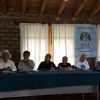
Use of Water for Electricity Generation Triggers Outcry in Mexico
One of the fears of the people of the Sierra Huasteca mountains in the state of San Luis Potosi in northeast Mexico is the construction of combined cycle power plants, which would threaten the availability of water.
Undertaking One of the Largest Solar Water Initiatives in Yemen
Yemen has one of the lowest supplies of freshwater per capita in the world. The effects of a growing population and limited water resources have been exacerbated a great deal by climate change and the escalating conflict.
Sousa, a Solar Power Capital in an Increasingly Arid Brazil
Sousa, a municipality of 70,000 people in the west of Paraíba, the state in Brazil most threatened by desertification, has become the country's capital of solar energy, with a Catholic church, various businesses, households and even a cemetery generating solar power.
Amidst Rising Heat Waves, UN says Cooling is a Human Right, not a Luxury
The rising heat waves in the world’s middle income and poorer nations are threatening the health and prosperity of about 1.1 billion people, including 470 million in rural areas without access to safe food and medicines, and 630 million in hotter, poor urban slums, with little or no cooling to protect them, according to the latest figures released by the United Nations.« Previous Page — Next Page »





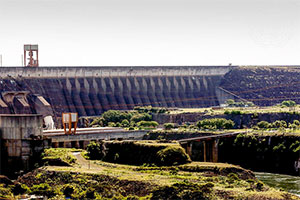 UN Power Plant, Paraguay. Credit: UN Photo/Evan Schneider
Energy has posed a great challenge for economies around the world. As global energy consumption skyrockets throughout the years, so does the need for sustainable solutions. The Sustainable Development Goals are essential in providing people with access to safe, affordable, and sustainable energy sources that minimize harm on the planet. Progress towards these goals opens the door for an advancement in modernization for communities on a global level and allows for a potential mitigation of tensions between nations.
The UN’s Summit of the Future in 2024 offered new initiatives that are being taken to achieve these goals, including a decreased reliance on fossil fuels, a switch to renewable energy sources, and improved climate financing.
IPS is well positioned to provide relevant, insightful, and compelling analysis of recent updates and measures being taken around the world to achieve a cleaner future.

The Week with IPS

NEXT STOP - SDGs
Tracking global progress towards a sustainable world
Tracking global progress towards a sustainable world
