Languages
Monday, October 26, 2026



News and Views from the Global South
Energy

Low Awareness Restrains Growth of Solar Technologies
Every year, Amos Chandiringa, 43, a farmer in Nemaire village in Makoni district in northeastern Zimbabwe, laboriously waters his tobacco nursery with a watering can. The toil of the job often leaves him without the energy or time to do other household chores.
FAO Releases Alarming Report on Soil Pollution
Soil pollution is posing a serious threat to our environment, to our sources of food and ultimately to our health. The Food and Agriculture Organization of the United Nations (FAO) warns that there is still a lack of awareness about the scale and severity of this threat.
From Mega to Micro, a Transition that Will Democratise Energy in Brazil
An energy transition is spreading around the globe. But in Brazil it will be characterised by sharp contrasts, with large hydroelectric plants being replaced by solar microgenerators and government decisions being replaced by family and community decision-making.
Over to You, Children! Zambia’s ‘Plant a Million Trees’ Takes Root
Trees are a vital component in the ecosystem—they not only give oxygen, store carbon, stabilise the soil and give refuge to wildlife, but also provide materials for tools, shelter and ultimately, food for both animals and human beings.
What’s Changing As Countries Turn INDCs into NDCs?
In the lead up to the historic Paris Agreement on climate change, adopted in 2015, more than 160 countries and the European Union submitted their own plans to address climate change, known as Intended Nationally Determined Contributions (INDCs).
Dreaming of A New Sustainable Economy
Officials from around the world came together to create and support a vision for a new, sustainable economy: a bioeconomy. Almost 1000 bioeconomy experts, from former heads of state to civil society leaders, convened in Berlin for the second Global BIoeconomy Summit to discuss best practices and challenges.
Argentina Aims for a Delicate Climate Balance in the G20
As president this year of the Group of 20 (G20) developed and emerging nations, Argentina has now formally begun the task of trying to rebuild a consensus around climate change. It will be an uphill climb, since the position taken by the United States in 2017 led to a noisy failure in the group with regard to the issue.
Latin America Faces Uphill Energy Transition
Latin America is facing challenges in energy efficiency, transportation and power generation to move towards a low carbon economy and thus accelerate that transition, which is essential to cut emissions in order to reduce global warming before it reaches a critical level.
New GCF Project Signals Paradigm Shift for Water-Scarce Barbados
At the start of 2017, the Caribbean Drought and Precipitation Monitoring Network (CDPN) warned eastern Caribbean countries that they were facing “abnormal climate conditions” and possibly another full-blown drought.
Caribbean Eyes Untapped Potential of World’s Largest Climate Fund
The Caribbean Community Climate Change Centre (CCCCC) also known as the 5Cs, is looking for ways to boost the region’s access to the Green Climate Fund (GCF).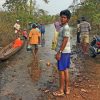
Drowning for Progress in Cambodia
Suddenly the road ends. The cart track disappears under the water. A vast lake stretches out in front of me. I have to transfer from a motorbike to a canoe. "Tuk laang," my guide says coolly. "The water is rising."
How Citizen Power Ignited Seoul’s Energy Innovations
In a bid to reduce its nuclear energy dependence, Seoul embarked on a massive energy reduction initiative—shaped by citizen participation—in 2012.
Washington’s Ambiguity Equals De Facto Sanctions On Teheran
Over the last few months, the United States’ rhetoric on the Iran nuclear agreement has been ambiguous, creating an uncertain environment for investors. With John Bolton, President Donald Trump has now appointed a national security adviser who is actively seeking to leave the Iran deal.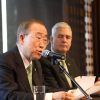
Former UN Chief Takes the Helm of Global Green Growth Institute
In the face of climate change and growing energy demand in developing countries, Ban Ki-moon, the new president and chair of the Global Green Growth Institute (GGGI), unveiled his vision for a more sustainable path by helping countries in their transition to greener economies and achieving the Sustainable Development Goals (SDGs).
High and Dry: Can We Fix the World’s Water Crisis?
April 12 is expected to be the infamous “Day Zero” in South Africa’s second largest city of Cape Town, a tourist hub which attracts millions of visitors every year.
A Breath of Fresh Air in India
With India’s citizens clamouring for breathable air and efficient energy options, the country’s planners are more receptive than ever to explore sustainable development options, says Frank Rijsberman, Director-General of the Global Green Growth Institute (GGGI).
Greening India for a Sustainable Tomorrow
Actions taken today in the pursuit of environmentally sustainable and socially inclusive growth path in India stand to benefit more than 17 percent of the world’s population. A sustainable future for India carries an impact for the subcontinent and the entire world.
Argentina’s Patagonia Rebels Against Oil Field Waste Pits
A project to install a huge deposit of oil field waste pits has triggered a crisis in the north of Argentina’s southern Patagonia region, and brought the debate on the environmental impact of extractive industries back to the forefront in this Southern Cone country.
Inclusive Green Growth Must Shape Thailand’s Future, Says GGGI Chief
Energy efficiency in industries presents a unique opportunity for Thailand’s environmental and economic policies as regional trends push towards more inclusive and sustainable green cities for the country and its neighbors, says the Director-General of the Global Green Growth Institute (GGGI) Dr. Frank Rijsberman.
Citizen-Generated Energy Enters the Scene in Argentina
The Argentine population can now generate their own energy through clean and unconventional sources and incorporate surpluses into the public grid, thanks to a new law. This is an important novelty in a country embarked on a slow and difficult process, with a still uncertain end, to replace fossil fuels.
A Burger That Saves Emissions Taking 2 Million Cars off the Road
Burgers are possibly the most ubiquitous meal on Americans’ dinner plates, but they’re also among the most resource-intensive: beef accounts for nearly half of the land use and greenhouse gas emissions associated with the food Americans eat.« Previous Page — Next Page »





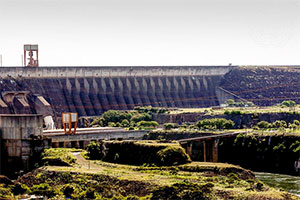 UN Power Plant, Paraguay. Credit: UN Photo/Evan Schneider
Energy has posed a great challenge for economies around the world. As global energy consumption skyrockets throughout the years, so does the need for sustainable solutions. The Sustainable Development Goals are essential in providing people with access to safe, affordable, and sustainable energy sources that minimize harm on the planet. Progress towards these goals opens the door for an advancement in modernization for communities on a global level and allows for a potential mitigation of tensions between nations.
The UN’s Summit of the Future in 2024 offered new initiatives that are being taken to achieve these goals, including a decreased reliance on fossil fuels, a switch to renewable energy sources, and improved climate financing.
IPS is well positioned to provide relevant, insightful, and compelling analysis of recent updates and measures being taken around the world to achieve a cleaner future.

The Week with IPS

NEXT STOP - SDGs
Tracking global progress towards a sustainable world
Tracking global progress towards a sustainable world
