Languages
Tuesday, September 22, 2026



News and Views from the Global South
Energy

Women Play Key Role in Solar Energy Projects
Since weather affects everyone, the idea that women are more susceptible to the effects of climate change may strike some as puzzling.
Young Artists Get Passionate About Renewable Energy
Conversations about renewable and sustainable energy don't typically include artistic ideas on the subject. However, the Caribbean Community (Caricom) has chosen to engage the region's youth in the conversation by inviting them to create artistic works on sustainable energy for a regional competition.
Geothermal – a Key Source of Clean Energy in Central America
Energy from the depths of the earth - geothermal - is destined to fuel renewable power generation in Central America, a region with great potential in this field.
Energy Habits Are Changing in Latin America’s Cities
The Vaz de Souza’s were so keen on the solar water heater that they made it their mission and business, which prospered with the surge in innovation in their city, Belo Horizonte, recognised as the solar energy capital of Brazil.
Will Renewable Energies Finally Get Their Chance in Argentina?
The first thing anyone who looks at any official document this year in Argentina will read is: “2017, the year of renewable energies.” This indicates the importance that the government gives to the issue, although translating the slogan into reality does not seem as easy as putting it in the headings of public documents.
Jordan Makes Strides Toward Inclusive Green Economy
Jordan may be one of the smallest economies in the Middle East, but it has high ambitions for inclusive green growth and sustainable development despite the fact that it lies in the heart of a region that has been long plagued with wars and other troubles, says the Director-General of the Global Green Growth Institute (GGGI) Dr. Frank Rijsberman.
Guyana’s Model Green Town Reflects Ambitious National Plan
At the head of Guyana’s Essequibo River, 50 miles inland from the Atlantic Ocean, you will find the town of Bartica. Considered the gateway to Guyana’s interior, the town has a population of about 15,000 and is the launching point for people who work in the forests mining gold and diamonds.
A Green Energy Shift in Barbados, One Streetlight at a Time
 The ever-escalating and volatile price of oil, and the high cost of importation, have left Barbados and other island nations in the unenviable position of having the highest electricity prices in the world.
Can Economic Growth Be Really Green?
The answer to this big question is apparently “yes” – Economic growth can be really green. How?
Barbados Steps Up Plans for Renewables, Energy Efficiency
With wind, solar and other renewable energy sources steadily increasing their share in energy consumption across the Caribbean, Barbados is taking steps to further reduce the need for CO2-emitting fossil fuel energy.
China Seeks to Export Its Green Finance Model to the World
Hand in hand with UN Environment and the Inter-American Development Bank (IDB), the People’s Bank of China (PBoC) disembarked in the Argentine capital to prompt this country to adopt and promote the agenda of so-called green finance, which supports clean or sustainable development projects and combats climate change.
UAE Leading the Way on Shifting to Greener Energy
Much of the world is moving away from oil for its electricity generation, according to the International Energy Agency (IEA), which says that globally the fossil fuel has dropped from a 25 percent share to 3.6 percent over the last four decades.
Brazil’s Shipyards – Victims of a Failed Reindustrialisation Process
“I have lived through three good periods and two bad ones,” prior to the present crisis in the Brazilian shipping industry, said Edson Rocha, a direct witness since the 1970s of the ups and downs of a sector where nationalist feelings run high.
Mexico’s Methane Emissions Threaten the Environment
Mexico is in transition towards commercial exploitation of its shale gas, which is being included in two auctions of 24 hydrocarbon blocks, at a time when the country is having difficulty preventing and reducing industrial methane emissions.
China Drives Nuclear Expansion in Argentina, but with Strings Attached
Two new nuclear power plants, to cost 14 billion dollars, will give a new impetus to Argentina’s relation with atomic energy, which began over 60 years ago. President Mauricio Macri made the announcement from China, the country that is to finance 85 per cent of the works.
New Research to Unearth UAE’s Renewable Energy Potential
A report by World Wildlife Fund (WWF) states that supplying the world with 95 per cent renewable sources by 2050 will not only reduce 80 per cent of GHG emissions from the energy sector but also save four trillion euros annually.
Mixed Reactions to U.S. Withdrawal from Climate Deal
The United States is expected to withdraw from the landmark Paris climate agreement, prompting mixed reactions from civil society and political representatives.
Business Unusual: Valuing Water for a Sustainable Future
Valuing water is more than simply assigning costs to a scare resource - it is an essential step for transforming water governance to meet the needs of a prosperous future.
Millions of Homes in Mexico Suffer from “Energy Poverty”
Energy poverty afflicts millions of homes in Mexico, with many social, economic and environmental impacts for the country.
Big polluting lobbyists may be forced to declare interests at UN talks
Is the presence of the fossil fuel industry necessary in global climate change negotiations, or does their presence in these talks represent a conflict of interest and undermine global progress?
World to Cut Emissions With or Without Trump
In a last-ditch effort, Germany and China are trying to influence the United States not to walk away from the Paris climate change accord it signed along with 194 nations.« Previous Page — Next Page »


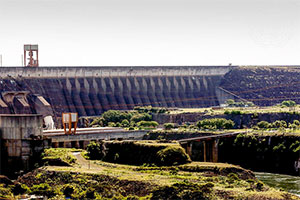 UN Power Plant, Paraguay. Credit: UN Photo/Evan Schneider
Energy has posed a great challenge for economies around the world. As global energy consumption skyrockets throughout the years, so does the need for sustainable solutions. The Sustainable Development Goals are essential in providing people with access to safe, affordable, and sustainable energy sources that minimize harm on the planet. Progress towards these goals opens the door for an advancement in modernization for communities on a global level and allows for a potential mitigation of tensions between nations.
The UN’s Summit of the Future in 2024 offered new initiatives that are being taken to achieve these goals, including a decreased reliance on fossil fuels, a switch to renewable energy sources, and improved climate financing.
IPS is well positioned to provide relevant, insightful, and compelling analysis of recent updates and measures being taken around the world to achieve a cleaner future.

The Week with IPS

NEXT STOP - SDGs
Tracking global progress towards a sustainable world
Tracking global progress towards a sustainable world
