Languages
Monday, October 19, 2026



News and Views from the Global South
Energy

In Belize, Climate Change Drives Coastal Management
A five-year project launched here in Belize City in March seeks to cement a shift in view of climate change and its impact on Belize’s national development.
Deforestation in the Amazon Aggravates Brazil’s Energy Crisis
In Brazil water and electricity go together, and two years of scant rainfall have left tens of millions of people on the verge of water and power rationing, boosting arguments for the need to fight deforestation in the Amazon rainforest.
Opinion: World Leaders Lack Ambition to Tackle Climate Crisis
World governments expect to agree to a new global treaty to combat climate change in Paris in December. As the catastrophic impacts of climate change become more evident, so too escalates the urgency to act.
A “Year of Eye-Catching Steps Forward” for Renewable Energy
Driven by solar and wind, world investments in renewable energy reversed a two-year dip last year, brushing aside the challenge from sharply lower oil prices and registering a 17 percent leap over the previous year to stand at 270 billion dollars.Palestine Crisis at Its Worst Since 1967, Says United Nations
In 2014, the ongoing humanitarian crisis in the occupied Palestinian territories (oPt) saw the worst escalation of hostilities since 1967, said a report by the United Nations Office of Coordination and Humanitarian Affairs (UNOCHA), released on March 26.
Afghanistan’s Economic Recovery: A New Horizon for South-South Partnerships?
First the centre of the silk route, then the epicenter of bloody conflicts, Afghanistan’s history can be charted through many diverse chapters, the most recent of which opened with the election of President Ashraf Ghani in September 2014.Turkey Investing in Coal Despite Cheaper Renewable Energy
In response to rising demand for electricity, pressure to keep prices affordable and a need to maintain energy security, the Turkish government plans to increase electricity generation from coal.
Q&A: “Protect Your Biodiversity”
Richard Huber is chief of the Sustainable Communities, Hazard Risk, and Climate Change Section of the Department of Sustainable Development of the Organisation of American States (OAS). Its objective? Foster resilient, more sustainable cities – reducing, for example, consumption of water and energy – while simultaneously improving the quality of life and the participation of the community.
Pollution a Key but Underrated Factor in New Development Goals
Pollution is likely to be the most pressing global health issue in the coming years without effective prevention and clean-up efforts, experts say.
Hold the Rich Accountable in New U.N. Development Goals, Say NGOs
When the World Economic Forum (WEF) met last January in Switzerland, attended mostly by the rich and the super-rich, the London-based charity Oxfam unveiled a report with an alarming statistic: if current trends continue, the world’s richest one percent would own more than 50 percent of the world’s wealth by 2016.
Opinion: Sustainable Development Goals Could Be a Game-Changer for Water
Suppose money was being deposited and withdrawn from your bank account, but you didn’t know how much. And suppose you knew you had bills coming due, but you didn’t know when or what amount would be required to cover them.
Why Investors Should Think Twice before Investing in Coal in India – Part 2
In November last year, India’s power minister Piyush Goyal announced that he plans to double coal production in India by the end of this decade and, in an effort to enhance production, the Indian government has started a process of auctioning coal blocks.
In Thrall to the Mall Crawl and Urban Sprawl
There's little argument about the basic facts: It's ugly (think strip malls and big box stores). It's not very convenient (hours spent behind the wheel to get to work). And it wreaks havoc on the natural environment (lost farmland and compromised watersheds).
Middle Income Nations Home to Half the World’s Hungry
Nearly half of the world’s hungry, amounting to about 363 million people, live in some of the rising middle income countries, including Brazil, China, India, Indonesia and Mexico, according to a new report released Wednesday by the Washington-based International Food Policy Research Institute (IFPRI).
Why Investors Should Think Twice before Investing in Coal in India – Part 1
India’s Government under Narendra Modi is in overdrive mode to please businesses and investments in the country. The much aggrandised ‘Make in India’ campaign launched in September 2014 is a clarion call for spurring investments into manufacturing and services in India and all eyes have turned to the power sector which is expected to undergo dramatic shifts.
Opinion: Climate Change Continues, Impervious to Official Declarations
It is now clear that we are not going to reach the goal of controlling climate change.
Safeguarding Africa’s Wetlands a Daunting Task
African wetlands are among the most biologically diverse ecosystems on the continent, covering more than 131 million hectares, according to the Senegalese-based Wetlands International Africa (WIA).
Eighty-Three Percent of Lights Have Gone Out in Syria
A single image can be more powerful, more descriptive and more potent than an entire essay – ‘ a picture says a thousand words,’ as the cliché goes.
Coal: Burning Up Australia’s Future
With less than a year to go before the United Nation’s annual climate change meeting scheduled to take place in Paris in November 2015, citizens and civil society groups are pushing their elected leaders to take stock of national commitments to lower carbon emissions in a bid to cap runaway global warming.
Renewable Energies in Latin America Weather Low Oil Prices
Traditionally, falling oil prices have discouraged development of renewable energy sources, but clean energy is making steady progress in Latin America, according to regional experts.
Opinion: A Legally-Binding Treaty to Prohibit Nuclear Weapons
Five years after the adoption of the NPT (Nuclear Non-Proliferation Treaty) Action Plan in 2010, compliance with commitments related to nuclear disarmament lags far behind those related to non-proliferation or the peaceful uses of nuclear energy.« Previous Page — Next Page »





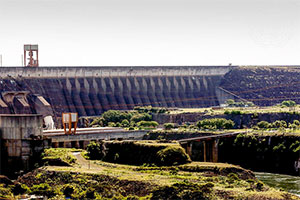 UN Power Plant, Paraguay. Credit: UN Photo/Evan Schneider
Energy has posed a great challenge for economies around the world. As global energy consumption skyrockets throughout the years, so does the need for sustainable solutions. The Sustainable Development Goals are essential in providing people with access to safe, affordable, and sustainable energy sources that minimize harm on the planet. Progress towards these goals opens the door for an advancement in modernization for communities on a global level and allows for a potential mitigation of tensions between nations.
The UN’s Summit of the Future in 2024 offered new initiatives that are being taken to achieve these goals, including a decreased reliance on fossil fuels, a switch to renewable energy sources, and improved climate financing.
IPS is well positioned to provide relevant, insightful, and compelling analysis of recent updates and measures being taken around the world to achieve a cleaner future.

The Week with IPS

NEXT STOP - SDGs
Tracking global progress towards a sustainable world
Tracking global progress towards a sustainable world
