Languages
Friday, November 6, 2026



News and Views from the Global South
Energy
Africa’s Future Lies in a Green Energy Grid
Development in Africa could falter as climate change grips the continent, increasing the length and severity of droughts and floods by altering precipitation patterns, among other impacts.
CLIMATE CHANGE: Emissions Punted to Durban, Breakthrough Seen on Forests
If success is measured by delaying difficult decisions, then the Cancún climate meeting succeeded by deferring crucial issues over financing and new targets to reduce greenhouse gas emissions to the next Conference of the Parties meeting a year from now in Durban, South Africa.
CLIMATE CHANGE: Summit Ends Without Solving Emissions Puzzle
"We are the coldest country in the world... so global warming is good for us. The warmer it is, the bigger the harvests... They talk about stopping deforestation of the tropical jungles to fight climate change, but we don't have tropical jungles."
CLIMATE CHANGE: India Ups Ante with Offer for Binding Targets
A rough yardstick for identifying which Asian countries make the biggest ripples in Cancún is the number of journalists who crowd around the spokesperson immediately after a press conference.
BOLIVIA: Madidi National Park and the Curse of Petroleum
Environmental organisations in Bolivia are waging a crusade to protect Madidi National Park against bids to tap into its petroleum reserves, build hydroelectric dams and promote human settlement in the country's largest nature preserve.CLIMATE CHANGE: Juggling Carbon Consumption and Social Gains
The economies of Latin America are caught on the horns of a dilemma: how to reduce their carbon consumption without sacrificing economic and social development. Subsidies for the development of renewable energies and for learning new technologies need to be increased urgently, experts say.
CLIMATE CHANGE: Cancun Summit Gives Fossil Fuels a Free Pass
The main cause of climate change is the burning of fossil fuels, so why are billions of dollars being invested to find and produce more oil, coal and natural gas?INDIA: Brakes Applied to SUVs – ‘Socially Useless Vehicles’
Indian owners of sports utility vehicles (SUVs) and luxury cars, who have been benefiting from subsidies on diesel meant to help farmers, may soon have to pay real prices for their fuel.EUROPE: Talking Green, ‘Lending Unclean’
The European Bank for Reconstruction and Development is reneging on pledges to support low-carbon economic models in Eastern Europe, and is instead ramping up its lending for fossil-fuel energy projects, critics say.EU Plans to get Smart With Energy
The electricity grid in Europe is in desperate need of an IQ boost.
AFRICA: Food Versus Biofuels Debate Continues
"We’re going to Cancún no better off than we were in Copenhagen," said Thuli Makama, the director of Friends of the Earth Swaziland, as she prepared to leave for the climate negotiations in Mexico.
Japan Under Fire for Abandoning Kyoto Pact
Japanese NGOs feel that Prime Minister Naoto Kan's categorical statement in parliament on Monday that his government would not under any circumstances be party to a continuation of the Kyoto Protocol, which was signed in that historic city in 1997, went "beyond irony".In the End, U.S. Gets (Partial) Offshore Drilling Ban
As negotiators meet in Cancún to discuss how to mitigate the worst effects of climate change, the impacts of the oil spill disaster that unfolded earlier this year on the other side of the Gulf of Mexico are still rippling through Washington.ECUADOR: Oil Shake-Up Means Flat Fees for Foreign Companies
As the dust settles following contract negotiations with foreign oil companies, Ecuador is looking at a new map for its petroleum industry and trying to determine what it will mean in economic terms for this OPEC-member nation.Brazil Keeps a Grip on Bolivia’s Natural Gas Industry
Brazil's state-owned oil company Petrobrás maintains a solid and vigorous presence in natural gas production within Bolivian territory, even with the nationalisation of petroleum and gas in 2006 led by Bolivia's left-wing President Evo Morales.
CLIMATE CHANGE: Will Year of Extremes End with a Whimper?
This year will likely be the warmest ever recorded, with soaring ocean temperatures resulting in a near record die-off of tropical corals, extreme heat and drought in Russia and massive flooding in Pakistan - all signs that climate change has taken hold.
CLIMATE CHANGE: Don’t Look to South Africa for Leadership
South Africa is Africa’s largest economy and the continent's biggest emitter of greenhouse gases. The country’s emissions per capita are on par with those of the United Kingdom, and more than twice as high as China’s emissions by the same measure.GUATEMALA: Legal Battle Over Wetland Oil Drilling
The 15-year extension of an oil-drilling contract in Guatemala's Laguna del Tigre National Park, one of Central America's most important wetlands, has triggered a legal fight against the government's decision, a battle waged by activists, academics and even government agencies.
DEVELOPMENT: Economic Boom Worsened De-industrialisation of LDCs
Least developed countries (LDCs) in Africa did not use the commodity export boom of the mid-2000s to diversify their economies from commodity dependence to manufacturing value-added products. Significantly, the agricultural sector has also not benefited, with the result that LDC reliance on imported food has become even worse.Hope and Pessimism Converge in Cancun
On Nov. 29, the 190-member Conference of Parties (COP) will flock to the Moon Palace Hotel, an all-inclusive luxury coastal resort in Cancún, Mexico, to discuss governments' progress on climate change.CLIMATE CHANGE: Gap Between Science and Pledges Likely to Outlive Cancun
Though there is widespread acknowledgement that the ambitions for this year's climate change conference are considerably lower than for last year's, the U.N. and other groups say even the deal struck a year ago will not go far enough to stop climate change.« Previous Page — Next Page »





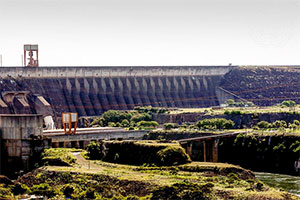 UN Power Plant, Paraguay. Credit: UN Photo/Evan Schneider
Energy has posed a great challenge for economies around the world. As global energy consumption skyrockets throughout the years, so does the need for sustainable solutions. The Sustainable Development Goals are essential in providing people with access to safe, affordable, and sustainable energy sources that minimize harm on the planet. Progress towards these goals opens the door for an advancement in modernization for communities on a global level and allows for a potential mitigation of tensions between nations.
The UN’s Summit of the Future in 2024 offered new initiatives that are being taken to achieve these goals, including a decreased reliance on fossil fuels, a switch to renewable energy sources, and improved climate financing.
IPS is well positioned to provide relevant, insightful, and compelling analysis of recent updates and measures being taken around the world to achieve a cleaner future.

The Week with IPS

NEXT STOP - SDGs
Tracking global progress towards a sustainable world
Tracking global progress towards a sustainable world
